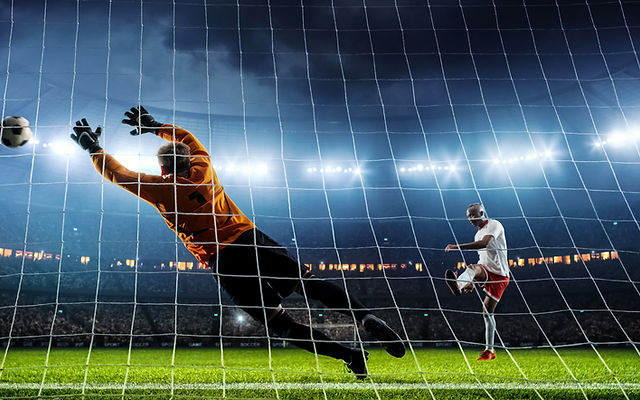
The UEFA Champions League knockout phase brought an electrifying match between Inter and Feyenoord, ending in a 2-1 victory for the home team. This victory at the San Siro/Giuseppe Meazza Stadium in Milan not only showcased the tactical brilliance of Simone Inzaghi but also highlighted Robin van Persie's approach to navigating through the pressures of an away game in such a critical round. The match was a testament to the high stakes involved, with both teams displaying immense dedication to securing a win.
The first half set the tone for what was an intensely competitive match. Inter, with a slight edge in ball possession at 52%, tried to establish dominance early on. However, Feyenoord was not far behind, showcasing their intent with a marginally higher expected goals (xG) of 1.04 compared to Inter's 0.57. The away team managed to convert one of their big chances, leading to a goal from a penalty by J. Moder in the 42nd minute, leveling the score after Marcus Thuram's early goal for Inter. The atmosphere in the stadium was electrifying, with fans from both sides creating a vibrant backdrop to the on-field action. The statistics of the first half, including the total shots, goalkeeper saves, and corner kicks, indicated a closely matched contest, setting up an intriguing second half.
First Half Stats Chart
The second half saw Inter take control, with their ball possession jumping to 60% and their expected goals (xG) significantly increasing to 1.66. This period of the game was marked by Inter's increased aggression and strategic plays, leading to a penalty converted by Hakan Çalhanoğlu in the 51st minute, which ultimately decided the match. Despite Feyenoord's efforts, they were unable to break through Inter's defense again, with their total shots increasing but not converting to goals. The fans' response was palpable, with the home crowd's intensity growing with every passing minute, pushing their team over the line.
Second Half Stats Chart
The match was a showcase of footballing prowess, with Inter demonstrating why they are considered among Europe's elite. The statistical highlights reveal a game of two halves, with Inter dominating the second half to secure their victory. The home team's ball possession stood at 56% over the entire match, with their expected goals (xG) tally at 2.23, reflecting their offensive efficiency. On the other hand, Feyenoord, despite their resilience, fell short, with a 44% possession and an xG of 1.49. The match's dynamics were further illustrated by the total shots, big chances created, and the crucial saves made by both goalkeepers, each tallying three saves.
Final Stats Chart
Marcus Thuram's early goal for Inter was a well-orchestrated move, culminating in a precise finish. The penalty by J. Moder for Feyenoord was a critical moment, bringing the away team back into the game. Hakan Çalhanoğlu's penalty was the deciding factor, showcasing his composure under pressure. The match also saw a fair share of disciplinary actions, with yellow cards issued to Kristjan Asllani and Marcus Thuram for Inter, and Gijs Smal for Feyenoord, indicating the intense battle on the field.
Both teams made strategic substitutions to influence the game's flow. Notably, Inter introduced F. Acerbi and D. Frattesi to bolster their defense and midfield, respectively. Feyenoord responded by bringing on L. Ivanušec and G. Read to inject fresh energy and creativity. These tactical changes were crucial in maintaining the intensity and competitiveness of the match.
Marcus Thuram's goal-scoring ability and Hakan Çalhanoğlu's decisive penalty were instrumental for Inter. For Feyenoord, J. Moder's penalty conversion was a highlight, showcasing his nerve in crucial moments. These performances underlined the players' influence on the match's outcome.
The heatmaps provide a fascinating insight into the teams' strategic formations and movements throughout the match. Inter's dominance in the second half is evident in their heatmap, showing concentrated activity in the attacking third. Feyenoord's heatmap also indicates their attempts to penetrate Inter's defense, especially down the flanks.
Inter Heatmap
Feyenoord Heatmap
Ivan Kružliak's officiating was crucial in managing the game's flow, with his experience evident in handling key decisions, including the awarding of penalties. The San Siro/Giuseppe Meazza Stadium, with its rich history and a capacity of 75,817, provided a fitting venue for such a high-stakes match, contributing to the unforgettable atmosphere.
Simone Inzaghi's tactical acumen was on full display, with his second-half adjustments proving pivotal. Robin van Persie's strategy for Feyenoord highlighted his team's resilience and ability to challenge even the toughest opponents away from home.
Inter's victory, with a final scoreline of 2-1 and an aggregate of 4-1, propels them further in the UEFA Champions League, keeping their dreams alive. For Feyenoord, despite a valiant effort, the journey ends, but not without a display of heart and skill that will surely serve them well in future competitions.
Inter Milan, under the guidance of their strategic formation Inter Formation - 3-5-2 , opted for a 3-5-2 setup in their recent clash. This formation allowed them to maintain a solid defensive structure while providing ample support in the midfield to initiate attacks. The lineup was spearheaded by the striking duo of Marcus Thuram and Mehdi Taremi, who were crucial in applying offensive pressure. Thuram, wearing the number 9 jersey, managed to find the back of the net, showcasing his pivotal role in the team's attacking dynamics. Taremi, number 99, although didn't score, was instrumental in creating chances, including winning a penalty, highlighting his importance in the forward line.
The midfield saw a blend of creativity and defensive diligence, with Hakan Çalhanoğlu scoring a goal, further cementing his reputation as a key player for Inter. Henrikh Mkhitaryan, donning the number 22, displayed an exceptional performance with a rating of 8, contributing significantly to both defensive and offensive plays. Denzel Dumfries, the captain, and a vital cog in the midfield machinery, showcased his leadership on the field.
Defensively, Inter's back three, consisting of Francesco Acerbi, Benjamin Pavard, and Yann Bisseck, worked in tandem to neutralize the opposing threats. Acerbi and Pavard, with their vast experience, managed to keep the defensive line disciplined, while Bisseck's performance was notable for his interceptions and blocks. Yann Sommer, the goalkeeper, had a commendable game with three saves, playing a crucial role in ensuring Inter's victory.
Feyenoord, employing a 4-3-3 formation Feyenoord Formation - 4-3-3 , aimed to exploit the width of the pitch and utilize the pace of their forwards. However, despite their efforts, they were unable to secure a win. The frontline was led by Anis Hadj Moussa, Ayase Ueda, and Aymen Sliti, with Moussa and Ueda attempting to breach Inter's defense without success. Jakub Moder, wearing the number 7 jersey, was the standout performer in the midfield, scoring a goal and proving to be a significant threat throughout the match.
The midfield trio, including Gijs Smal and Luka Ivanušec, worked tirelessly to bridge the gap between defense and attack. However, they struggled to break through Inter's robust defensive setup. In defense, Feyenoord relied on Givairo Read, Thomas Beelen, Dávid Hancko, and Hugo Bueno to fend off Inter's attacks. Despite their efforts, the defensive line was breached twice, highlighting areas for improvement.
Both teams had significant absences due to injuries and other reasons, which might have impacted their strategies and performances. Notably, Inter was without key players like Nicolò Barella and Lautaro Martínez, affecting their midfield and attacking options. Feyenoord also faced the absence of key personnel like Justin Bijlow and In-Beom Hwang, which could have provided additional depth to their squad.
The match statistics provide a deeper insight into the players' performances. Marcus Thuram's goal-scoring ability was complemented by his high expected goals (xG) rate, showcasing his efficiency in front of the goal. Hakan Çalhanoğlu's contribution was not just limited to his goal; his overall playmaking ability was evident through his key passes and high xG. On the defensive end, Benjamin Pavard and Francesco Acerbi showed their worth with crucial clearances and interceptions, ensuring Inter's defense remained impenetrable.
For Feyenoord, Jakub Moder was the standout performer, with his goal underscored by a high xG, reflecting his knack for finding scoring opportunities. In defense, Gernot Trauner, despite coming on as a substitute, made a significant impact with his defensive actions, showcasing the depth in Feyenoord's squad.
Inter Formation - 3-5-2
Feyenoord Formation - 4-3-3
In an electrifying Round of 16 clash in the UEFA Champions League, Inter faced Feyenoord, marking a significant milestone in the ongoing competition. The match, which concluded with Inter securing a 2-1 victory over Feyenoord, not only highlighted the competitive spirit of both teams but also had a substantial impact on their standings and prospects in the tournament. This encounter took place at the iconic San Siro/Giuseppe Meazza stadium in Milan, Italy, showcasing the high stakes involved as teams vie for the prestigious title.
Inter, hailing from Italy, demonstrated their prowess and strategic gameplay, which is reflective of their performance throughout the tournament. With 8 matches played, Inter has accumulated a total of 19 points, positioning them 4th in the standings. Their impressive record consists of 6 wins, 1 draw, and 1 loss, with a goal difference of +10, having scored 11 goals while conceding only 1. This solid performance underscores Inter's defensive strength and offensive capabilities, making them a formidable contender in the Champions League.
On the other hand, Feyenoord, representing the Netherlands, showcased their determination and skill, despite the setback. Positioned 19th in the standings, Feyenoord's journey in the tournament has been marked by challenges and resilience. Over the course of 8 matches, they have secured 13 points through 4 wins, 1 draw, and 3 losses. With a goal difference of -3, scoring 18 goals and conceding 21, Feyenoord's aggressive playstyle has been evident, although consistency has been a concern.
The current top 4 teams in the UEFA Champions League standings present a formidable lineup, led by Liverpool in the 1st position with 21 points from 8 matches, showcasing their dominance with 7 wins, 1 loss, and an impressive goal difference of +12. Following closely are Barcelona and Arsenal, both tied at 19 points but differentiated by goal difference, with Barcelona at +15 and Arsenal at +13, placing them 2nd and 3rd respectively. These teams, along with Inter, form the elite group leading the charge in the competition, each with unique strengths and strategies that have propelled them to the top of the standings.
Conversely, the bottom of the standings reveals the teams facing the toughest challenges in the tournament. Among them, GNK Dinamo Zagreb, VfB Stuttgart, Shakhtar Donetsk, and Bologna occupy the 25th to 28th positions, respectively. These teams have struggled to make a significant impact, with points ranging from 11 to 6, highlighting the competitive nature of the Champions League and the fine margins that separate success from disappointment.
As the UEFA Champions League progresses, the performances of Inter and Feyenoord, along with the current leaders and those at the bottom, will be closely watched. The competition remains wide open, with every match offering the potential to redefine the standings and alter the course of the tournament. The blend of tactical ingenuity, individual brilliance, and team cohesion will undoubtedly continue to captivate football fans worldwide, as Europe's elite clubs battle for supremacy on the grandest stage.