When Chinese President Xi Jinping visited Manchester in October 2015, his trip produced both an unexpected viral moment and an ambitious declaration.
The viral moment came in the form of a selfie—an image of Xi and then-UK Prime Minister David Cameron posing alongside Manchester City striker Sergio Agüero. The bold declaration, however, carried far greater significance.
In a written interview with Reuters, Xi expressed his desire for China’s national team to become "one of the best in the world."
Just six months later, the Chinese government launched a sweeping plan to transform the country into a global football powerhouse by 2050. The long-term vision included hosting and competing at a men’s World Cup, while a more immediate goal targeted a top-tier ranking in Asia by 2030.
Yet, a decade into this ambitious project, China's men's national team has made little progress. When the plan was unveiled, China ranked 81st in FIFA's world rankings; today, they have slipped to 90th, sandwiched between New Zealand and Curaçao. Their only World Cup appearance remains in 2002, when they exited in the group stage without scoring a goal.
Their chances of reaching the 2026 World Cup hang by a thread—defeats to Saudi Arabia and Australia in the upcoming international break would all but end their qualification hopes.
Despite the struggles at the elite level, some aspects of Xi’s football blueprint are materializing. The plan was structured in three phases over 34 years, and a key milestone—expanding grassroots participation—has been largely met.
China has significantly invested in community football, ensuring widespread access to pitches across the country.
"This initiative truly accelerated from 2016," says Dr. Mike Gow, an expert in contemporary China at Edge Hill University. "You’re never more than a 10-minute walk from a half-size or full-size all-weather pitch. The scale is remarkable."
However, fostering a football culture similar to that of Europe has proven more difficult.
David Sproer, a former youth coach for the Shanghai Football Association, recalls the initial excitement. "It felt like a gold rush," he says. "There was a real sense that Chinese football was on the verge of something big."
Sproer, like many other European coaches, left China during the COVID-19 pandemic. Looking back, he believes the country’s approach to sports development—successful in disciplines like gymnastics and diving—has hindered its football progress.
"Chinese kids are educated with the idea that there’s always a right and a wrong answer," he explains. "Football, unlike diving, isn’t about perfection—it requires creativity and adaptability."
Football’s image in China has also suffered due to persistent corruption scandals.
In December 2024, former Everton midfielder Li Tie—who managed the national team from 2020 to 2021—was sentenced to 20 years in prison for match-fixing and bribery. This was just the latest in a long history of scandals tarnishing the sport.
According to Sproer, these issues have discouraged parental involvement in youth football.
"Kids are under immense academic pressure, and parents are equally stretched at work," he says. "There isn’t much time for volunteering, and with football’s reputation in the professional leagues, there’s not much incentive either."
The national team’s poor performances have only deepened public frustration. In September 2024, a 7-0 loss to Japan in World Cup qualifying left fans furious.
"This was like England getting hammered by Germany," says Dr. Gow. "But more than anger, there was exasperation—over both the state of the game and the level of corruption."
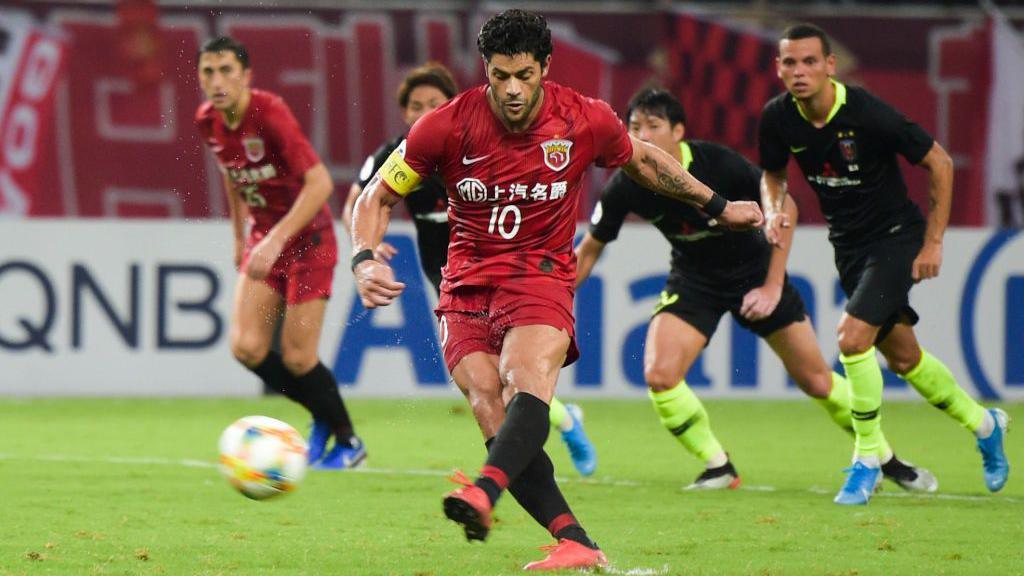
When Xi first outlined his vision in 2016, it sparked a wave of investment from Chinese businesses into European clubs. Domestically, the Chinese Super League (CSL) saw a boom, with clubs spending lavishly to sign international stars like Oscar from Chelsea and Hulk from Zenit St. Petersburg.
Today, that era has all but collapsed. Only two Chinese investors still control English professional clubs—Fosun International at Wolverhampton Wanderers and Dai Yongge at Reading, the latter mired in financial troubles.
The CSL, once thriving, has suffered financial turmoil. Guangzhou Evergrande, the league’s most successful club, was forced into liquidation in January due to unpaid debts.
Dr. Gow explains that many entrepreneurs used China’s football boom as a means to move money out of the country.
"It’s very difficult to transfer funds out of China, so some businessmen saw the government’s football strategy as an opportunity," he says. "But within a few years, authorities cracked down on this, shutting the door on outward investment."
With private investment dwindling and the men's national team struggling, many have written off China’s 2050 football ambitions.
Yet those who have worked in the country believe progress is still possible. Youth teams are showing signs of improvement, and China’s long-term approach suggests that change—though slow—could still yield results.
"Never underestimate them," says Dr. Gow. "When the Chinese Communist Party sets a long-term goal, they usually find a way to achieve it."