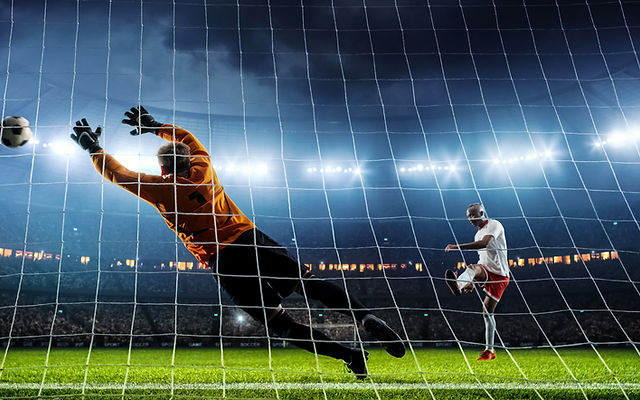
In a match that was a testament to tactical ingenuity and resilience, Parma hosted Juventus at the historic Ennio Tardini stadium, delivering a spectacle that kept fans on the edge of their seats. This encounter was more than just a game; it was a clash of strategies, with both teams showcasing their footballing philosophies under the guidance of their esteemed managers, Cristian Chivu and Igor Tudor. The final scoreline of 1-0 in favor of Parma barely scratches the surface of the narrative that unfolded.
The first half set the tone for what was a closely contested battle, with Parma and Juventus demonstrating why Italian football is revered for its tactical depth. The home team, under the astute leadership of Cristian Chivu, opted for a strategy that emphasized resilience and counter-attacks, a plan that bore fruit in the closing moments of the half. Juventus, managed by Igor Tudor, dominated possession, as reflected in the 58% ball possession statistic, a testament to their intent to control the game's tempo. However, possession alone doesn't win matches, as the away team soon discovered.
Despite Juventus' attempts to penetrate Parma's defense, the home team's tactical discipline was evident. They created a big chance and capitalized on it, leading to the only goal of the first half. Mateo Pellegrino's header, a moment of brilliance, was not just a goal but a statement. The statistical overview of the first half reveals a narrative of two teams, one fighting to assert dominance through control and the other leveraging precise moments to strike. The expected goals (xG) metric stood at 0.45 for Parma and 0.33 for Juventus, indicating the effectiveness of Parma's opportunistic approach.
First Half Stats Chart
As the teams emerged for the second half, Juventus, trailing by a goal, intensified their efforts. The shift in momentum was palpable, with Juventus pushing forward, trying to find an equalizer. Their efforts, however, were met with a Parma side determined to protect their lead. The tactical battle continued, with both teams making strategic adjustments.
Juventus' increased possession in the second half (66%) and their attempts to breach Parma's defense through 6 total shots were notable. Parma, on their part, remained disciplined, focusing on maintaining their structure and looking for opportunities to counter. The second half saw a series of tactical substitutions and adjustments, as both managers sought to tip the balance in their favor. Despite Juventus' efforts and dominance in ball possession, the resilience of Parma's defense and their strategic counter-attacks kept the visitors at bay.
The atmosphere at Ennio Tardini was electric, with fans rallying behind their teams, understanding the stakes of every move on the pitch. The match's intensity was reflected in the statistics, with both teams fighting for every ball, every inch of the field.
Second Half Stats Chart
The match was a showcase of tactical nuances, with both teams implementing strategies reflective of their managers' philosophies. Parma's goal, a well-executed header by Mateo Pellegrino, was the culmination of a precise buildup and understanding of spatial dynamics on the field. The incident involving a series of cards, including yellow cards for Simon Sohm and Hernani of Parma and Nicolás González, Manuel Locatelli, and Kenan Yıldız of Juventus, highlighted the match's competitive nature and the high stakes involved.
Substitutions played a crucial role in the match's dynamics, with both teams making strategic changes to influence the game's outcome. Parma introduced M. Pellegrino and N. Estévez to inject fresh energy and creativity, while Juventus brought on W. McKennie and D. Vlahović in an attempt to bolster their attacking options. These changes underscored the managers' attempts to adapt to the unfolding scenario, showcasing the depth of tactical planning in modern football.
Final Stats Chart
The heatmaps of both teams offer a fascinating insight into the tactical approaches employed by Parma and Juventus. Parma's heatmap shows a concentrated effort in defensive and midfield areas, highlighting their strategy to contain Juventus' attacks and exploit counter-attacking opportunities. In contrast, Juventus' heatmap displays their emphasis on maintaining possession and attempting to unlock Parma's defense through varied attacking channels.
Parma Heatmap
Juventus Heatmap
The match between Parma and Juventus at Ennio Tardini was more than just a football game; it was a testament to the tactical depth and resilience inherent in Italian football. Under the guidance of Cristian Chivu and Igor Tudor, both teams exhibited strategic ingenuity, but it was Parma's ability to execute their plan to perfection that made the difference. This victory not only secures crucial points for Parma but also serves as a statement of their tactical prowess and ambition in Serie A.
In a closely contested match that saw Parma edge out Juventus with a 1-0 victory, both teams showcased their strategic depth and individual player performances. The game unfolded with Parma deploying a 3-5-2 formation, aiming to utilize their strength in midfield and flexibility in attack, while Juventus opted for a 3-4-2-1 setup, focusing on solidity at the back and creativity from the wings.
Parma Formation - 3-5-2
Juventus Formation - 3-4-2-1
Parma's choice of a 3-5-2 formation allowed them to control the midfield while providing support to their forwards. The lineup included:
Substitutes Nahuel Estévez (#8), Antoine Hainaut (#20), Hernani (#27), and Dennis Man (#98) were brought on to maintain the team's momentum and secure the win.
Missing Players included Gabriel Charpentier, Mateusz Kowalski, Yordan Osorio, Adrian Benedyczak, and Valentin Mihăilă due to various reasons, impacting the team's depth.
Juventus' 3-4-2-1 formation was designed to be defensively robust while providing support to the lone striker. The lineup was as follows:
Substitutes Francisco Conceição (#7) and Kenan Yıldız (#10) were introduced to inject fresh energy and creativity into the team.
Missing Players such as Arkadiusz Milik, Bremer, Juan Cabal, Federico Gatti, and Samuel Mbangula due to injuries or other reasons significantly affected the team's options.
The match statistics reveal a tight contest, with Parma taking advantage of their home ground and a well-executed strategy. Mateo Pellegrino's goal was a testament to Parma's effective use of their forward line, while Juventus struggled to capitalize on their chances, as reflected in the performances of their forwards, particularly Vlahović, who had a below-par rating of 6.5 before being substituted.
Both teams' formations played a crucial role in the match's dynamics, with Parma's 3-5-2 providing them with the necessary balance between defense and attack, while Juventus' 3-4-2-1 aimed to solidify their defense but ultimately fell short in supporting their lone striker effectively.
In conclusion, Parma's tactical approach and player performances were key to their victory over Juventus. The match highlighted the importance of formation adaptability and the impact of missing players on team strategies. As the season progresses, both teams will look to build on these experiences to refine their tactics and squad depth.
As the Serie A season progresses into its 33rd round, the standings reveal a fiercely competitive landscape at both ends of the table. The recent clash between Parma and Juventus at the Ennio Tardini Stadium, which ended in a 1-0 victory for the home side, has significant implications for the league positions and the European competition prospects of the teams involved.
At the pinnacle of Serie A, Inter Milan holds the top spot with 71 points from 33 matches. Their impressive tally of 21 wins, 8 draws, and only 4 losses, alongside a goal difference of +40, underscores their potent attack and robust defense this season. Napoli, mirroring Inter's points haul but with a lesser goal difference of +27, occupies the second position, also securing their spot in next season's Champions League.
The third place is held by Atalanta, who have amassed 64 points. Their offensive prowess is evident with 66 goals scored, although they have conceded 30, leading to a +36 goal difference. Bologna sits in the fourth position, a surprising contender for the Champions League spots, with 60 points fueled by 16 wins and a goal difference of +15. These teams have showcased consistency and resilience, setting the stage for a nail-biting conclusion to the campaign.
Juventus, traditionally a dominant force in Italian football, finds itself in fifth place following the recent loss to Parma. With 59 points from 33 matches, consisting of 15 wins, 14 draws, and 4 losses, their goal difference stands at +18. This position places them in the Europa League qualification zone, a step down from their usual Champions League expectations. The loss against Parma not only dents their hopes for a top-four finish but also highlights the challenges they've faced this season in achieving consistency.
Parma, on the other hand, is battling at the other end of the spectrum. Their victory over Juventus is a significant boost in their fight against relegation. Positioned 15th, they have secured 31 points from 33 games, which includes 6 wins, 13 draws, and 14 losses. With a goal difference of -13, every point gained is crucial as they look to distance themselves from the relegation zone.
The battle to avoid relegation is equally intense, with Venezia, Empoli, and Monza occupying the last three spots. Venezia and Empoli are tied on 25 points, but with a dire goal difference of -19 and -26, respectively. Monza, at the bottom, faces an uphill battle to remain in Serie A, having accumulated only 15 points with a -32 goal difference. These teams have five rounds left to secure their status in Italy's top flight, adding drama to the season's closing stages.
In conclusion, the Serie A standings after round 33 reflect the competitive nature of the league, with teams fighting for European qualification and survival. The outcome of matches such as Parma vs. Juventus not only influences the immediate positions but also has a cascading effect on the morale and strategy of the teams involved. As the season nears its end, the stakes continue to rise, promising an exciting finish to the campaign.