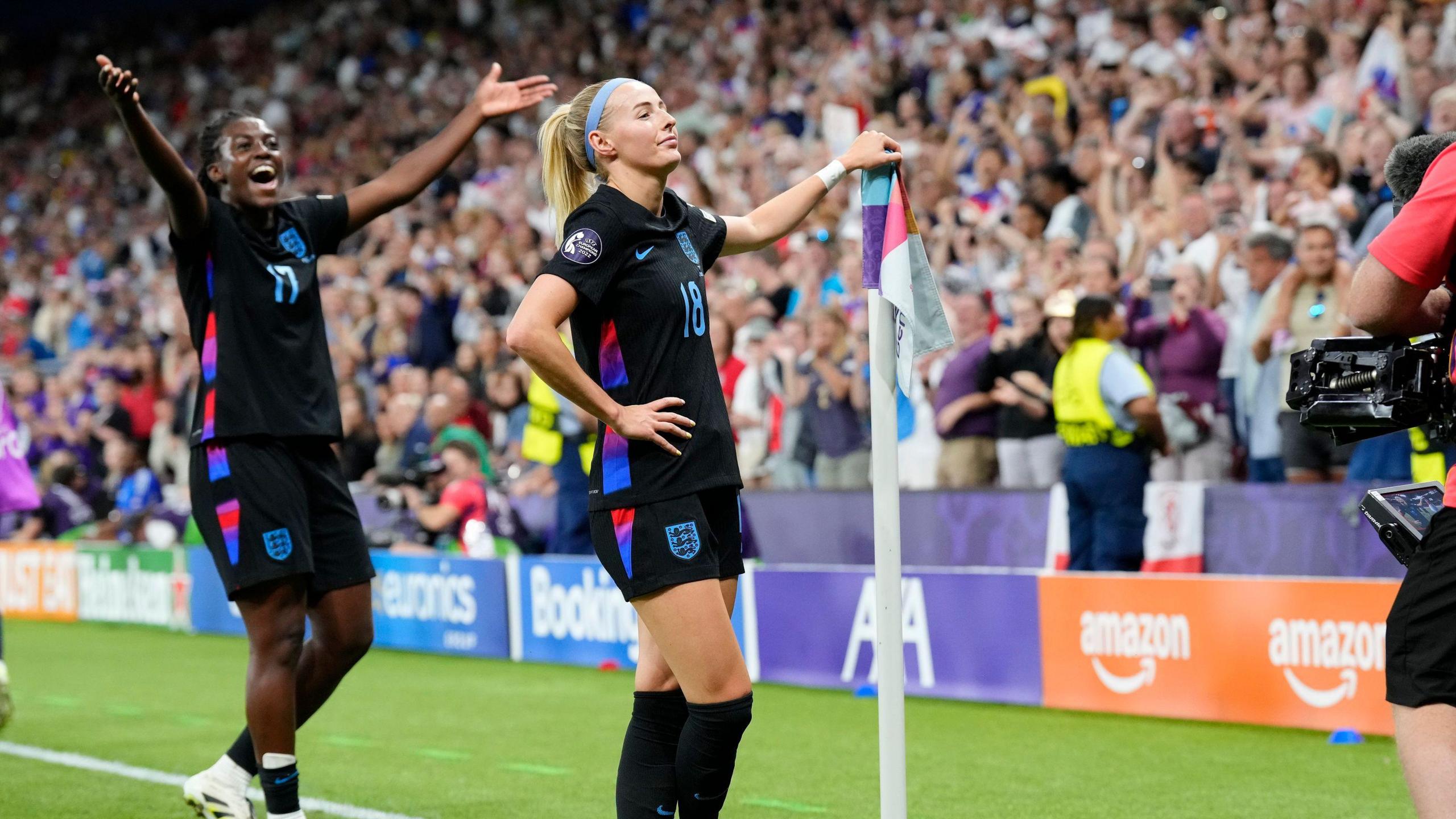
Michelle Agyemang and Chloe Kelly once again delivered when it mattered most, rescuing England from the brink of Euro 2025 elimination in their dramatic semi-final win over Italy. With the Lionesses trailing 1-0 in stoppage time, 19-year-old Agyemang equalised in the 96th minute before Kelly capitalised on the rebound from her saved penalty to complete a stunning comeback.
It marked the second consecutive knockout match where the duo came off the bench to change the course of the game—mirroring their impact in the quarter-final against Sweden. As England prepare for a final showdown with either Germany or Spain, manager Sarina Wiegman faces a pivotal decision: Should she reward Agyemang and Kelly with starting roles, or preserve the current formula that has repeatedly delivered success?
The argument for keeping Agyemang and Kelly as impact substitutes is underpinned by precedent and tactical consistency. At Euro 2022, Wiegman employed a similar approach—using Alessia Russo and Ella Toone as game-changing substitutes throughout the tournament. The strategy paid off handsomely: Russo scored four goals (a tournament record for a substitute), and Toone found the net in both the semi-final and final.
Wiegman has consistently referred to her substitutes as “finishers,” reflecting a clear philosophy that values the unique contributions of players introduced late in games. According to former England striker Rachel Daly, that philosophy remains valid.
"It's working. Don’t fix what isn’t broken,” Daly said on the Daly Brightness podcast. “People will say ‘start them,’ but it’s hard to come off the bench and make a difference—yet they’ve been doing exactly that.”
Agyemang’s statistical output further strengthens the case. She averages 6.1 shots per 90 minutes—more than double Russo’s 2.9—and leads the England squad with 15.17 touches in the opposition box per 90. While some of that is inflated by entering matches against fatigued opposition, the data underscores her dynamic influence.
Former goalkeeper Siobhan Chamberlain echoed the sentiment of maintaining tactical stability:
“If those 11 players are fit, they’ll start the final,” she told BBC Radio 5 Live Breakfast. “Wiegman has her trusted core. There have been a few tweaks, but she knows she has game-changers on the bench when needed.”
However, not all voices are in favour of preserving the status quo. Concerns are growing over the cumulative fatigue within England’s starting XI, who have now endured consecutive extra-time matches in the knockout rounds.
With minimal rotation—Esme Morgan for Jess Carter being the only recent change—former England midfielder Karen Carney has argued for a more proactive approach ahead of the final.
“Freshness is the most important thing now,” Carney said on ITV. “Germany are powerhouses. Spain are technically brilliant. England will need energy from the start.”
Kelly and Agyemang, alongside Aggie Beever-Jones and Beth Mead, comprise four of the five most goal-involved substitutes at Euro 2025. Their sustained impact highlights the growing case for structural change, especially against top-tier opposition that can seize control early.
Carney suggested that sticking with the same starting XI may no longer be sustainable:
“Plan A isn’t working, Plan B is magnificent. I want to see Plan A work better—and that means injecting fresh legs and ideas into the starting line-up.”
Ultimately, Wiegman’s dilemma is as much about game management as it is about player quality. Agyemang and Kelly have proven their readiness to perform on the biggest stage, but their value as late-game weapons may be diminished if they start. Conversely, starting them could provide England with early momentum and reduce the physical load on a fatigued first XI.
The decision also hinges on the opposition. Germany’s physical dominance and Spain’s technical superiority demand tactical adaptability. Whether Wiegman opts for early intensity or reserves her trump cards for the final stretch may define England’s hopes of securing back-to-back European titles.
There is no easy answer. Keeping Agyemang and Kelly as high-impact substitutes adheres to a strategy that has consistently borne fruit. But introducing them from the outset could offer England the energy and incisiveness needed to wrest control from elite opponents early in the final.
Whatever Wiegman decides, one thing is clear: Agyemang and Kelly have become indispensable to England’s Euro 2025 narrative—whether from the first whistle or the final moments.