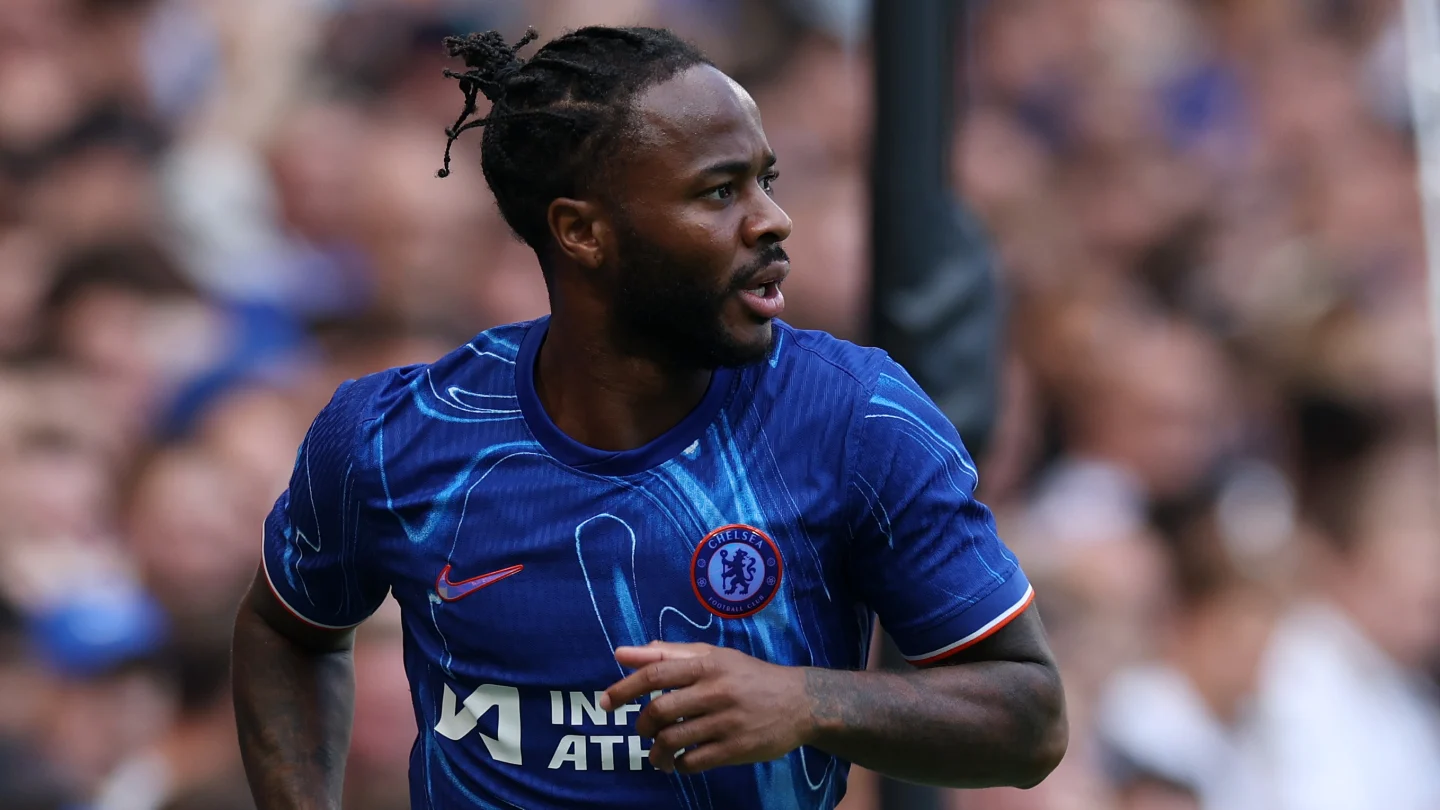
Four years ago, Raheem Sterling was at the peak of his career, widely considered England’s most influential player during their run to the Euro 2020 final. Today, at 30, the winger finds himself frozen out at Chelsea, trapped in contractual limbo with £30m still owed on his deal.
Sterling joined Chelsea in 2022 as the first major signing of Todd Boehly and Clearlake Capital’s ownership, moving from Manchester City for £50m on a five-year contract worth £325,000 per week. At the time, the transfer was billed as a statement of intent, overseen by then-head coach Thomas Tuchel.
However, instability on the managerial front—Tuchel, Graham Potter, Frank Lampard, Mauricio Pochettino, and now Enzo Maresca—undermined Sterling’s integration. Across two seasons, he made 81 appearances and scored 19 goals, but Chelsea slumped to 12th and then sixth in the Premier League.
Maresca’s arrival effectively ended Sterling’s role as a first-team player, and after a disappointing loan at Arsenal last season, he has not featured since.
Sterling’s exclusion has created a standoff. Chelsea are reluctant to pay out the £30m remaining on his deal, while Sterling has little incentive to walk away from such a lucrative contract. Until a resolution is found, he will continue training with the so-called “bomb squad,” alongside Axel Disasi and David Datro Fofana, with limited access to first-team facilities.
The earliest opportunity for Sterling to return to top-flight football is January, but that depends on either a negotiated exit or a new loan agreement.
Efforts to find a buyer this summer proved unsuccessful. Chelsea explored interest from Bayer Leverkusen and Juventus, but Sterling preferred to remain in London for family reasons, with his son part of Arsenal’s academy.
Closer to home, Fulham, Crystal Palace, and West Ham were approached, yet none progressed to concrete offers. Sterling also rejected lucrative approaches from the Saudi Pro League, signalling his priority remains competitive football rather than financial gain.
Last season’s rushed loan to Arsenal, arranged on deadline day, served as a cautionary tale. With little preparation time and limited minutes under Mikel Arteta, the move failed to revive his career. Sterling was determined not to repeat that scenario this summer, preferring to wait for the right opportunity.
From Chelsea’s perspective, Sterling’s wages have significantly restricted the pool of potential suitors, especially among London-based clubs. From Sterling’s side, a desire for stability and proximity to family has limited his options abroad.
The result is a deadlock: Chelsea continue to carry the cost of a high-earning player outside the manager’s plans, while Sterling remains sidelined from first-team football at a critical stage of his career.
For now, both player and club are locked in a stalemate with no obvious resolution — and the longer it drags on, the more damaging it becomes for both.