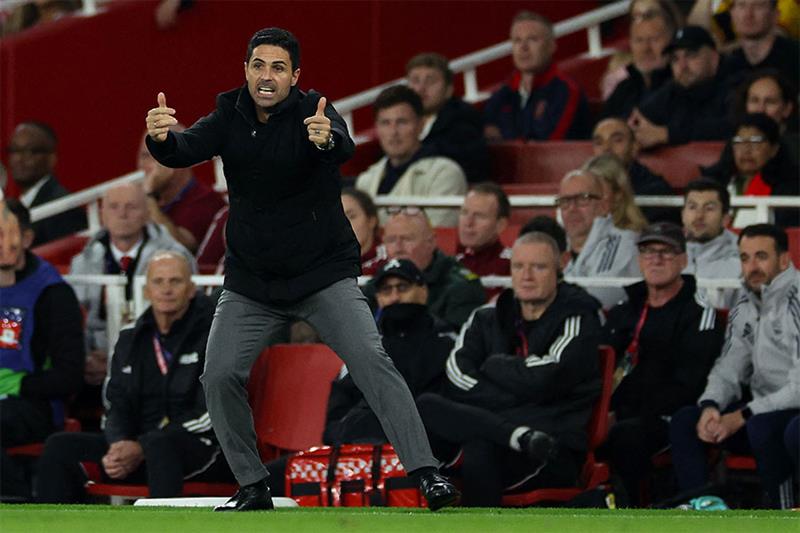
Mikel Arteta believes granting Martin Odegaard “total freedom” is unlocking the Arsenal captain’s full potential, after the Norwegian midfielder produced a commanding performance in the 2-0 Champions League win over Olympiacos on Wednesday.
Returning to the starting XI following a spell out with a shoulder injury, Odegaard wasted no time in reasserting his influence. The 25-year-old orchestrated much of Arsenal’s best play, providing the creative spark for Gabriel Martinelli’s 12th-minute opener and later supplying a deft assist to Bukayo Saka for the Gunners’ stoppage-time second.
“Martin has all the license in the world to go forward, to play with that freedom and that level of threat,” said Arteta. “It’s not just the passes — it’s the way he takes the ball, carries it, makes runs. He was really dangerous tonight. He probably should have scored as well. It’s great to have him back.”
Odegaard’s presence at the heart of Arsenal’s attack once again highlighted his importance not just as a playmaker, but as the driving force behind the team’s high-pressing approach. His vision and ability to dictate tempo were crucial in breaking Olympiacos down, while his spatial awareness continually opened opportunities for Arsenal’s rapid wide players.
Arteta praised Odegaard’s natural creativity, insisting that few players possess the same instinctive understanding of the game.
“That creativity is just who he is — it doesn’t add any pressure because it’s his nature,” Arteta explained. “Not many players can do what he does. He has total freedom from me to explore and interpret space, and he’s been doing that brilliantly in recent games.”
The Arsenal manager also pointed to the synergy between Odegaard’s playmaking and the pace offered by his front line. With Martinelli, Saka, Eberechi Eze, and Noni Madueke capable of stretching defences, Odegaard’s ability to exploit pockets of space becomes even more valuable.
With Madueke sidelined and Saka still regaining full fitness after a hamstring issue, Arteta turned to Leandro Trossard alongside Martinelli on the flanks. That depth — enhanced by a proactive summer transfer window — represents a significant evolution from the previous campaign, when injuries exposed the squad’s limitations in their pursuit of domestic and European titles.
“Last season, I was looking at the bench and we had five academy players who had never played professional football in the Champions League,” Arteta noted. “Today, I made six changes, and everyone who came in raised the level. That involvement is crucial.”
Arteta also stressed the importance of carefully managing workloads, particularly for key figures like Saka, as Arsenal aim to end their 21-year wait for a Premier League title and claim their first-ever Champions League crown.
“With Bukayo, it was about risk management,” Arteta explained. “He’s coming back from a long-term injury and played 46, 60, and 70 minutes in quick succession. We opted to start Gabby instead, and he offered a different profile and performed really well.”
Arsenal’s depth and Odegaard’s growing influence are combining to give the Gunners momentum on multiple fronts. If Arteta’s approach continues to bring the best out of his captain — and keeps his squad fresh — Arsenal look increasingly equipped to challenge at the highest level in Europe and at home.