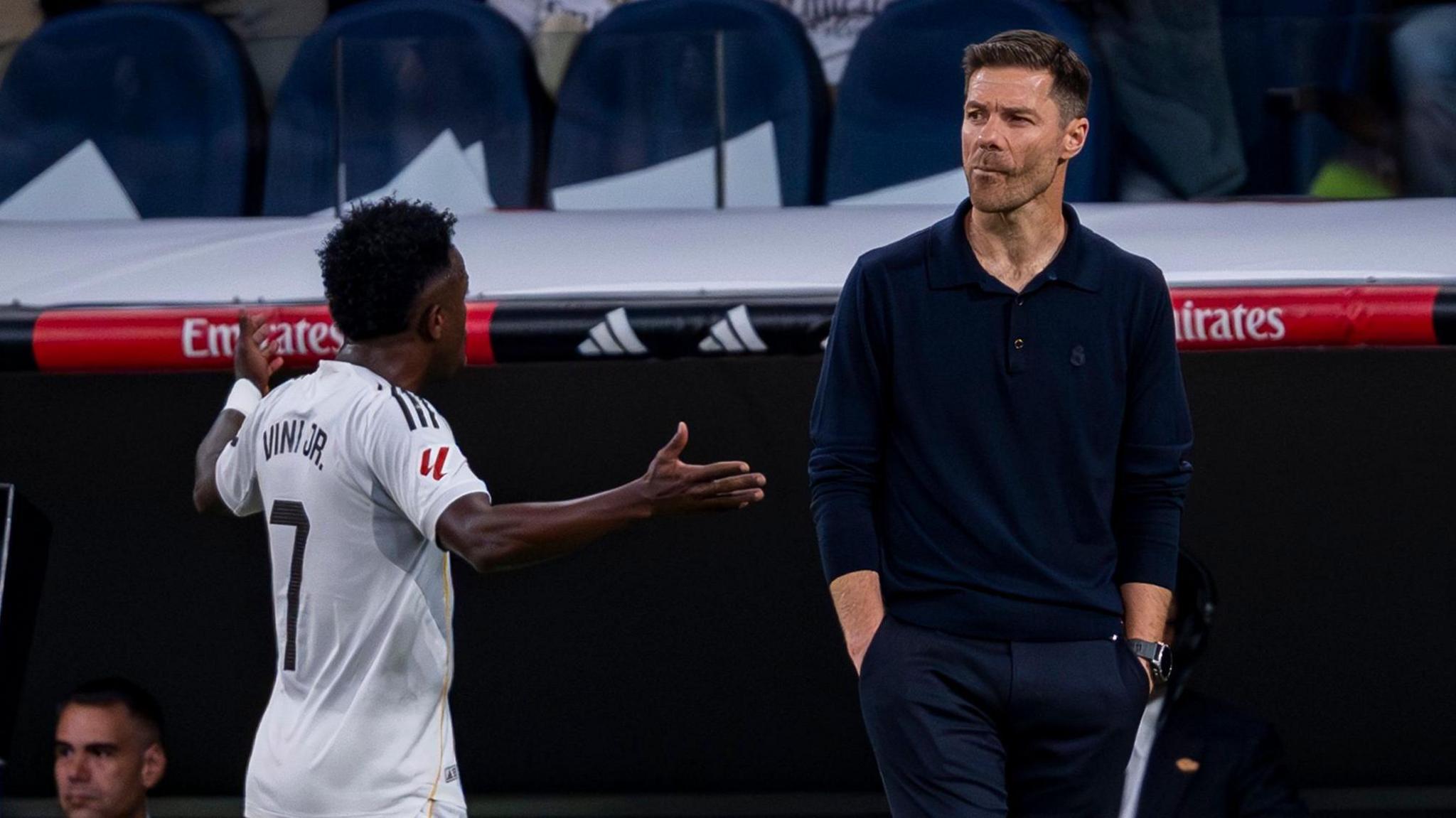
Vinicius Jr’s frustrated reaction to being substituted against Barcelona was not a declaration of rebellion or a hint at an imminent departure. Yet, it symbolised a deeper tension brewing between the Brazilian forward and his Real Madrid manager, Xabi Alonso — a dynamic that now requires careful management to prevent escalation.
In short — yes, at least he has thought about it.
When Vinicius muttered “I’m going to leave this team” as he came off during Sunday’s El Clasico victory, it wasn’t a spontaneous outburst. The thought of leaving had surfaced as early as the end of the last transfer window.
While no official offer materialised, those close to the player later admitted his frustration stemmed from emotions running high — particularly after a pre-Club World Cup dispute with Alonso.
Still, it reflects a clear shift in Vinicius’ perception of his status at Madrid. Under Carlo Ancelotti, he enjoyed creative freedom — encouraged to improvise, attack with instinct, and serve as the team’s expressive focal point. Under Xabi Alonso, the environment is more structured, defined by tactical discipline and shared responsibility.
To some within the dressing room, this new order feels restrictive. For Alonso, however, it’s essential — a non-negotiable framework aimed at restoring balance and consistency after a season of underperformance.
The relationship between Vinicius and Alonso has become tense, marked by moments of coldness and mutual frustration. The Brazilian’s apology after El Clasico notably excluded any mention of his coach, underscoring the distance between the two.
The turning point came before the Club World Cup semi-final against PSG, when Alonso informed Vinicius he would start on the bench — his first omission of the season. The forward reacted poorly, but the coach stood firm, determined to assert that no player, regardless of talent, is beyond his authority.
That stance remains. Alonso has insisted that Vinicius will not play every minute, will be rotated more frequently, and will face competition from Rodrygo on the left flank. His approach mirrors the attributes that defined him as a player — methodical, composed, and unafraid of confrontation.
For Alonso, managing Real Madrid means enforcing order, not catering to individual star power. Vinicius, on the other hand, feels stripped of the personal connection and warmth he once shared with Ancelotti — replaced instead by professional distance and rigid expectations.
Within the club hierarchy, the power balance has subtly shifted. Kylian Mbappé has become the new centrepiece of Madrid’s sporting project — and Vinicius knows it.
While senior figures insist he remains vital to Madrid’s long-term plans, his sense of importance has diminished. The club still intends to renew his contract until 2030, but discussions stalled this summer. Vinicius feels the club hasn’t adequately protected him — whether from media scrutiny, officiating controversies, or perceived underappreciation.
For now, he is unwilling to sign an extension under current conditions. If Alonso’s approach remains unyielding and substitutions continue, his hesitation will persist. Yet football is fluid — trust can be rebuilt, and a reconciliation could quickly reopen negotiations.
Vinicius’ background helps explain his reactions. Raised in São Gonçalo, a tough suburb of Rio de Janeiro, he learned to fight for respect and recognition. That upbringing shaped his resilience — and his tendency to respond sharply when he feels disrespected. Teammates describe him as impulsive but not ill-intentioned — someone who feels deeply but quickly calms down.
At present, what exists between Vinicius and Alonso is a truce, not a resolution.
The forward has apologised both publicly and privately — though not directly to his manager — and Alonso has accepted it pragmatically. The coach recognises that Vinicius’ intensity and unpredictability are assets the team cannot afford to lose, while the player understands that open conflict would damage his own standing.
Alonso will not compromise on his principles. His authority is central to the identity he’s building at Madrid. Vinicius, meanwhile, must learn to channel emotion into performance rather than frustration — a test of maturity for both.
Another high-pressure match will soon arrive, and with it, another opportunity to reset or reignite tensions. If Vinicius starts and performs, the noise will subside. If not, the issue could resurface.
For now, the club remains calm, Alonso remains resolute, and Vinicius — publicly at least — remorseful. His apology hasn’t healed the rift, but it has bought valuable time.
Real Madrid’s dressing room has survived bigger storms. This one, for the moment, appears contained but unresolved.