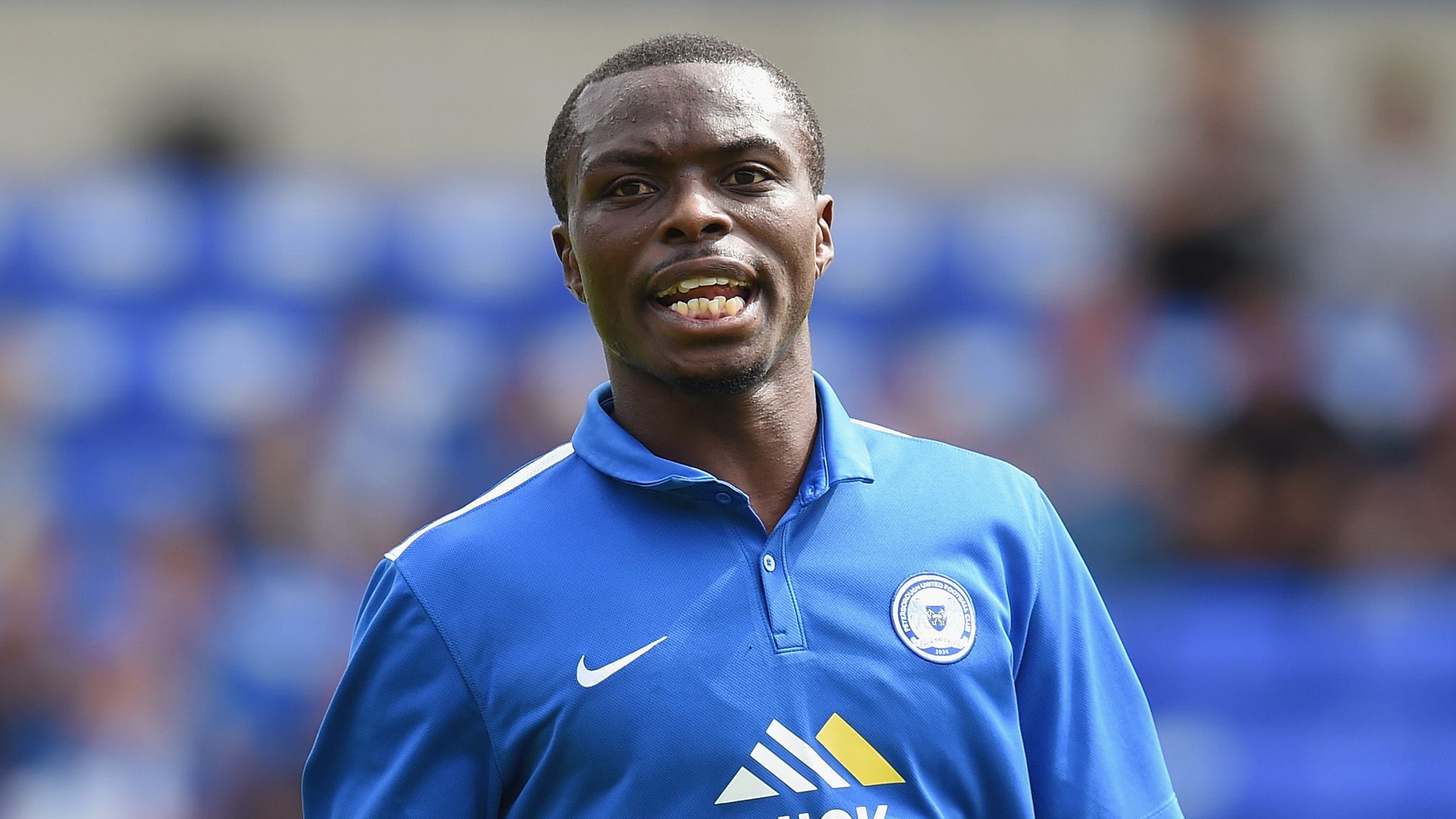
In the modern era of football, national identity is no longer defined solely by birthplace. For former Peterborough United defender Gabriel Zakuani, this complexity has become a calling — one that sees him reconnecting players of Congolese descent with their roots, and, in doing so, strengthening the Democratic Republic of the Congo’s (DR Congo) footballing future.
Born in Kinshasa (then part of Zaire) and raised in England, Zakuani has made it his mission to identify and recruit talent from the global Congolese diaspora — a community that has produced numerous elite footballers across Europe, many of whom have represented other nations at youth level.
Today, as a technical consultant for DR Congo’s national team, Zakuani’s work sits at the intersection of talent scouting, cultural diplomacy, and football development. His efforts have been instrumental in persuading high-profile players such as Aaron Wan-Bissaka and Yoane Wissa to represent their ancestral homeland.
With the Leopards preparing for a World Cup play-off semi-final against Cameroon and the Africa Cup of Nations on the horizon, Zakuani’s influence behind the scenes continues to grow.
Now 39, Zakuani’s playing career took him from Leyton Orient and Peterborough United to Gillingham, while he earned 30 international caps for DR Congo. His recruitment role began informally during his playing days — most notably when he persuaded then-Crystal Palace winger Yannick Bolasie to commit to the Congolese national team.
“It probably started while I was still playing,” Zakuani told BBC World Service. “I was convincing players like Bolasie to join us when he was being considered by England and France. I was doing the job before it even had a title.”
Despite his growing influence, Zakuani admits his work can be laborious. Without access to an official player database, he relies heavily on observation, intuition, and personal connections.
“I wish I had a database — it would make my job a lot easier,” he said. “I do my own research, watching games and looking for surnames that sound Congolese. Then I dig deeper, meet players outside stadiums, talk to them and their families — that’s how the process starts.”
His scouting extends across Europe, focusing on young prospects in England, France, Belgium, and Switzerland, where many players of Congolese heritage are based. Reports and assessments are sent back to DR Congo’s coaching staff, forming the basis for future call-ups.
Zakuani stresses that the key to recruitment often lies not with the players, but with their parents.
“The parents are crucial,” he explains. “They remember me as captain of DR Congo, which helps build trust. We talk not just about football but about politics, life — it’s a friendly, open conversation. Once the parents are comfortable, it becomes much easier to convince the player.”
That personal touch helped sway both Wan-Bissaka and Wissa, whose international decisions were far from straightforward. Wan-Bissaka received an England call-up in 2019 but withdrew through injury and later accepted DR Congo’s invitation in 2024. Wissa, born in France, chose DR Congo in 2020 after initially hesitating.
“The turning point often comes when players realise they’re not being selected for their birth nations,” Zakuani notes. “When they see that, the opportunity to represent their heritage becomes much more meaningful.”
The landscape has changed dramatically since Zakuani’s own international debut in 2005. Back then, training sessions were makeshift, with players wearing their club kits due to a lack of resources.
“Now we have everything — proper facilities, physios, and equipment,” he says. “The environment is professional, which helps attract players from Europe.”
Language barriers, once a challenge, are fading too. With many players raised in multilingual European environments, communication within the squad has improved significantly.
“Most of the players now speak two or three languages, and I speak eight myself,” Zakuani adds. “It helps massively when I’m travelling across Europe meeting potential recruits.”
DR Congo’s approach is part of a broader movement across African football. Nations like Morocco, Tunisia, Algeria, Mali, and Cape Verde are increasingly engaging with their diasporas to strengthen their squads.
“Tunisia and Mali have also appointed former internationals to similar roles,” explains Algerian journalist Maher Mezahi. “Morocco employs dedicated scouts who maintain databases of players with Moroccan heritage. Some, like Achraf Hakimi, were approached as early as 16.”
Algeria took a more grassroots route — one of their current scouts began by posting about young dual-nationality players on Facebook before being hired by the federation.
The results speak for themselves. Cape Verde, whose squad includes Dubliner Roberto Lopes, qualified for their first-ever World Cup with a team heavily drawn from the diaspora. Lopes initially ignored the coach’s approach, assuming the message — sent in Portuguese on LinkedIn — was spam. He now has 38 caps.
Ghana, too, have explored this strategy, reportedly considering call-ups for Callum Hudson-Odoi and Eddie Nketiah, both of whom have represented England at senior level.
For Gabriel Zakuani, this work is more than talent acquisition — it’s a reconnection of identity and opportunity.
“Football has become global,” he reflects. “Players can represent where they’re born or where they come from. What matters is that they feel proud of the shirt they wear.”
As DR Congo prepare for one of their most important qualification campaigns in decades, Zakuani’s influence — built on language, relationships, and trust — may well prove as crucial as any goal scored on the pitch.