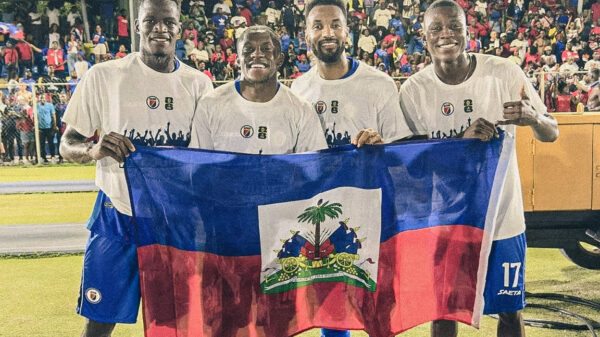
Haiti sealed a historic 2-0 victory over Nicaragua to secure only their second-ever World Cup appearance—an achievement made even more remarkable by the fact that their head coach, Sébastien Migné, has never been able to visit the country he manages.
The 52-year-old Frenchman has been unable to enter Haiti since taking the job 18 months ago due to severe security concerns. Ongoing conflict and widespread gang violence have forced the national team to relocate all home fixtures to Curaçao, roughly 500 miles away. The island, located off the Venezuelan coast, has become their de facto base as instability continues to plague Haiti.
The crisis gripping the nation is long-running and deep-rooted. Since the catastrophic 2010 earthquake, which devastated infrastructure and institutions, Haiti has spiraled into chronic instability. Armed gangs now control significant areas of the capital, Port-au-Prince, contributing to mass displacement—over 1.3 million people have been forced from their homes—and creating famine-level food insecurity. International advisories warn citizens against travel to the country due to the high risk of kidnapping, violent crime, terrorism, and civil unrest.
“It’s impossible because it’s too dangerous,” Migné told France Football, explaining why he has not been able to take up residence in Haiti. “I usually live in the countries where I work, but I can’t here. There are no more international flights landing there.”
Despite managing from afar, Migné has constructed a competitive team through remote coordination. With no opportunity to assess domestic talent on the ground, he relied heavily on communication with Haitian Football Federation officials, who supplied reports and evaluations of local players. As a result, the current squad is composed entirely of foreign-based internationals, including Wolves midfielder Jean-Ricner Bellegarde. The federation is also attempting to recruit Sunderland forward Wilson Isidor, born in France to Haitian parents.
Haiti’s triumph over Nicaragua secured their return to the World Cup for the first time since 1974. They join Panama, who defeated El Salvador 3-0, and debutants Curaçao—who qualified after a draw with Jamaica—as the Concacaf representatives heading to the 2026 tournament in the United States, Mexico, and Canada.
In their only previous World Cup appearance, Haiti were eliminated in the group stage after losses to Italy, Poland, and Argentina. Their 2026 qualification marks a significant milestone—not only for Haitian football, but for a nation striving for hope amid profound instability.