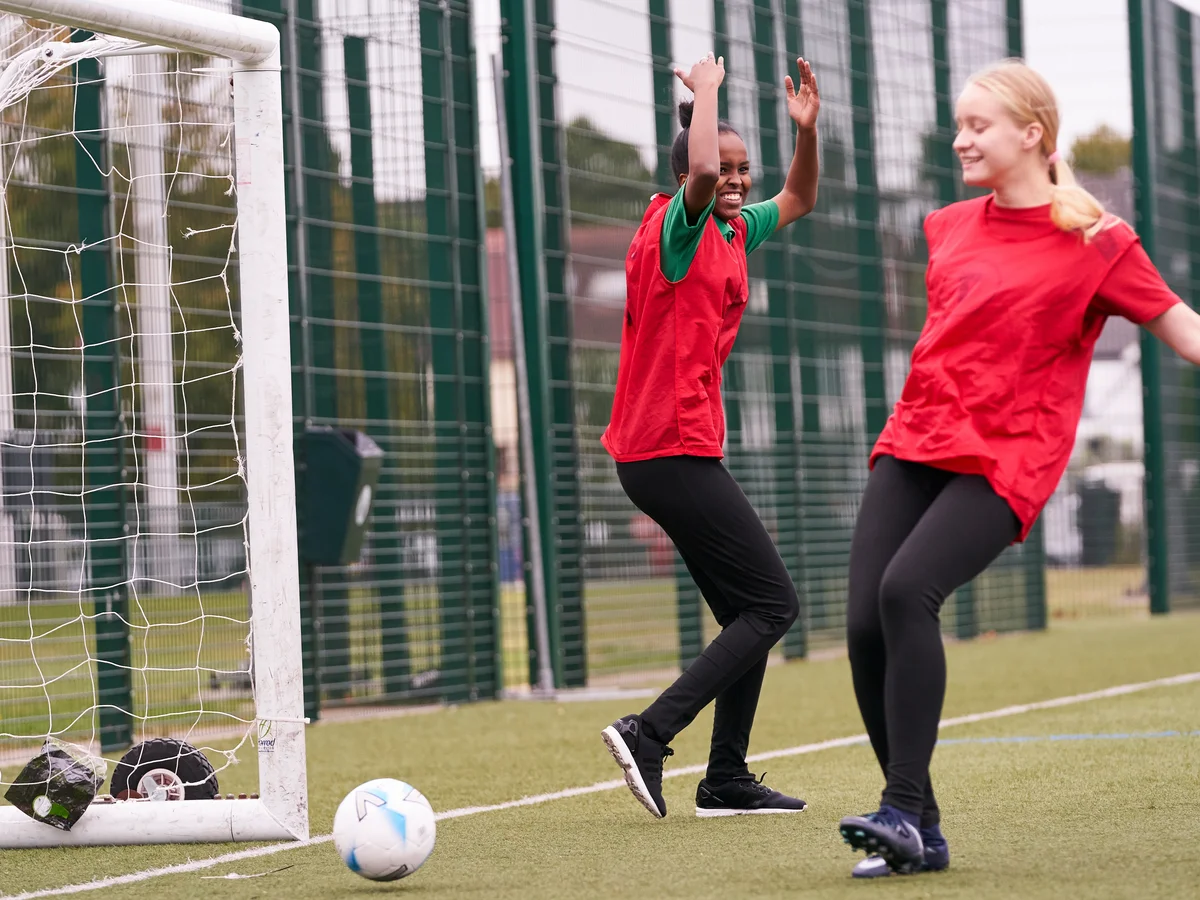
England has reached a landmark milestone in its push for gender equality in school sport, with 90% of schools now offering girls equal access to football in PE lessons—three years earlier than originally planned.
The target, set for 2028 as part of the Football Association’s (FA) long-term strategy to expand opportunities for girls and women, has been achieved thanks to rapid nationwide uptake. The Barclays Girls’ Football in Schools network, launched six years ago with just 3,000 schools, has now grown to 20,202 participating institutions.
According to the FA, 2.6 million girls currently have equal access to football through PE—representing a 31% rise since the 2020–21 academic year. The organisation attributes much of this surge to the Lionesses’ historic Euro 2022 triumph, which it says played a crucial role in shaping political momentum and influencing government policy. Following their victory, Sarina Wiegman’s squad penned an open letter to Conservative leadership hopefuls Liz Truss and Rishi Sunak, calling for “every young girl” to be given the chance to play football at school.
The FA reports that equal access has now been embedded across Key Stages 2 and 3 (ages 7–14), marking a significant step in normalising girls’ participation in football. Ambassador and former England striker Ian Wright emphasised the broader mission: “This was never about girls becoming the next Lionesses—it’s about making it normal for girls to play football, just like boys. It’s about equality.”
On the international stage, England’s women have remained highly competitive, reaching the 2023 World Cup final and later defeating Spain to retain their European title in July—further sustaining interest and investment in the women’s game domestically.
Despite the progress, the FA acknowledges challenges remain, particularly at Key Stage 4 (ages 14–16), where participation among teenage girls often declines due to factors such as confidence, body image concerns, and social pressures. The governing body has set new goals to tackle these issues and aims to increase the proportion of schools offering equal opportunities through extracurricular clubs from 83% to 90% by 2028.
FA head of development Stacey Mullock reinforced the organisation’s commitment: “No girl should ever face barriers to playing football in school. Our ambition has driven us to push for cultural change, ensuring girls have the same access and opportunities as boys.”
The achievement marks a significant stride toward embedding football as an inclusive sport for all school-aged girls in England, but the FA’s continued focus signals that the journey toward full equality is far from complete.