“London is full of people, but it can still feel lonely,” reflects Kieran Duff as he walks through Russell Square, still irritated after realising he forgot his football socks for an important match. “Hopefully someone has a spare pair.”
Inside the changing rooms, a close-knit group of Newcastle United supporters prepare in their black-and-white kits, discussing early-season losses to Juventus and Inter Milan. No one, unfortunately, has brought extra socks.
“It might sound strange, but wearing the full kit genuinely feels different,” says Newcastle Supporters’ Club captain Tom King. “Part of your brain believes you’re playing for Newcastle. It creates a connection to the club that I haven’t felt with any other team I’ve represented.”
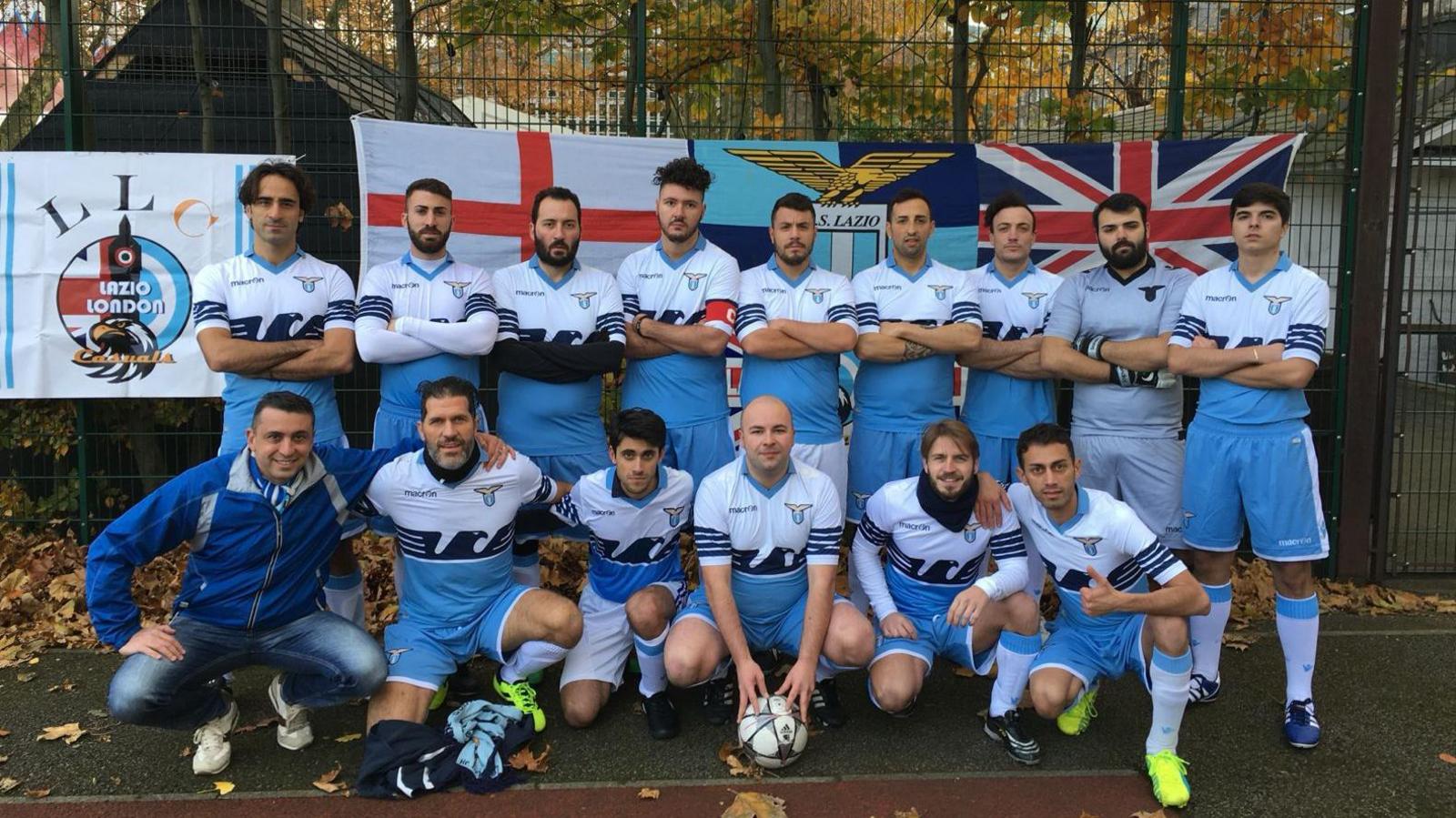
Next door, players in classic Aston Villa claret and blue warm up. The scene is set for a crisp November Sunday at Coram’s Field in central London as Newcastle face Villa in the London Supporters’ League—a competition that, on any given weekend, also features teams representing AC Milan, Fiorentina, Genoa, Lazio, Paris Saint-Germain, Real Madrid, Lyon, Roma, Monza, and Panathinaikos. All arrive fully kitted in their club’s colours.
“We won the league last season—our first title in eight years—so we added a star above our crest,” says Ludo Romagnoli, born in Modena, raised in Brazil, and later a university student in London. “Representing our club fills me with pride.”
“It’s more enjoyable playing against people who genuinely feel the badge and the colours,” adds Pedro Aguilar of Real Madrid London. “Everyone has a personal story—why they support their club, what it means to them. Meeting people from different backgrounds, seeing the same passion expressed through different teams—that’s fascinating.”
The league traces its origins to one Lazio fan missing home.
Massimiliano Ciccone was a Lazio season-ticket holder before leaving Rome in 1998. “Two years later, they won the league for the first time in nearly 30 years,” he jokes.
When Ciccone moved to London in 2013, he struggled to find somewhere to watch Lazio matches. As he eventually established a viewing spot, more expatriate fans joined him.
“I realised we weren’t alone—many people had followed their club passionately back home, even as ultras, and then lost that connection when they moved abroad,” he says. “So they tried to rebuild it here, with others who shared the same loyalty.”
Ciccone’s Lazio London Casuals soon met members of AS Roma’s UK supporters’ group, leading to the idea of a friendly derby match.
“I’ll admit, I was nervous. You don’t know how people will react,” he recalls. “It was heated, but never crossed the line. It went well enough that we said, ‘Why not do this every year?’”
That local derby inspired the creation of the London Supporters’ League. Now in its ninth season, the eight-a-side competition has expanded to 14 teams. Growth is constrained only by pitch availability, and the league deliberately excludes London clubs to ensure it remains a space for expatriate supporters to reconnect with their roots.
Ciccone and the organisers vet new teams to ensure they represent genuine fan communities. Matches are scheduled around real-club fixtures, and the league tracks scorers, individual awards, and hosts an end-of-season ceremony.
“I sometimes feel like a mini version of Gianni Infantino—trying to keep everyone happy,” Ciccone laughs. “Over time, rivalries softened as teams got to know each other. Now they’ve become friends. It’s been a real social experiment—and a successful one.”
The league’s true achievement lies in the network of friendships and belonging it fosters. That “shared passion,” as Newcastle captain King puts it, anchors many players in an often isolating city.
King joined the Newcastle United Supporters’ Club London—the London Mags—simply wanting to play football again post-pandemic. The wider group, active for 60 years and boasting 500 members, hosts darts nights, golf days, pool leagues, pub quizzes, and Christmas gatherings. Some members travel to away matches together, attend one another’s weddings, and form lifelong friendships.
“It helped me reconnect with where I’m from,” King says. “London can feel isolating without a community. Finding these lads made a huge difference. We share the same roots, the same outlook.”
For supporters who have moved from abroad, this sense of community is even more significant. “Joining the Milan team changed my life,” says Romagnoli. “Suddenly, I had a global family that loved the club as much as I did.”
Real Madrid London exemplifies that international blend.
“Our squad includes players from South Africa, India, Colombia, Ecuador, Romania, the UK, Spain—and our goalkeeper is Albanian,” says Aguilar, who grew up in Venezuela as a Madrid supporter. “We hold barbecues, celebrate birthdays. It gives people a sense of belonging—through the club, through football, through each other.”
Villa edged Newcastle 2-1 in a close contest between the only English clubs in the league.
“We had a strong squad out,” says Villa fan Lloyd Perry, who travelled more than an hour for the match. “Everyone wanted to face the Geordies.”
After the final whistle, both teams gather for a brief pitchside analysis before heading to The Dolphin Pub—a familiar post-match stop for the London Mags.
“It’s great having groups who are in the same situation as you,” says King. “There’s real camaraderie between teams.”
Inside the pub, players break down the match, swapping insights and jokes as the women’s Tyne-Wear derby plays on the big screen. Each Newcastle goal is celebrated with terrace-like passion, the transformation from player to fan complete.
Until next Sunday arrives.