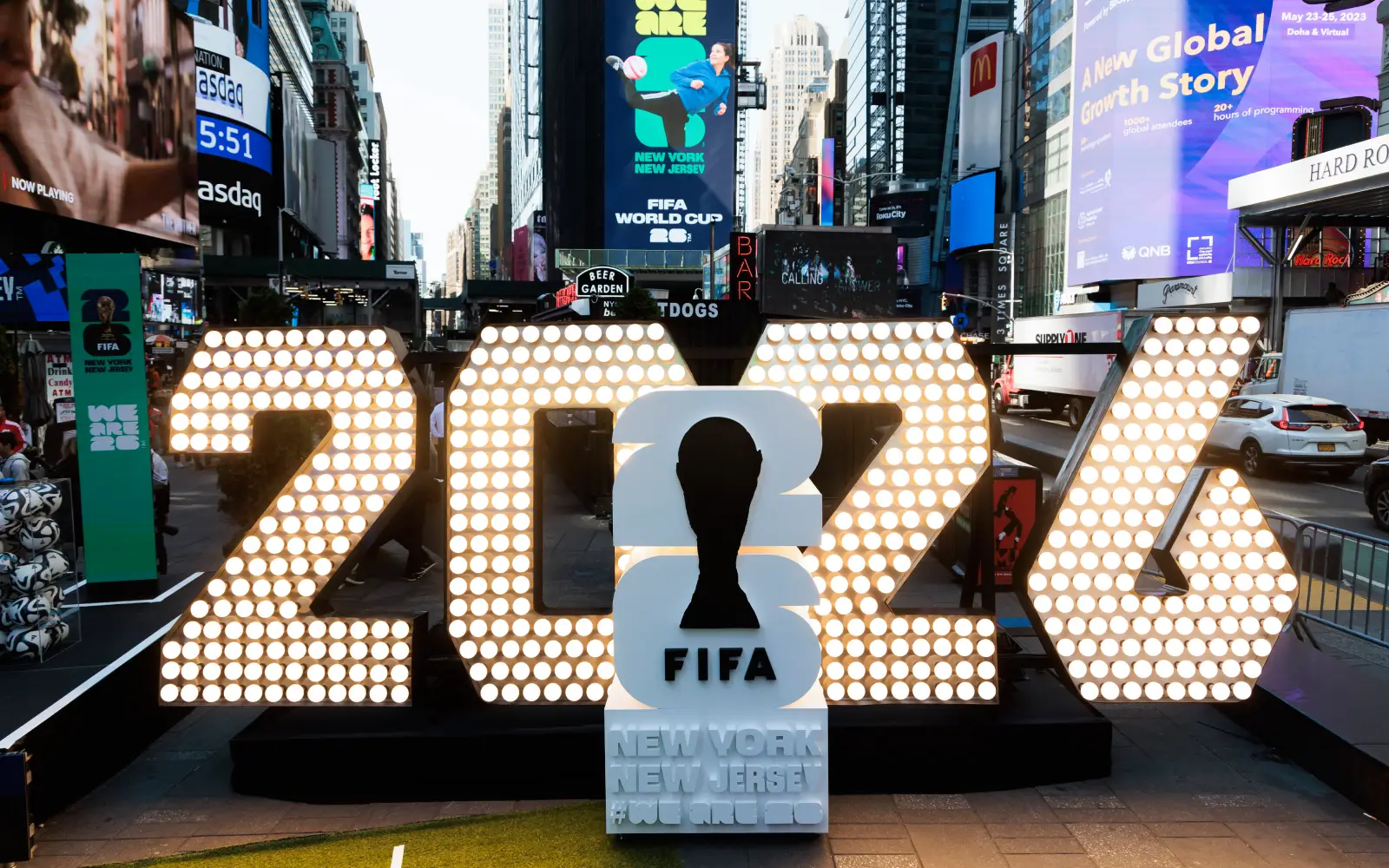
The 2026 World Cup marks the first edition staged across three nations, but unlike the United States and Mexico, Canada enters this global event without prior hosting experience. Toronto — sharing Canada’s fixtures with Vancouver — has faced a series of logistical, financial, and political hurdles in preparing for the tournament.
Challenges have included differing views with FIFA over necessary expenditures and lingering uncertainties around the hosting budget. Still, Sharon Bollenbach, executive director of FIFA World Cup 2026 in Toronto, told AFP that such obstacles were anticipated. With just over six months before kickoff, she insisted the city will be fully prepared.
“Choosing to be a host city is a big, bold decision,” Bollenbach said. “And big cities like Toronto sometimes need to make big, bold decisions — even if they aren’t universally popular.”
While most matches will take place in the United States — host of the 1994 World Cup — Canada and Mexico will each stage 13 games. Unlike its co-hosts, however, Toronto is navigating preparations for a 48-team, 104-match tournament with no historical precedent.
This unfamiliarity has created room for negotiation. Bollenbach explained that there were moments when Toronto pushed back on FIFA’s requests, citing budget limitations.
One prominent example concerned training facilities. FIFA initially required three new training pitches in Toronto, but after discussions, agreed to scale that demand back.
“If we’re building training sites, we need to ensure they’ll actually be used,” Bollenbach said. “We reduced the requirement from multiple new pitches down to one.”
Toronto will learn which national teams it will host after next week’s World Cup draw in Washington. Canadian Prime Minister Mark Carney is expected to attend, as is U.S. President Donald Trump.
Preliminary projections estimated that roughly 300,000 visitors could come to Toronto during the tournament, although those figures will be refined following the draw. Yet Bollenbach noted that actual numbers could exceed expectations if some supporters feel more comfortable travelling to Canada than to the U.S.
Although Trump stated in May that all fans would be welcome during the World Cup, analysts say his policies — particularly aggressive immigration enforcement — have negatively influenced broader tourism patterns. Tourism Economics forecast an 8.2% decline in international arrivals to the U.S. in 2025, citing deteriorating global sentiment toward American travel.
“I think that’s how people feel, even outside the World Cup context,” Bollenbach said. She added that Toronto would be “wise” to prepare for a potential influx of fans choosing Canada over the U.S.
Toronto’s World Cup matches will be held at an expanded BMO Field, home to MLS side Toronto FC. The absence of major new construction has helped control expenses, with the city’s hosting budget currently estimated at approximately CAD $380 million (USD $277 million).
However, Toronto formally committed to hosting before securing funding from the province of Ontario — a decision that continues to create uncertainty. Provincial–municipal budget negotiations, often fraught in Ontario politics, remain unresolved.
“The discussions are ongoing,” Bollenbach said. “There’s been a bit of back-and-forth behind the scenes.”
Hosting costs in Vancouver are even higher, partly due to significant renovations required at BC Place. Local businesses in the west coast city have also raised concerns over whether hotel capacity will be sufficient for the expected influx of fans.
Despite the financial and logistical hurdles, Toronto’s organizers remain confident. The path to hosting may be complicated, but the city insists it will meet the challenge — and be ready when the world arrives in June.