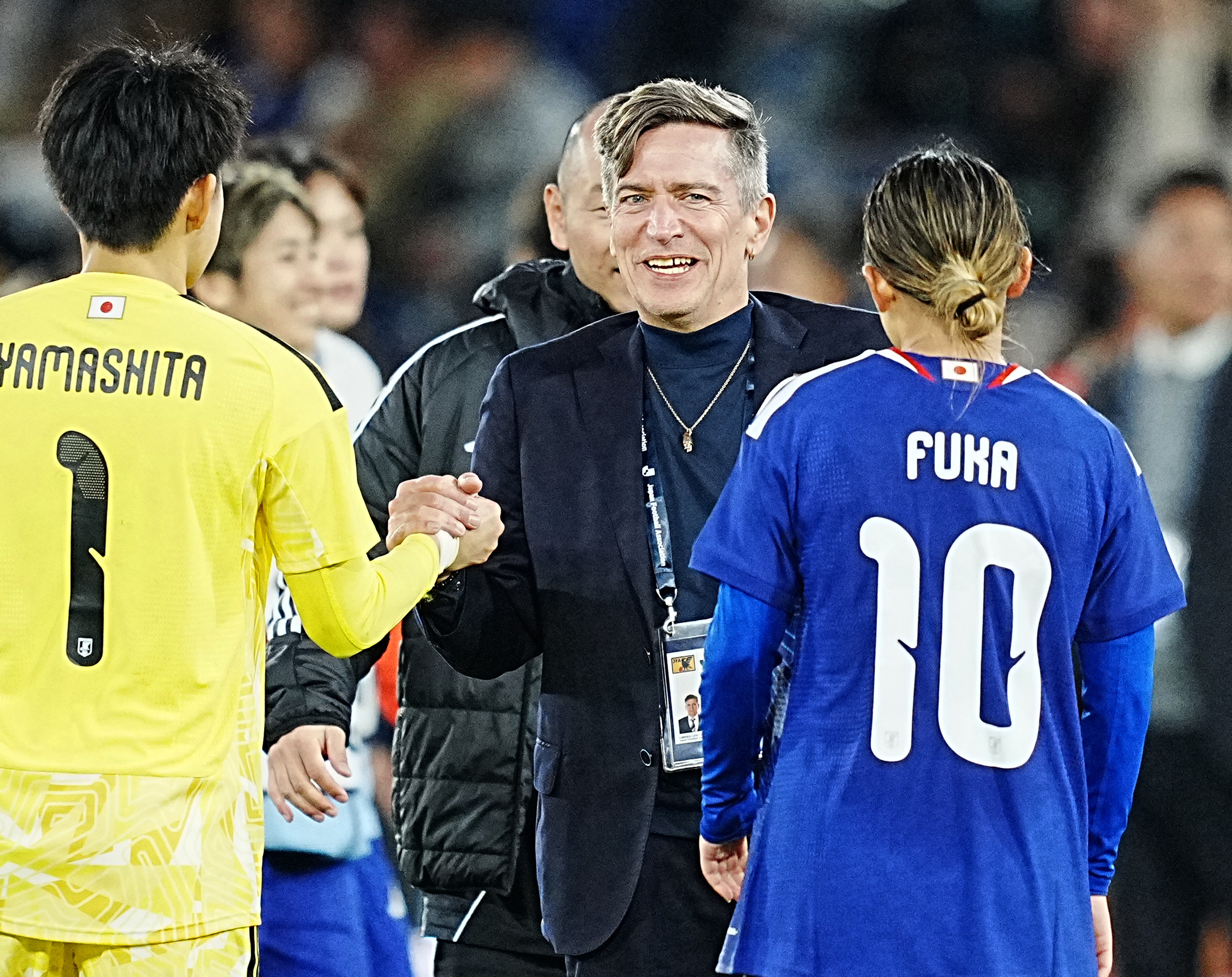
Japan head into next month’s Women’s Asian Cup with ambition and intent, as head coach Nils Nielsen declared his side are determined to “make new history” by reclaiming continental supremacy.
When Nielsen unveiled his 26-player squad on Thursday, the headline detail was clear: 16 of the selected players are based in England. The composition reflects both the globalisation of Japan’s talent pool and the increasing influence of Europe’s elite leagues on the national team’s identity.
Japan remain the only Asian nation to have won the FIFA Women’s World Cup, lifting the trophy in 2011. Yet their dominance has not extended consistently to continental competition.
Despite 20 editions of the Women’s Asian Cup, Japan have lifted the title just twice — most recently in 2018. For a nation with global pedigree, that return falls short of expectation.
Nielsen, appointed in December 2024 as the first foreign-born coach of the Japan women’s national team, believes the upcoming tournament in Australia offers an opportunity to recalibrate that narrative.
“It is not a tournament that has been easy to win for Japan historically,” said the 54-year-old. “We want to make new history. This is why we cannot be happy until we have the final prize because we have a team that can win it.”
The message is clear: this is not a development cycle — it is a competitive objective.
The squad selection underscores Japan’s evolving structure.
Sixteen players are drawn from England’s Women’s Super League and wider UK system, including:
Their inclusion highlights a team built around players accustomed to high-intensity, tactically sophisticated environments.
Veteran defender Saki Kumagai, now on 164 international caps, remains a symbolic and structural leader — the sole remaining link to Japan’s 2011 World Cup triumph.
In contrast, only four players from Japan’s domestic WE League were selected. The balance illustrates a strategic tilt toward players operating in Europe’s most competitive ecosystems, potentially prioritising tempo, physicality and tactical versatility.
Nielsen emphasised that squad construction was shaped by diversity of profile rather than replication of skill sets.
“What we ended up with was a little bit of everything, so we are pretty much prepared for every scenario. We didn’t pick so many players that are the same because when we replace a player on the pitch, we want to bring something different.”
This philosophy reflects modern tournament logic. In compressed competition formats, adaptability often outweighs cohesion alone. Tactical flexibility — the ability to shift shapes, pressing intensity or transitional emphasis — can be decisive.
Encouragingly for Japan, Nielsen confirmed injuries were not a significant factor in selection, allowing him to prioritise form and tactical suitability.
Japan have been drawn alongside Taiwan, Vietnam and India in the group stage — a section they are widely expected to navigate comfortably.
Yet Nielsen’s focus appears directed beyond the opening phase.
“I really feel that no matter what our opponents come up with, we have possible answers in our squad.”
The confidence stems not just from technical quality, but from structural depth and international experience.
For Japan, this tournament represents more than a trophy opportunity. It is a chance to reassert regional authority at a time when women’s football across Asia is growing rapidly and competitive margins are narrowing.
A World Cup champion that has underachieved, by its own standards, at continental level now seeks alignment between global status and regional dominance.
With a European-hardened core, experienced leadership and a coach unburdened by historical precedent, Japan enter the Asian Cup not as hopefuls — but as a side intent on correcting the record.
History already remembers them. The objective now is to rewrite it.