English clubs that dominated the league phase of this season’s UEFA Champions League have been handed a sobering reminder of the competition’s unforgiving knockout stage after failing to register a single victory in the first legs of the round of 16.
Several Premier League representatives now face daunting tasks in the return fixtures. Manchester City, Chelsea FC and Tottenham Hotspur all suffered heavy defeats and must overturn three-goal deficits against Real Madrid, Paris Saint-Germain and Atlético Madrid respectively, even with the advantage of playing the second legs at home.
Elsewhere, Liverpool FC and Arsenal FC remain confident of progressing despite narrow setbacks against Galatasaray and Bayer Leverkusen. Meanwhile, Newcastle United will travel to the Camp Nou with belief after matching FC Barcelona in a 1-1 draw at St James’ Park.
After overwhelming success earlier in the tournament, the opening knockout fixtures have offered a stark reality check for the Premier League’s elite.
The Premier League continues to enjoy a substantial financial advantage over rival European leagues, largely driven by lucrative global broadcasting deals. However, that economic power has not translated consistently into continental dominance.
Only three of the past 13 winners of the UEFA Champions League have come from England. Last season, Arsenal FC were the sole Premier League side to reach the semifinals, while the 2023/24 campaign saw no English clubs progress to the final four.
Scheduling has frequently been highlighted as a contributing factor. The Premier League remains the only major European league without a winter break and includes two domestic knockout competitions — the FA Cup and the EFL Cup — which significantly increase fixture congestion.
Former UEFA president Michel Platini famously described English teams as “lions in winter and lambs in spring,” a reference to their tendency to fade during the decisive months of the European calendar.
Liverpool manager Arne Slot echoed similar concerns, noting that the lack of a winter break may hinder English sides as the season progresses. Of the six Premier League clubs still involved in the Champions League, four also reached the EFL Cup semifinals and five were involved in FA Cup ties shortly before last week’s European fixtures.
While the Premier League is widely regarded as football’s wealthiest domestic competition, English clubs are not always the financial leaders in individual matchups. In three of the six round-of-16 ties featuring Premier League teams, their opponents generate greater revenue.
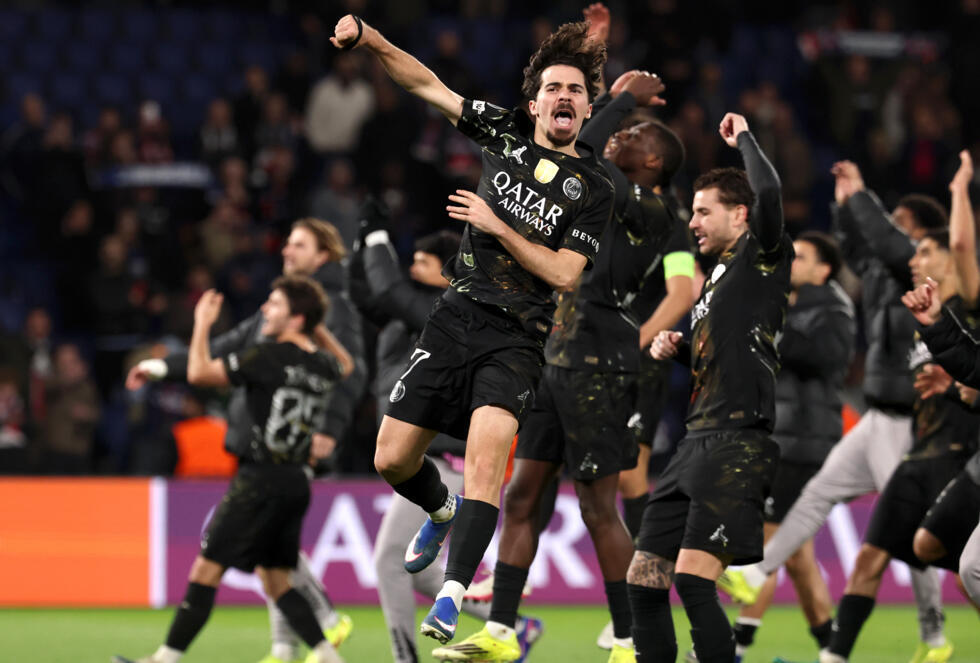
Real Madrid — widely recognised as the world’s richest club — demonstrated their pedigree by defeating Manchester City 3-0 at the Santiago Bernabéu. Similarly, reigning champions Paris Saint-Germain produced a commanding performance to beat Chelsea FC 5-2.
Barcelona were also relieved to escape St James’ Park with a draw after a late penalty from Lamine Yamal salvaged a point against Newcastle United.
For Tottenham Hotspur, a 5-2 defeat to Atlético Madrid reflected their struggles domestically, with the London side battling to maintain their Premier League status.
Manchester City manager Pep Guardiola emphasised the challenge posed by Europe’s elite clubs.
“The Champions League is incredibly demanding,” Guardiola said. “Every team is well prepared and the level of competition is extremely high.”
Another factor cited in the struggles of English teams is the increasingly physical nature of Premier League football.
Matches this season have frequently been defined by aerial duels, long throw-ins and set-piece battles, creating a relentless and physically demanding environment.
Newcastle winger Anthony Gordon previously described the league as “a running game dominated by duels,” highlighting the intense physical demands placed on players.
Slot has also criticised the growing emphasis on set-pieces in English football, suggesting the sport’s aesthetic qualities are being diminished. By contrast, officiating standards and interpretations in European competitions often differ significantly.
The Liverpool manager was frustrated during his side’s 1-0 defeat to Galatasaray when Spanish referee Jesús Gil Manzano disallowed an equaliser after judging a challenge from a corner to be overly physical — an incident that highlighted the stylistic divide between domestic and European competitions.
Guardiola has attempted to adapt to the Premier League’s evolving physical demands by building a more robust Manchester City squad. However, the trade-off has arguably reduced the technical control and possession dominance that previously defined his side, a vulnerability exposed in Madrid where Federico Valverde scored a first-half hat-trick.