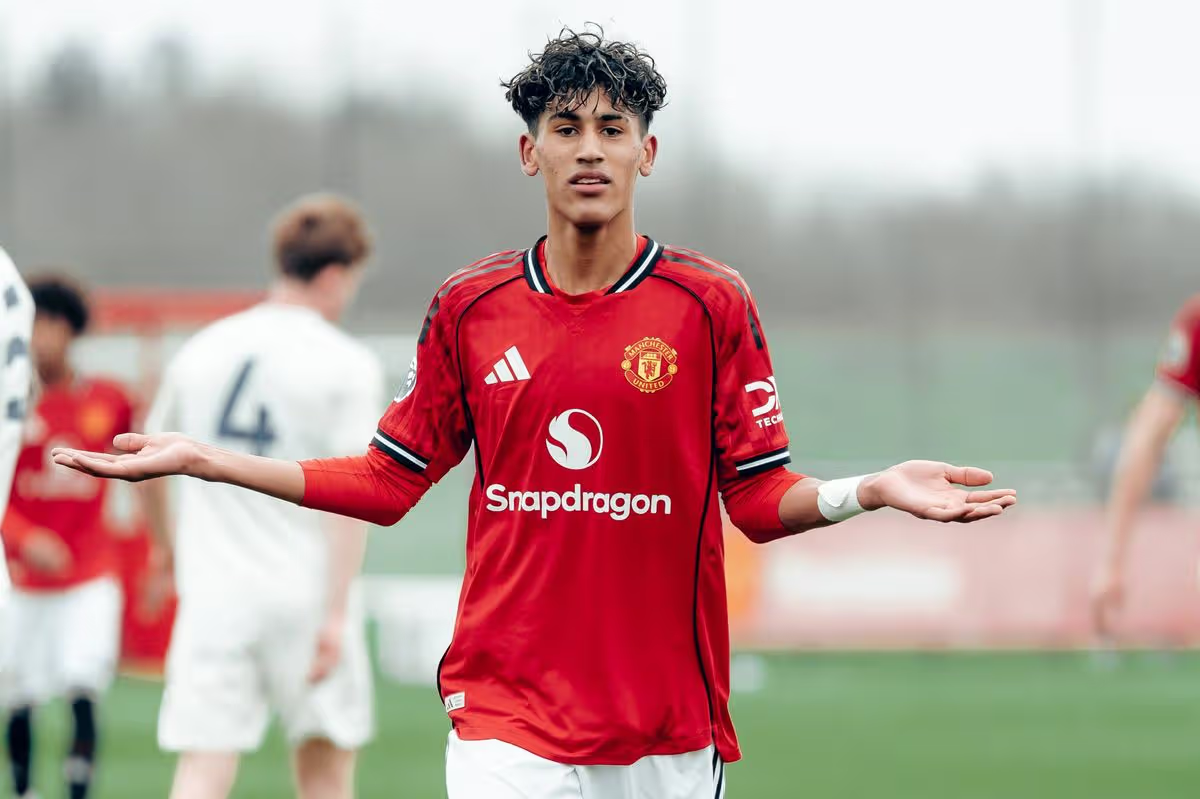
Manchester United supporters eager to catch a glimpse of rising talent JJ Gabriel will have to wait before seeing him on the Premier League stage at Old Trafford. For now, his performances remain confined to youth level — though not without growing attention.
Gabriel, who turned 15 in October, is currently ineligible for senior league action due to Premier League regulations requiring players to be 15 by 31 August of the relevant season. Despite this technical limitation, his impact at youth level has already positioned him as one of the most exciting prospects within United’s academy.
His recent appearance in a 3-2 FA Youth Cup victory over Sunderland offered further evidence of his ability. While not his most dominant display, Gabriel still delivered moments of clear quality — including a precise lay-off for Chido Obi and a decisive assist for Junior Brown. A late individual move, showcasing technical balance and control, underlined why his profile continues to rise.
The reaction from supporters — many of whom sought photos with him post-match — reflects a broader recognition of his potential. His name already carries weight within youth circles, a rare occurrence for a player still so early in his development.
Youth development environments are typically cautious when it comes to elevating individuals, but Gabriel’s trajectory has made anonymity impossible. Comparisons have naturally emerged, including parallels with Max Dowman of Arsenal, who recently made history as the league’s youngest scorer.
Manchester United have been proactive in managing both expectation and retention. High-profile moments — such as Gabriel attending senior fixtures and meeting figures like Alex Ferguson — signal the club’s intent to integrate him into their long-term vision. Senior figures including technical director Jason Wilcox played a key role in securing his commitment amid interest from top European clubs.
On the pitch, his numbers reinforce the growing hype. Gabriel currently leads the Premier League Under-18 scoring charts and has registered 10 goals in his last nine matches, playing a central role in a side competing strongly across multiple youth competitions.
Under the guidance of Darren Fletcher, Gabriel’s development has been carefully managed. Initially deployed as a false nine to maximise space and minimise physical mismatches, he is gradually adapting to a central role despite being naturally inclined to operate from wider areas.
Exposure to senior environments has already begun. Ruben Amorim was among the first to include him in first-team training sessions, while former United midfielder Michael Carrick has also acknowledged his progress.
Fletcher has consistently emphasised both Gabriel’s talent and the importance of patience, highlighting his work ethic, attitude and support system as key factors in his development trajectory.
Manchester United’s history offers perspective on early breakthroughs. Figures such as Wayne Rooney, who debuted at 16, and club record-holder David Gaskell — United’s youngest-ever player — illustrate both the possibilities and unpredictability of early exposure.
Other notable milestones include Duncan Edwards and Angel Gomes, while Norman Whiteside and Federico Macheda remain among the club’s youngest goalscorers. These precedents highlight that early debuts can signal either sustained excellence or unfulfilled promise.
Gabriel’s timeline suggests patience will be required. By the start of the 2026–27 season, he will still be just under 16, placing him on the cusp of eligibility for senior competitions such as the EFL Cup.
For now, his focus remains on youth football, where there is still significant development ahead. However, given his trajectory and the club’s strategic handling, it appears only a matter of time before he transitions to the senior stage — a moment already anticipated by those closely following his rise.