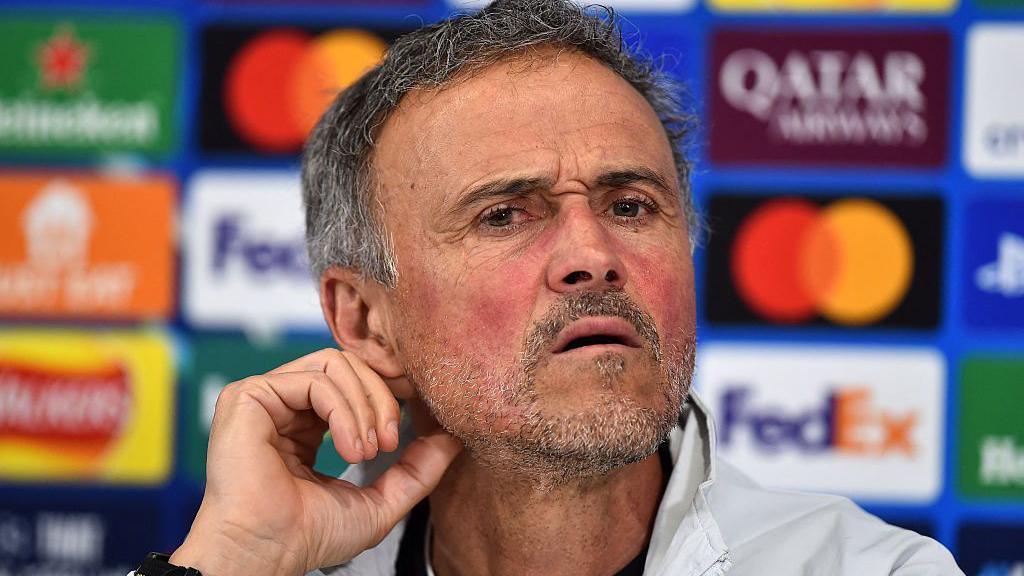
Paris Saint-Germain are once again among the favourites for the Champions League title — and this time, it’s not just about star power, but a brilliantly engineered tactical system under Luis Enrique.
The defending champions, who host Bayern Munich in Tuesday’s semi-final first leg (20:00 BST), are arguably playing their most cohesive and dynamic football yet — even compared to past squads featuring Lionel Messi, Neymar and Kylian Mbappe.
At the heart of PSG’s evolution is a clear philosophy: fluidity with structure.
Earlier this month, Luis Enrique revealed his ideal:
“It would be a dream to have 20 players who can play everywhere.”
That vision is now a reality in Paris. PSG’s system thrives on versatility, constant movement, and intelligent rotations — making them unpredictable and incredibly difficult to defend against.
While PSG’s style may look chaotic, it’s built on disciplined principles.
These are players responsible for maintaining positional stability:
Even when players rotate, these zones are always occupied — ensuring the team never loses shape.
These are PSG’s most dangerous weapons.
Operating mainly in central areas, floaters:
This blend of freedom and structure is what allows PSG to dominate elite opposition without losing control.
PSG’s movement is not random — it’s highly choreographed.
The concept of “zone replacement” is key:
Every movement has a trigger, and every player understands their role within it.
PSG’s full-backs are central to their tactical flexibility:
This constant adaptation creates overloads and confusion for opponents.
Ballon d’Or winner Ousmane Dembele is given the most freedom in Enrique’s system — and he thrives because of it.
His unpredictability forces defenders out of position, opening space for teammates making late runs — a key source of PSG’s goals.
Modern football has seen a rise in man-to-man marking, especially in leagues like the Premier League.
But PSG’s fluid movement exposes its weaknesses:
Stopping PSG isn’t just about tactics — it requires players capable of matching their intelligence, movement, and technical quality.
Luis Enrique’s system demands:
PSG’s depth allows them to rotate effectively. For example:
It’s a luxury not all rivals — including Arsenal — can afford.
This PSG side represents a shift from superstar reliance to collective brilliance.
With a perfect blend of:
Luis Enrique has built one of the most exciting and complete teams in modern football — and a serious contender to retain their Champions League crown.