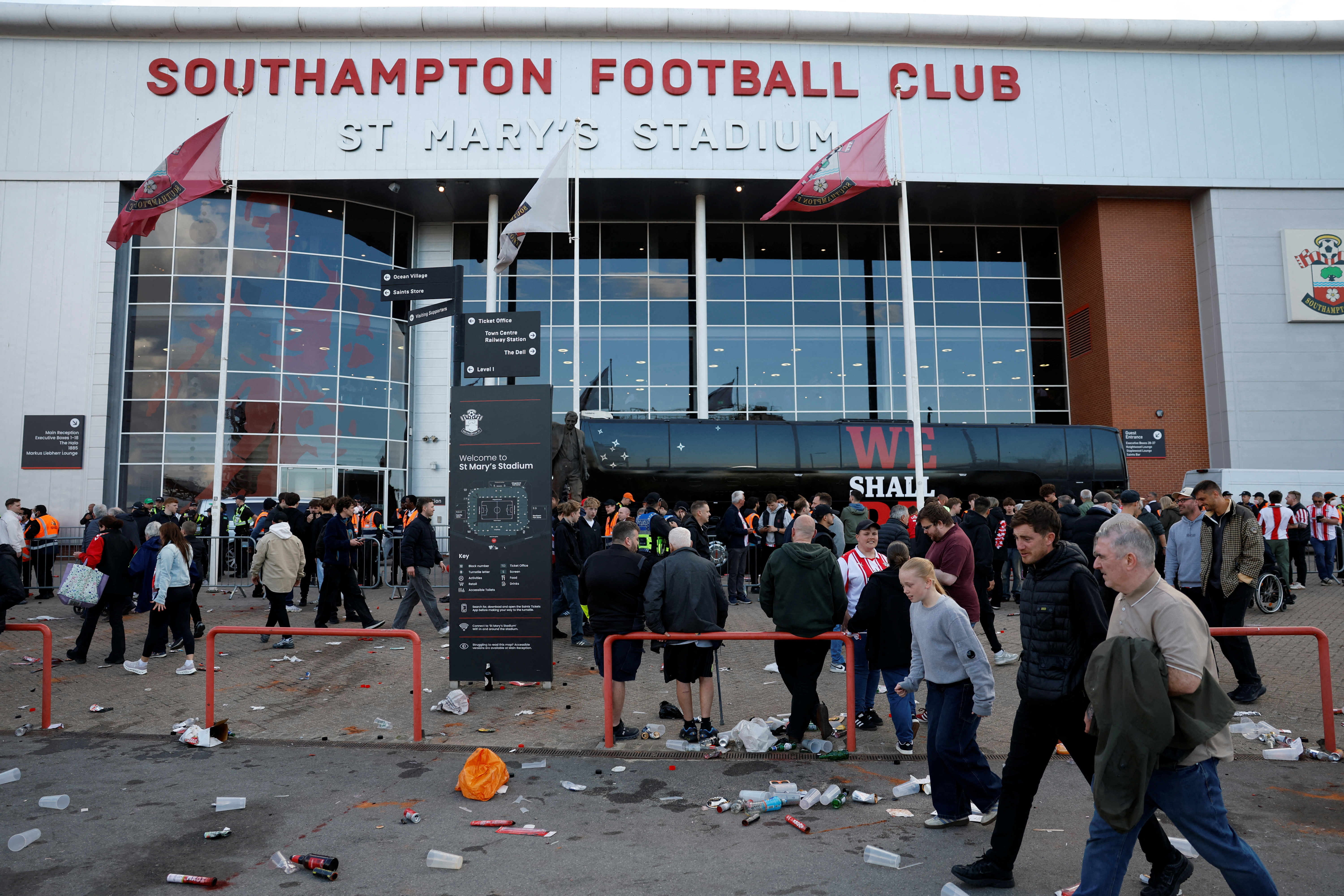
Southampton could suffer the most expensive punishment in sports espionage history after being expelled from the Championship playoff final for illegally filming rival teams’ training sessions.
The English Football League (EFL) confirmed on Tuesday that Southampton admitted to spying on opposition preparations, including those of semifinal opponents Middlesbrough, leading to their removal from the playoff final.
The decision could cost the south coast club a place in the Premier League and an estimated £200 million ($268 million) in future revenue — making it one of the harshest financial consequences ever linked to sporting espionage.
Southampton are expected to appeal the severity of the punishment, but if the ruling stands, the club will miss out on what is widely regarded as the richest match in football.
Sport has witnessed several infamous spying scandals over the years, but few have carried consequences on this scale.
One of the most notable incidents came in Formula One in 2007, when McLaren received a record $100 million fine after obtaining confidential Ferrari car design documents.
The scandal was exposed after a McLaren engineer asked his wife to photocopy the documents at a local copy shop, where a Ferrari-supporting employee alerted the Italian team.
McLaren were also stripped of all constructors’ championship points that season, while Ferrari’s Kimi Raikkonen edged Lewis Hamilton and Fernando Alonso to the drivers’ title.
In the NFL, the term “Spygate” became globally recognised after the New England Patriots were punished in 2007 for illegally filming opponents’ coaching signals during games.
The Patriots were fined $250,000, lost a first-round draft pick, and head coach Bill Belichick received a record personal fine of $500,000.
The franchise was later fined another $1.1 million in 2020 after a television crew filmed the sidelines during a Cincinnati Bengals and Cleveland Browns game.
Major League Baseball also dealt with a major spying controversy when the Houston Astros were fined $5 million for using video systems to steal opponents’ signs during the 2017 and 2018 seasons.
Although the Astros lost draft picks and saw senior staff suspended, they retained their 2017 World Series title.
Southampton’s case follows another high-profile football spying scandal at the 2024 Paris Olympics, where Canada’s women’s team staff used drones to observe New Zealand training sessions.
FIFA deducted six points from Canada during the tournament and fined Canada Soccer approximately $226,000. Head coach Bev Priestman was later dismissed and banned from football for one year for breaching fair play regulations.
Southampton’s staff had previous examples to learn from.
In 2019, Leeds United were fined £200,000 after then-manager Marcelo Bielsa admitted to sending staff members to watch opposition training sessions.
Bielsa defended the practice, insisting it was common in other countries and formed part of his preparation methods.
However, the EFL ruled Leeds had breached regulations requiring clubs to act with “utmost good faith” toward one another.
In response, the league introduced stricter rules banning clubs from observing opposition training sessions within 72 hours of a match.
It is this regulation that Southampton were found guilty of breaching.
The punishment leaves Southampton facing enormous sporting and financial uncertainty.
Promotion to the Premier League would have guaranteed the club massive broadcasting revenue, sponsorship growth and commercial opportunities.
Instead, Southampton now risk becoming the latest cautionary tale in sport’s long history of espionage scandals — and potentially the costliest.