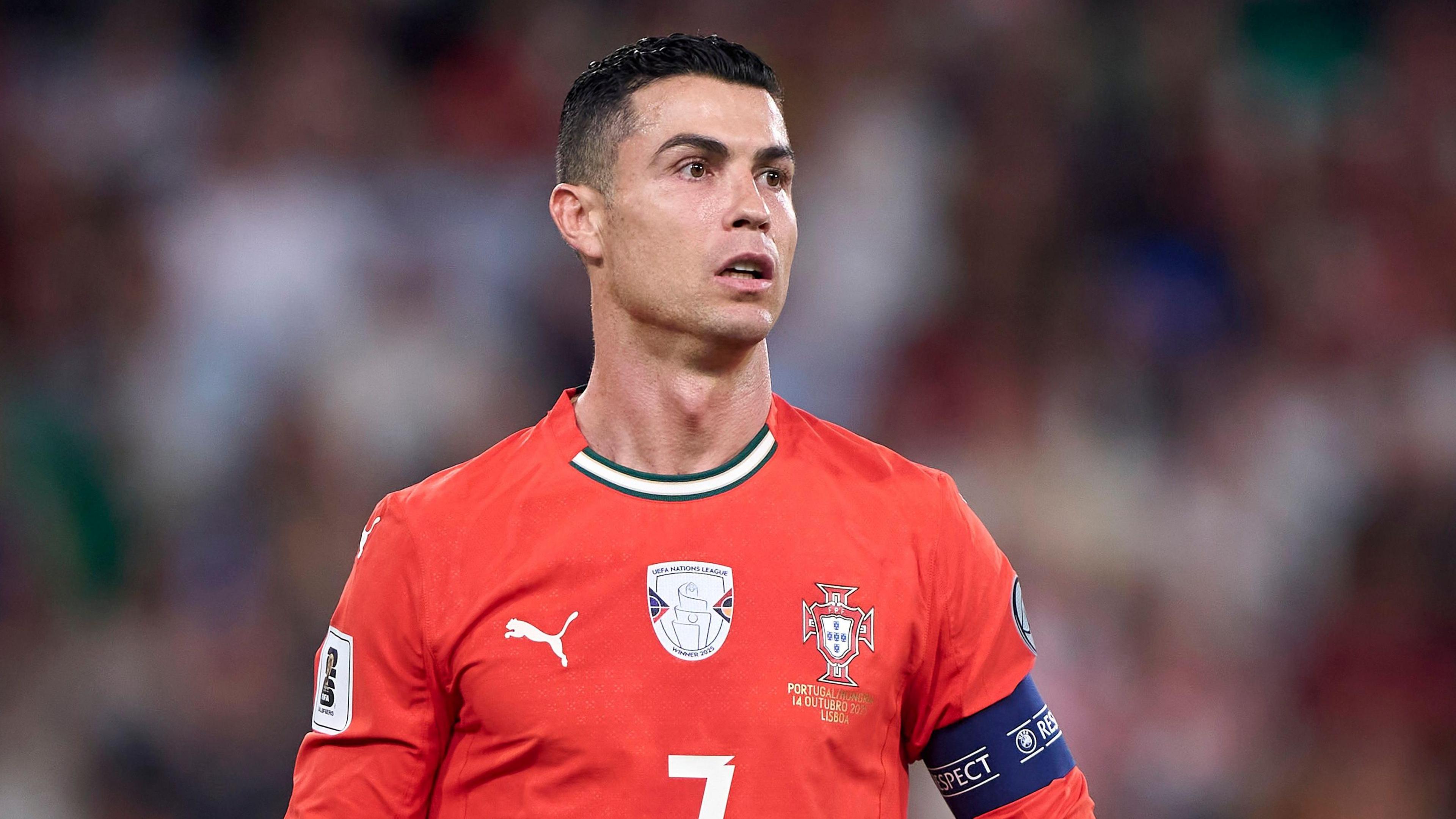
More than two decades after making his Portugal debut in an unremarkable friendly against Kazakhstan, Cristiano Ronaldo is preparing for one final World Cup appearance - and another opportunity to cement his extraordinary legacy.
When the then-18-year-old first stepped onto the pitch in Chaves on 20 August 2003, few could have imagined he would go on to become one of football's greatest players.
Yet Ronaldo now stands as international football's all-time leading scorer with 143 goals and is set to join Lionel Messi and Guillermo Ochoa as one of the few players to feature in six World Cups.
His influence on Portuguese football extends far beyond goals.
Ronaldo has transformed the mentality of a nation, helping Portugal believe it can compete with the world's elite and inspiring generations of players who followed.
Former Sporting CP and Portugal staff member Joao Aroso believes Ronaldo's impact on the country has been immense.
"Cristiano allows our small country to be recognised worldwide for something exceptional," Aroso said.
"He represents Portugal on a global stage like no one else."
Despite turning 41, Ronaldo remains central to Portugal's plans under head coach Roberto Martinez.
While debate surrounding his role has intensified since the 2022 World Cup, Martinez has consistently defended his captain, pointing to his impressive return of 25 goals in 31 international appearances during his tenure.
"We are talking about one of the greatest players in football history," Martinez has said.
"He is here because he continues to perform at a very high level."
Ronaldo has scored at each of his previous five World Cups and enters this tournament with eight goals on football's biggest stage, just one behind Eusebio's Portuguese record.
His ultimate ambition, however, remains helping Portugal lift the World Cup trophy for the first time.
Former Portugal international Abel Xavier believes Ronaldo's experience could prove invaluable.
"Cristiano understands big moments better than almost anyone," Xavier said.
"His leadership, mentality and influence on younger players make him extremely important to this squad."
Former goalkeeper Ricardo, who shared the field with Ronaldo on his international debut and now works with the national team, agrees.
"He may not have the same speed as before, but his quality and mentality remain exceptional," Ricardo said.
"He is still a player who can decide matches."
Questions over whether Portugal might function better without Ronaldo have surfaced periodically, particularly after dominant victories against Luxembourg and Armenia in matches he missed.
Some pundits argue the team should begin transitioning away from its long-serving captain.
However, Martinez has shown little inclination to move on from Ronaldo, who has featured in the vast majority of Portugal's matches since the Spaniard took charge in 2023.
The prospect of life after Ronaldo is already being discussed within Portuguese football.
The Portuguese Football Federation has insisted it is preparing for the future while acknowledging the unique relationship between the player and the national team.
Federation president Pedro Proenca recently stressed that Ronaldo's eventual departure will be a natural transition rather than a crisis.
"Cristiano will always be linked to Portugal and its football history," Proenca said.
"The federation is preparing for the future, but his importance to the game in our country is undeniable."
For now, though, those conversations can wait.
As Portugal prepare to begin their World Cup campaign against DR Congo on 17 June, Ronaldo remains the face of the nation and the focal point of their ambitions.
Twenty-three years after his debut, one final World Cup journey awaits.
Whether it ends with the trophy he has always chased remains to be seen, but Ronaldo's place in football history is already secure.