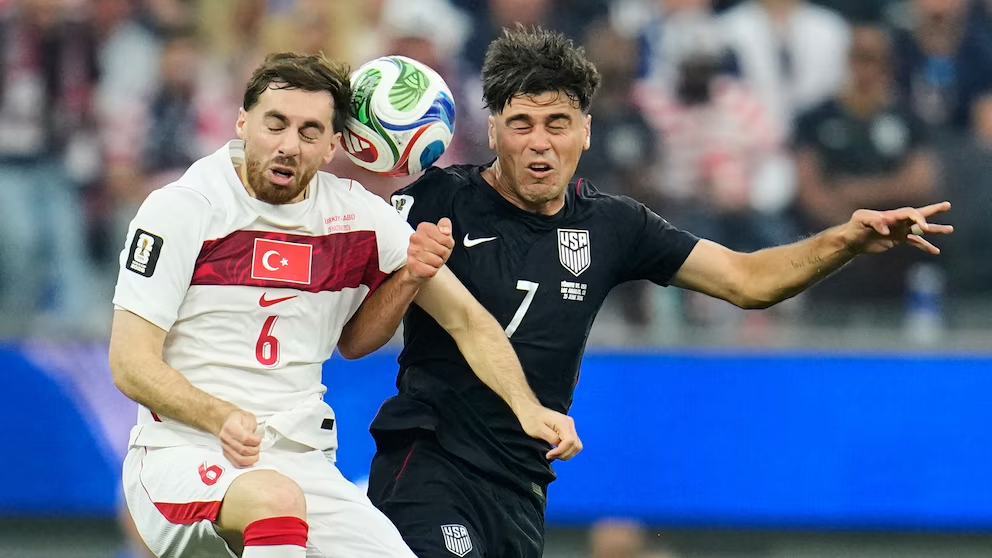
Turkey secured a 3-2 victory over the United States in what the statistics confirm was a closely matched FIFA World Cup encounter. The margin of victory was narrow, and the xG figures — 1.88 for Turkey and 2.05 for the USA — underline just how fine the margins were across the full 90 minutes. Despite being outshot 18 to 9 on the day, Turkey were clinical when it mattered, converting three of their nine attempts while the USA's superior volume of chances ultimately went unrewarded in the decisive moments.
The opening exchanges set the tone for a contest defined by contrasting styles. Turkey were direct and purposeful in the first half, striking twice before the half-hour mark and threatening a third before the interval. The USA, meanwhile, carried the ball well and dominated possession in the opening 45 minutes with 58% of the ball, but their xG of just 0.70 in the first half tells the story of a team that moved the ball without consistently threatening the Turkish goal in meaningful ways. The two big chances apiece in the first half felt broadly equal on paper, but Turkey's finishing was sharper.
The second half produced a significant tactical shift. The USA grew into the game considerably, posting an xG of 1.34 in the second period compared to Turkey's 0.18. They generated two big chances to Turkey's one, fired ten shots to Turkey's four, and won four corner kicks to none. The Americans pressed higher and moved the ball with more urgency, and that pressure produced S. Berhalter's goal on 49 minutes to reduce the deficit. Yet Turkey held firm, defending their lead with organisation and discipline, and Kaan Ayhan's 90th-minute goal — the decisive third — put the result beyond doubt.
The final scoreline of 3-2 reflects a game in which Turkey were more efficient in front of goal despite facing a USA side that was arguably the more active attacking force across the full 90 minutes. Turkey's goalkeeper made five saves in total — three in the first half and two in the second — and those interventions were crucial in protecting a lead that was never entirely comfortable. This was a result built on defensive resilience, early goals and clinical finishing rather than territorial dominance, and Turkey will take considerable satisfaction from that.
Turkey's performance was defined by their ability to exploit moments of quality early in the match and then manage the game intelligently from a position of strength. They went ahead inside ten minutes through Arda Güler's goal, added a second through Burak Abdülkadir Yılmaz on 31 minutes, and although they allowed the USA back into the contest, they never truly lost control of the game's fundamental shape. Their 47% possession across the full match is not a concern in isolation — it reflects a side that was willing to let the USA have the ball in non-threatening areas and defend compactly.
In the first half, Turkey's xG of 1.70 from just five shots is a remarkable figure and speaks to the quality of the chances they created. Two big chances in the opening 45 minutes were converted into two goals, and the Turkish attacking players demonstrated the kind of composure in front of goal that separates efficient sides from merely active ones. Güler's early goal on ten minutes was particularly significant — scoring so early in a World Cup fixture can fundamentally alter the dynamic of the match, and Turkey used that advantage to dictate the tempo of the opening period.
Defensively, Turkey's goalkeeper was the busiest player on the pitch, making five saves in total. That figure is high, and it reflects the genuine pressure that the USA applied — particularly in the second half. Turkey conceded 18 shots and nine corners, and the fact that they limited the USA to just two goals from that volume of attacking play is a credit to their defensive organisation as a collective unit. The back line held its shape under sustained second-half pressure, and when the USA did find space, the goalkeeper was equal to the task on multiple occasions.
Kaan Ayhan's goal in the 90th minute was the defining moment of Turkey's evening. Going into the final minute with a one-goal lead, the pressure from the USA was considerable, and a late equaliser would have been a significant blow. Instead, Turkey broke forward and Ayhan converted to make it 3-2, effectively ending the contest. It was the kind of goal that reflects a team's character — finding a third when they could have sat back and tried to absorb pressure — and it confirmed that Turkey were not simply hanging on but remained a genuine attacking threat throughout the match.
The United States will leave this fixture frustrated, and the statistics provide a clear basis for that frustration. They outshot Turkey 18 to 9, won nine corners to Turkey's two, held 53% possession across the full match, and generated an xG of 2.05 — marginally higher than Turkey's 1.88. By almost every volume-based metric, the USA were the more active side, yet they scored only twice and left with a defeat. The efficiency gap between the two sides was the decisive factor in this match.
In the first half, the USA's possession dominance — 58% — did not translate into meaningful pressure. Their xG of 0.70 from eight shots in the opening 45 minutes reflects a team that was moving the ball but not creating high-quality opportunities with sufficient regularity. The two big chances they had in the first half were not converted, and going into the break two goals down meant the USA faced a significant task in the second period. The fact that their goalkeeper was not called into action once in the first half — making zero saves — tells its own story about where the danger was coming from in the opening 45 minutes.
The second half was a markedly different story. The USA posted an xG of 1.34 in the second period, generated two big chances, had ten shots, and won four corners. S. Berhalter's goal on 49 minutes was the catalyst for a sustained period of American pressure, and there were moments when an equaliser looked possible. The USA's goalkeeper made just one save across the entire match — a reflection of how little Turkey threatened in the second half — while the Americans kept pressing forward. However, the inability to convert the big chances that came their way in the second half proved costly.
For the USA, the lesson from this match is one of clinical finishing. Generating 18 shots and four big chances against a well-organised Turkey side is no small achievement at this level, and the underlying numbers suggest they were not as outclassed as the scoreline might initially imply. However, World Cup football is ultimately decided by goals, and the USA's single save conceded against Turkey's five saves faced tells the story of two sides at different ends of the efficiency spectrum on this particular evening. The performance contains enough positives for the coaching staff to work with, but the result is a difficult one to absorb.
The match burst into life almost immediately, with Alp Trusty putting the USA ahead inside three minutes. It was a remarkable opening to the contest — the Americans, who would go on to dominate possession in the first half, made the most of an early opportunity and looked to have set the tone for a positive evening. However, the lead lasted just seven minutes. Arda Güler equalised for Turkey on ten minutes, and that goal fundamentally changed the complexion of the match. Turkey had absorbed the early USA pressure, responded with a goal of their own, and from that point forward they began to assert themselves.
The period between the tenth and 31st minutes saw Turkey grow in confidence and the USA struggle to recapture the initiative. The Turkish midfield began to control the tempo more effectively, and when Burak Abdülkadir Yılmaz scored on 31 minutes to make it 2-1, it felt like the culmination of a sustained period of Turkish dominance. At that stage, Turkey had scored twice from five first-half shots, converting their opportunities with a ruthlessness that the USA had not managed from their own early chances. The USA's eight first-half shots produced just the one goal — Trusty's opener — while Turkey's five produced two.
The second half opened with the USA on the front foot, and they reduced the deficit almost immediately. S. Berhalter's goal on 49 minutes — just four minutes after the restart — gave the Americans renewed belief and set up what became an increasingly tense final 40 minutes. The USA's second-half statistics reflect a team that pushed hard for an equaliser: ten shots, four corners, an xG of 1.34. Yet Turkey's defensive structure held, and the goalkeeper made two crucial saves in the second period to keep the USA at bay. The one-goal margin entering the final stages of the match remained precarious for Turkey.
The contest was settled in the 90th minute when Kaan Ayhan scored Turkey's third goal to make it 3-2. It was a goal that arrived against the run of play in the second half — Turkey's xG of just 0.18 in the second period confirms they were not creating chances freely after the break — but it was a goal that came at the perfect moment. The USA, who had been pressing for an equaliser and had generated genuine opportunities to level the scores, were instead punished on the counter. Ayhan's late strike was Turkey's fourth shot of the second half and their most significant, and it confirmed a victory that was built on first-half efficiency and second-half defensive resilience.
S. Berhalter was named the top performer in this match with a rating of 8.3, and the statistics he accumulated across 92 minutes on the pitch provide a compelling case for that recognition. He scored one goal and registered one assist, contributing directly to both of the USA's goals in a match where his side were ultimately on the losing side. The fact that he earned the top player award despite being on the losing team speaks to the quality of his individual contribution in a match where the collective effort fell just short.
Berhalter's passing numbers were particularly impressive. He completed 51 of 60 attempted passes — an accuracy rate of 85% — in a match where the USA's total of 471 passes reflected a team that was comfortable moving the ball. His 85 touches placed him among the most involved players on the pitch, and that level of engagement across 92 minutes suggests he was a consistent presence in the USA's build-up play rather than an intermittent contributor. For a midfielder operating in a World Cup fixture against a well-organised Turkish side, those are substantial numbers.
His goal on 49 minutes was the most significant moment of his personal contribution. Coming just four minutes into the second half, it immediately altered the dynamic of the match and gave the USA a genuine platform to push for an equaliser. The timing of the goal was important — it came at a point when the USA needed to respond quickly after the break, and Berhalter delivered. His assist, which contributed to one of the USA's other goals, further demonstrates his involvement in the team's attacking play and his ability to both score and create at this level.
What makes Berhalter's performance particularly noteworthy is the context in which it occurred. The USA were two goals down at half-time, and the task of recovering from that position against a Turkish side that had been clinical in the first half required individual players to step up and take responsibility. Berhalter did exactly that — his goal immediately after half-time set the tone for the USA's second-half recovery, and his consistent involvement in the build-up play throughout the match gave his side a focal point in midfield. The 8.3 rating reflects a player who performed at a high level in a difficult match, even if the collective result did not go his team's way.
This result carries meaningful implications in the context of the FIFA World Cup. For Turkey, a 3-2 victory is three points that will strengthen their position in the competition and build momentum at a tournament where confidence and winning habits matter enormously. The manner of the victory — coming from behind early on, holding a lead under sustained second-half pressure, and then adding a third late on — demonstrates a resilience and mental fortitude that will serve them well in subsequent matches.
For the USA, this defeat is a setback that complicates their path through the tournament. Losing at this stage of a World Cup, particularly when the underlying statistics suggest they were not outplayed across the full 90 minutes, is a difficult outcome to process. The xG figures — 2.05 for the USA versus 1.88 for Turkey — and the shot count of 18 to 9 in the Americans' favour suggest that this was a match they were capable of winning. However, results at major tournaments are determined by what actually happens, not by what the numbers suggest should have happened, and the USA now face the prospect of needing positive results to advance.
Turkey's ability to win a match in which they were outshot so significantly is a noteworthy achievement in World Cup terms. Sides that can win when they are not the dominant attacking force tend to be difficult to eliminate from tournaments, because they can adapt their approach based on the opposition. Turkey's first-half efficiency — scoring twice from five shots with an xG of 1.70 — combined with their second-half defensive discipline represents a tactical flexibility that will concern future opponents who study this match carefully.
The broader World Cup picture will be shaped by results across other fixtures in the competition, but Turkey's three points here represent a significant step in establishing themselves as a credible force in the tournament. Their goal difference — three scored, two conceded — is healthy, and the fact that they scored in the 90th minute suggests a squad with the fitness and determination to compete for the full duration of matches. For the USA, the challenge now is to respond, and the manner in which they do so will define how their World Cup campaign is ultimately remembered.
Turkey will take considerable encouragement from this result as they look ahead to their remaining fixtures in the competition. The ability to score early, manage a lead and then add a late third goal when under pressure are qualities that tend to define successful World Cup campaigns. Arda Güler's early goal, Yılmaz's second before half-time and Ayhan's late clincher represent a goal-scoring contribution spread across the squad, which is a positive sign for a team that will need multiple contributors to progress deep into the tournament. The coaching staff will be pleased with the first-half performance in particular, where the xG of 1.70 from five shots reflected clinical, purposeful attacking play.
The areas for concern for Turkey are primarily defensive. Conceding 18 shots, nine corners and an xG of 2.05 while requiring five goalkeeper saves to see out the match suggests that their defensive structure — while ultimately effective — was tested more than they would have liked. Future opponents of higher quality may punish the spaces that the USA found in the second half more consistently, and Turkey's coaching staff will need to address the drop-off in defensive solidity between the first and second halves. The transition from a 1.70 first-half xG conceded to a 1.34 second-half xG conceded — while the figures are reversed for Turkey's own attacking output — reflects a team that became more passive after building their lead.
For the United States, the task ahead is clear. They need to win their next fixture to remain in a strong position in the competition, and the performance here — despite the defeat — provides a foundation to build upon. The second-half display in particular, where they generated 10 shots, four corners and an xG of 1.34, shows that this is a team capable of applying sustained pressure at World Cup level. S. Berhalter's individual performance demonstrates that they have quality in midfield, and the coaching staff will be encouraged by the USA's ability to create chances against a well-organised opponent.
The narrative implications of this result extend beyond the immediate standings. Turkey have announced themselves as a team with genuine tournament credentials — efficient, organised and capable of winning matches when not at their dominant best. The USA, meanwhile, face a defining moment in their World Cup campaign. How they respond to this defeat will tell us a great deal about the character and depth of their squad. Both sides have shown enough quality in this fixture to suggest they are capable of producing strong performances in what lies ahead, but it is Turkey who depart with the points and, perhaps more importantly, with the belief that comes from winning a closely contested World Cup match.