The expanded 48-team FIFA World Cup has delivered its fair share of shocks, with several lower-ranked nations proving they can compete with football's elite.
Cape Verde (64th), Curacao (81st), Ghana (65th) and South Africa (54th) have all claimed valuable results against higher-ranked opponents including Spain (3rd), Ecuador (29th), England (4th) and South Korea (28th).
Rather than relying on luck, these performances have been built on intelligent tactics, disciplined defending and clinical execution. Here's why the underdogs are making such a strong impact.
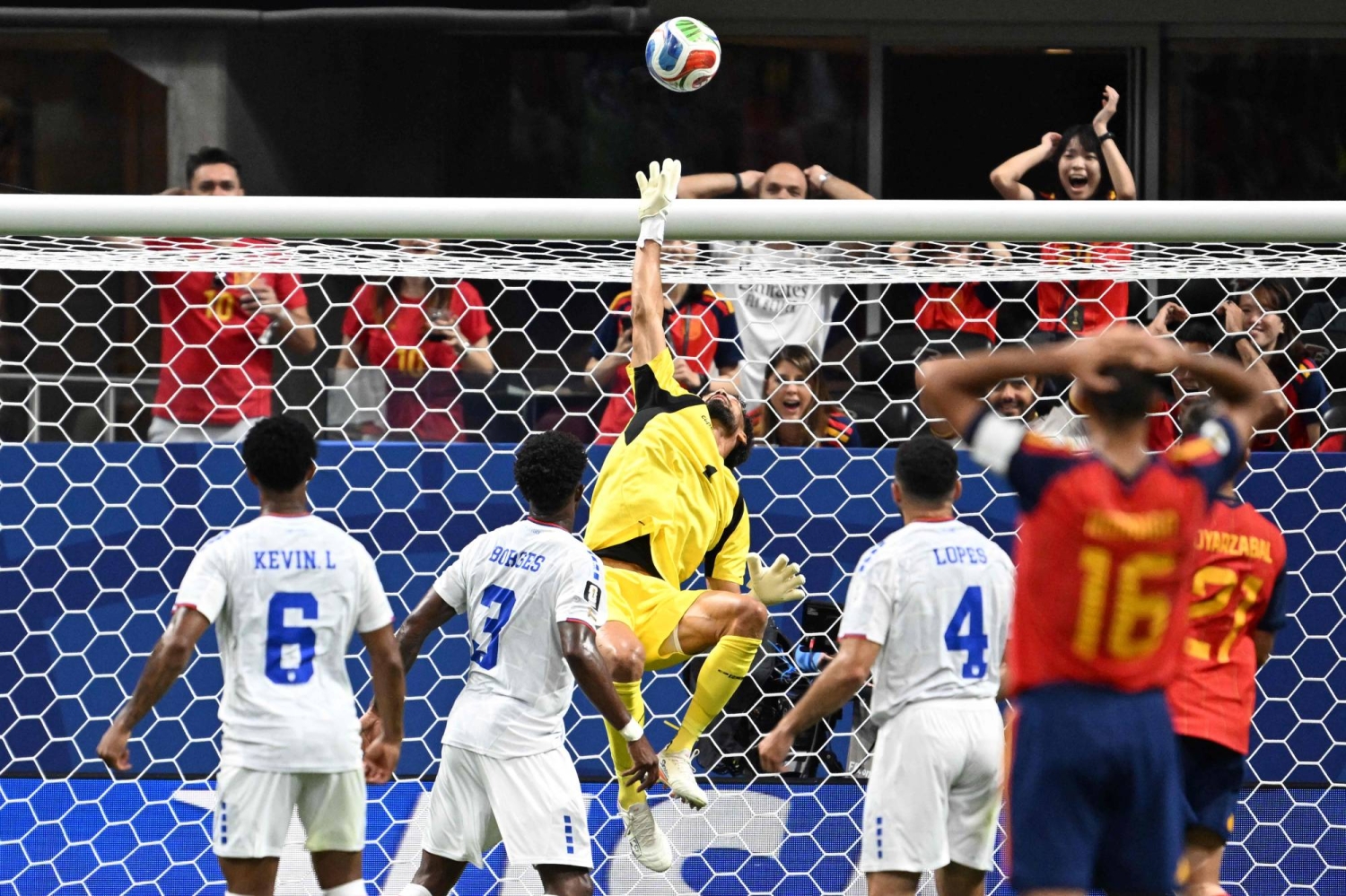
Cape Verde's goalless draw with Spain was arguably the tournament's standout tactical performance.
Operating in a disciplined 4-5-1 formation, Cape Verde kept the distance between their midfield and defence extremely compact, denying Spain the space they thrive in.
Spain repeatedly attempted to lure their opponents out by recycling possession backwards, but Cape Verde refused to press unnecessarily. Even when Spain's defenders carried the ball forward, Cape Verde maintained their shape until the final moments before engaging.
Unable to play through the middle, Spain were forced into wide areas or hopeful balls over the top, significantly limiting their attacking threat.
Ghana employed a similar strategy against England.
Thomas Tuchel's England often invite pressure before attacking the spaces left behind, but Ghana refused to be drawn out. Jordan Ayew pressed high to mark Elliot Anderson, while the rest of the side stayed compact in two disciplined defensive lines just outside their penalty area.
The numbers underline this approach.
Cape Verde recorded a PPDA (Opposition Passes Per Defensive Action) of 51.2 compared to Spain's 5.9, highlighting just how little they pressed.
Ghana's PPDA reached 62 during the opening 15 minutes against England, further illustrating their patient, low-pressure approach.
Both teams only increased their pressing late in matches as they searched for winning opportunities.
While compact defending has helped several underdogs, simply packing defenders behind the ball is not enough.
Saudi Arabia's defeat to Spain exposed the dangers of a poorly organised low block.
Despite using five defenders, Saudi Arabia repeatedly shifted too aggressively towards the ball, leaving large spaces on the opposite flank.
Spain exploited those gaps by switching play quickly, repeatedly creating two-on-one overloads involving Lamine Yamal and Pedro Porro.
That tactical imbalance directly led to Spain's third goal, with Porro finding space to cross for Mikel Oyarzabal after Saudi Arabia failed to cover the weak side.
Sweden suffered similar problems during their 5-1 defeat to the Netherlands.
Using a 5-3-2 formation, Sweden's three-man midfield struggled to protect the full width of the pitch.
The Dutch consistently overloaded Sweden's left side, with Denzel Dumfries making dangerous runs from deep that went untracked.
Only after switching to a 4-5-1 shape—similar to Cape Verde and Ghana—did Sweden regain greater defensive stability.
Successful underdogs have also shown courage in possession.
South Africa produced 14 shots compared to South Korea's seven despite enjoying just 31% possession.
Rather than launching hopeful long balls from goal-kicks, Bafana Bafana often played short to attract South Korea's high press before delivering accurate longer passes into advanced areas.
Cape Verde, Iraq and South Africa all used similar build-up patterns, deliberately positioning players far apart to stretch opponents pressing man-to-man.
The wider spacing forced opponents to cover greater distances, creating passing lanes into midfield and attack.
This approach carries obvious risks.
South Africa conceded goals against Mexico, while Iraq were punished by Norway after losing possession during build-up play.
However, both sides also created numerous scoring opportunities, demonstrating the balance between risk and reward.
Against South Korea, South Africa remained committed to their approach, progressing the ball forward with precision before attacking quickly to score the decisive goal that secured qualification for the knockout stage.
Strong tactical organisation has narrowed the gap between football's biggest nations and the tournament's underdogs, but moments of individual quality remain essential.
Cape Verde goalkeeper Vozinha produced one of the performances of the tournament with a series of outstanding saves against Spain.
Curacao's Eloy Room also equalled the World Cup record with 15 saves in a single match, helping his country earn its first-ever World Cup point.
These performances highlight how disciplined tactics, collective organisation and standout individual displays can allow smaller nations to compete with the world's best.
As this World Cup has shown, rankings matter far less when preparation, belief and execution come together on football's biggest stage.