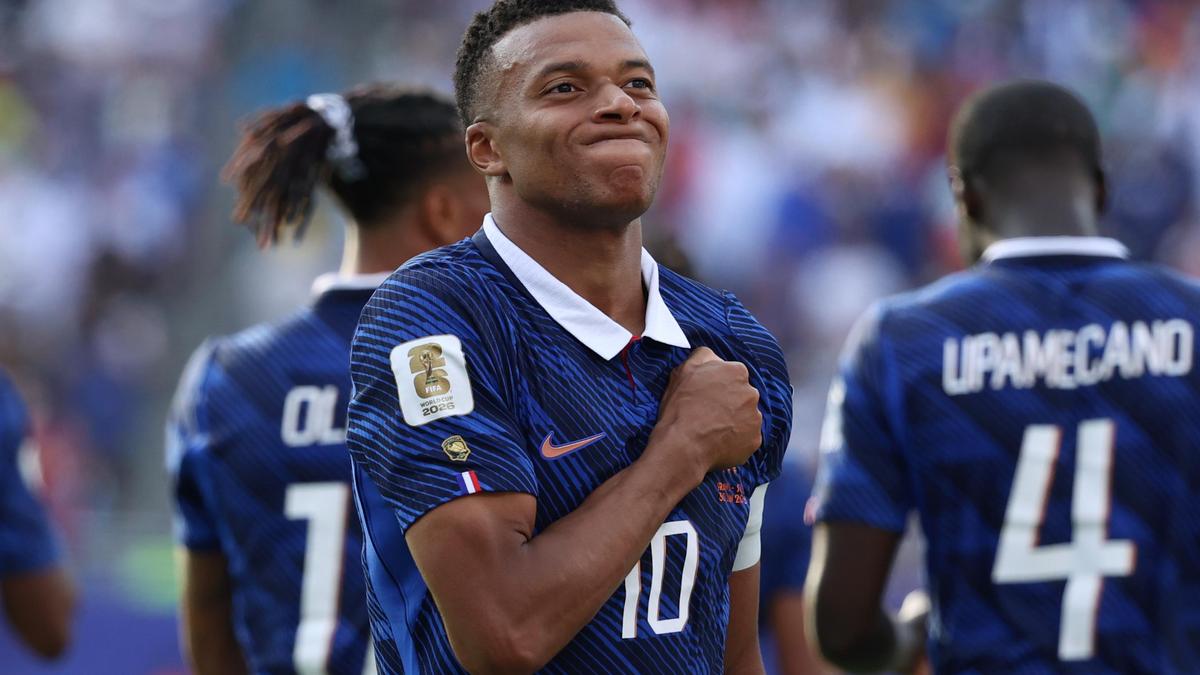
France delivered one of the more complete performances seen at this stage of the FIFA World Cup, dismantling Sweden 3-0 in a match that was rarely in doubt after the opening exchanges. The final scoreline accurately reflected the gulf between the two sides, with France's statistical dominance stretching across almost every meaningful category. A 61% share of possession, 25 total shots, seven big chances, and an expected goals figure of 3.24 against Sweden's 0.70 told the story of an afternoon where Les Bleus were in near-total control for long stretches.
The game's decisive period came either side of half-time. France had been the dominant force throughout the first half without finding the breakthrough, but that changed in the final minute of the opening 45 minutes when Kylian Mbappé opened the scoring. That goal, arriving at a psychologically significant moment, fundamentally altered the dynamic of the contest. Sweden had managed to keep France at bay for the better part of an hour of football, but conceding just before the interval removed any tactical structure they had carefully built.
Bryan Barcola added a second goal eight minutes into the second half, and Mbappé completed his brace in the 74th minute to put the result entirely beyond question. Sweden, to their credit, did not capitulate entirely — they improved their possession share from 29% in the first half to 47% in the second — but France's xG in the second period alone was 2.32, suggesting that the scoreline could have been even more emphatic. Sweden's goalkeeper was required to make nine saves across the full 90 minutes, a workload that speaks to the relentless nature of France's attacking output.
Tactically, this was a match that France controlled through their ability to circulate the ball quickly and create overloads in wide areas. With 551 passes completed across the full match — compared to Sweden's 350 — France's midfield and defensive lines were rarely under sustained pressure. Sweden managed just one corner kick across the entire 90 minutes, compared to France's nine, which underlines just how comprehensively Les Bleus pinned their opponents back. This was not a match decided by a single moment of individual brilliance; it was a systemic, organised victory built on collective superiority.
France's performance was defined by their ability to sustain pressure across both halves without ever appearing to lose concentration or structure. In the first half particularly, their dominance was extraordinary — 71% possession, 15 shots, six corner kicks, and an xG of 0.92 before a single goal had been scored. That they went into half-time with only a one-goal lead was perhaps the most flattering aspect of Sweden's showing, given how comprehensively France had controlled the territory and the ball. The fact that France required their goalkeeper to make only one save in the first half further underlines how little Sweden were able to threaten going forward.
Kylian Mbappé was the focal point of France's attacking play and delivered a performance befitting his status as one of the world's foremost forwards. His first goal, arriving at the stroke of half-time, was the culmination of sustained French pressure and came at the most damaging possible moment for Sweden. His second, in the 74th minute, confirmed the win and gave him a brace on the day. Mbappé's ability to find space in and around the penalty area, combined with his movement off the ball, created constant problems for Sweden's defensive structure. He was not merely a finisher; he was a constant presence who occupied multiple defenders and opened corridors for his teammates.
Barcola's contribution was equally significant. His goal in the 53rd minute — the second of the match — effectively ended Sweden's realistic hopes of a comeback. Playing as a forward, Barcola completed 26 of 31 passes across his 90 minutes, accumulated 48 touches, and demonstrated a willingness to press and work in both directions. His goal was not simply a product of being in the right place; it reflected the kind of intelligent movement and timing that France's attacking system demands from its wide forwards. The combination between Mbappé and Barcola throughout the match gave Sweden's backline two distinct problems to solve simultaneously, and they were unable to adequately address either.
In the second half, France's xG jumped to 2.32 from 10 shots, suggesting that their chances became higher quality as the match progressed and Sweden's defensive shape became increasingly stretched. France's five big chances in the second half alone — compared to Sweden's one across the entire match — reflects how effectively Les Bleus exploited the spaces that opened up once Sweden were forced to push higher in search of a goal. France's defensive discipline also deserves recognition: they conceded just two shots in the second half that required their goalkeeper to intervene, limiting Sweden to minimal genuine opportunities despite the Swedes controlling nearly half of the ball in the final 45 minutes.
Sweden arrived at this fixture facing a France side that represented one of the sternest tests available in the competition, and the final result was a fair reflection of the difficulty of that task. However, a closer examination of the statistics reveals that Sweden's performance was not entirely without merit, even if the overall picture was one of a side outclassed in most key areas. Their first-half display was particularly difficult — managing just 29% possession, three shots, and zero corner kicks — but they did at least limit France to an xG of 0.92 in that period, suggesting their defensive shape held some structural integrity before the Mbappé goal punctured it.
The concession just before half-time was the moment that fundamentally undermined Sweden's game plan. Going into the break level would have given them a platform to reorganise and potentially make a contest of the second half. Instead, they were forced to alter their approach immediately after the restart, pushing higher up the pitch and accepting greater risk in their defensive line. That shift created the space that France exploited so effectively in the second half, with Barcola's goal arriving just eight minutes into the period and arriving precisely as Sweden were attempting to recalibrate.
Sweden's improvement in the second half — their possession share rising to 47%, their passes increasing from 114 to 236 — demonstrated that they were capable of competing on the ball when the match situation demanded it. Their one big chance in the second half also showed a degree of attacking intent, and their goalkeeper's nine saves across the full match underlined both the scale of France's pressure and the commitment Sweden showed to at minimum keeping the scoreline respectable. That the final margin was three goals rather than five or six is in part a testament to Sweden's goalkeeper and the organisation that remained in their defensive structure even as the match slipped away.
What ultimately undid Sweden was their inability to cope with the pace and movement of France's forward line in transition. When France won the ball back in midfield — which happened frequently given their 61% possession share — Sweden were repeatedly caught in moments where their defensive shape had not fully reset. The combination of Mbappé's directness and Barcola's intelligent movement created scenarios where Sweden's defenders were forced into reactive rather than proactive defending. With only 10 fouls committed across the full match, Sweden were not a side that resorted to cynical disruption; they attempted to defend with structure and shape, but France's quality simply exceeded what that structure could contain.
The opening 45 minutes were a study in France's ability to dominate without converting that dominance into goals. France registered 15 shots in the first half and generated an xG of 0.92, but Sweden's goalkeeper — called upon five times in that period — kept the scoreline level. France enjoyed 71% of the ball and won six corner kicks to Sweden's none, yet the half appeared to be heading towards an interval stalemate. Sweden, for their part, managed three shots and an xG of 0.28, suggesting that while they were not creating genuine danger, they were at least maintaining a semblance of defensive organisation.
That changed in the 45th minute, when Kylian Mbappé broke the deadlock. The goal arrived at the most damaging possible moment for Sweden — with barely seconds remaining before the half-time whistle — and it fundamentally shifted the psychological and tactical landscape of the match. France had been patient in their build-up play, circulating the ball through 285 completed passes in the first half, and the breakthrough finally came from Mbappé, who demonstrated the composure and finishing quality that has made him one of the most feared forwards in world football. The timing of the goal was as important as the goal itself; Sweden had no time to respond before the break.
The second half began with Sweden needing to push forward, and France punished them almost immediately. Eight minutes into the second period, in the 53rd minute, Bryan Barcola added a second goal to put France firmly in control. Barcola's goal effectively ended the match as a competitive contest — Sweden would have needed to score three times against a France side that had conceded nothing and were generating chances at will. France's xG in the second half reached 2.32 from just 10 shots, reflecting the increasingly high quality of the opportunities they were creating as Sweden's defensive structure became more stretched and disorganised.
Mbappé completed his brace in the 74th minute, converting France's seventh big chance of the match and putting the final seal on a comprehensive victory. Sweden's goalkeeper made four saves in the second half, bringing his total to nine for the match — a figure that speaks to the relentless nature of France's attacking play even after the result had been settled. Sweden did manage one big chance of their own in the second half, and France's goalkeeper was required to make two saves after the break, but these were isolated moments in a match that France controlled from start to finish. The final whistle confirmed a 3-0 victory that was, if anything, flattering to Sweden given the statistical dominance France had exercised across the full 90 minutes.
Bryan Barcola was identified as the match's top performer with a rating of 7.9, and while Kylian Mbappé's brace will naturally attract the majority of the post-match attention, the case for Barcola as the standout individual is a compelling one. Playing the full 90 minutes as a forward, Barcola accumulated 48 touches and completed 26 of his 31 attempted passes — an accuracy rate of 83.9% — which reflects both his involvement in France's build-up play and his efficiency when in possession. For a forward operating in the final third against an organised defensive structure, those passing numbers represent a meaningful contribution to France's ability to sustain pressure and maintain their positional shape.
Barcola's goal in the 53rd minute was the defining moment of his afternoon and the moment that effectively ended Sweden as a competitive force in the match. Arriving just eight minutes into the second half, the goal came at a time when Sweden were attempting to reorganise after conceding just before half-time. Barcola's ability to find the right position and execute under pressure — in a match of this magnitude, on the World Cup stage — demonstrated a maturity and composure that belied any suggestion that he might struggle against top-level opposition. The goal was not a simple tap-in; it required the kind of intelligent movement and timing that separates forwards who can perform in high-pressure environments from those who cannot.
Beyond the goal, Barcola's contribution to France's overall attacking structure was significant. His 48 touches across 90 minutes indicate that he was consistently involved in the build-up, not merely waiting for opportunities to present themselves in the penalty area. His movement created space for Mbappé, and his willingness to press Sweden's defenders when France did not have the ball added a defensive dimension to his performance that is often overlooked when assessing forward players. The combination of Barcola and Mbappé in France's forward line gave Sweden two distinct and genuinely dangerous threats to manage simultaneously, and the statistical evidence suggests that Sweden were unable to cope with either.
The 7.9 rating places Barcola above all other players in this match, and the justification for that rating is clear when the full range of his contributions is considered. His passing accuracy of 83.9% was achieved in areas of the pitch where space is at a premium and defensive pressure is constant. His goal was match-defining in its timing. His movement and pressing work contributed to France's ability to generate seven big chances across the full match. In a France side that contains some of the most technically gifted players in world football, Barcola's ability to perform at this level — and to be recognised as the match's top performer ahead of a player who scored twice — speaks to the quality and consistency of his individual display.
A 3-0 victory in the FIFA World Cup carries significant weight regardless of the stage of the competition, and France's performance against Sweden will send a clear message to the other nations competing in the tournament. The combination of a 3.24 xG, seven big chances, and 25 shots demonstrates that France are not merely winning matches; they are generating the kind of attacking output that suggests their performances are sustainable and repeatable rather than dependent on individual moments of fortune. An expected goals figure of 3.24 against 0.70 represents a dominant display by any measure, and it reinforces France's status as one of the tournament's leading contenders.
For Sweden, the defeat is a significant setback in terms of their World Cup ambitions. Conceding three goals and generating only 0.70 xG across 90 minutes suggests that the gap between Sweden and the tournament's elite sides remains considerable. Sweden's ability to improve their second-half possession share to 47% demonstrates that they are capable of competing with the ball, but their inability to convert that possession into genuine goalscoring opportunities — one big chance across the entire match — highlights the limitations of their attacking play at this level. The result will require a significant response if Sweden are to remain relevant in the competition.
France's performance also reinforces the importance of the Mbappé-Barcola partnership as a tactical asset. With Mbappé contributing two goals and Barcola adding a third, France's forward line demonstrated the kind of collective output that can dismantle well-organised defensive structures. The fact that France generated five big chances in the second half alone suggests that their attacking patterns become more effective as matches progress and defensive structures tire or become stretched — a characteristic that will be particularly valuable in knockout football, where matches are often decided in the final 30 minutes.
In the broader context of the World Cup, France's 3-0 victory over Sweden adds to their goal difference and consolidates their position as a side capable of competing at the highest level of the tournament. The statistical profile of their performance — dominant possession, high shot volume, high xG, minimal defensive exposure — suggests a team that is well-organised and tactically coherent across all departments. Sweden, meanwhile, will need to reassess their approach and find a way to generate more consistent attacking output if they are to make a meaningful impression on the competition. The gap between the two sides on this evidence was significant, and closing that gap will require substantial improvement.
France will take considerable confidence from this performance as the World Cup progresses. The combination of Mbappé's individual brilliance — two goals from a brace that demonstrated his finishing quality and movement — and the collective efficiency of the wider squad suggests that France are operating at a level that few sides in the tournament will be able to match. The 3.24 xG figure is particularly encouraging from a French perspective, as it indicates that their attacking patterns are generating high-quality opportunities consistently rather than relying on low-probability efforts from distance. If France can maintain this level of output in subsequent fixtures, they will be extremely difficult to eliminate.
The areas for minor concern — France's 14 fouls across the match and the fact that their goalkeeper was required to make three saves — are relatively minor in the context of an otherwise dominant display. Sweden did improve in the second half and managed to create one big chance, which suggests that France's defensive concentration did drop slightly after the match was effectively won. In knockout football, that kind of lapse can prove costly against higher-quality opposition, and France's coaching staff will be aware that the standards maintained in this match will need to be replicated and potentially exceeded as the competition intensifies.
For Sweden, the immediate task is to regroup and identify the tactical adjustments necessary to make them more competitive in their remaining fixtures. Their first-half display — just 29% possession, three shots, zero corner kicks — was not the foundation of a side capable of progressing deep into a World Cup. The improvement in the second half, while real, came in a context where the match had already been decided, which limits its significance as evidence of genuine tactical flexibility. Sweden will need to find a way to be more competitive from the first whistle if they are to produce results against the quality of opposition they are likely to face.
The narrative emerging from this match is one of French dominance and Swedish vulnerability against elite-level opposition. France's ability to control matches through possession, generate high-quality chances, and deliver goals at psychologically significant moments — as Mbappé demonstrated with his first-half stoppage-time opener — makes them a formidable proposition for any side remaining in the tournament. Sweden, by contrast, face a period of reflection and adjustment. The 3-0 defeat is a result that demands a response, and how Sweden react in their next fixture will tell us a great deal about their resilience and their capacity to compete at this level of the competition.