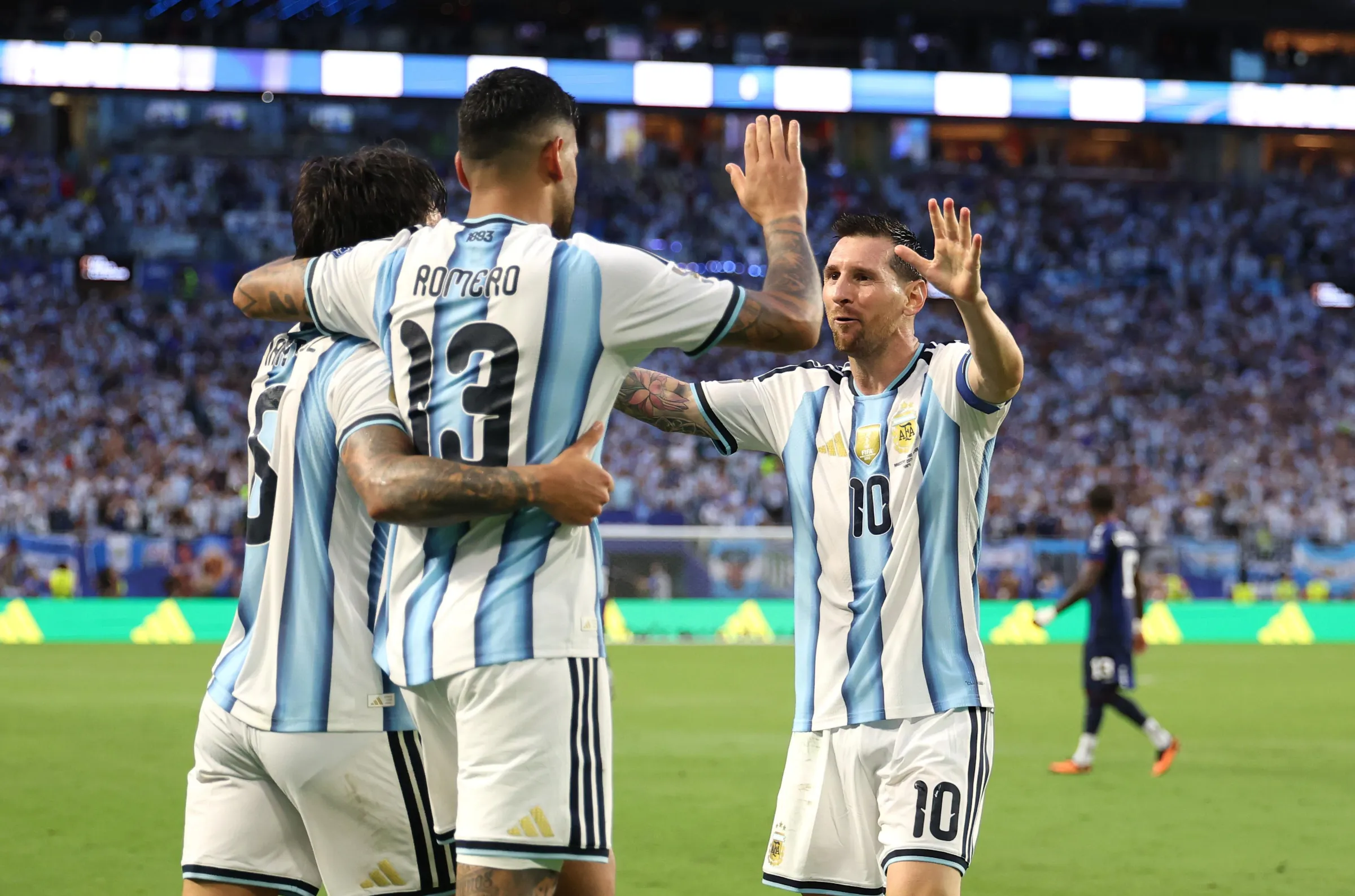
Argentina required extra time to see off Cabo Verde in a World Championship fixture that defied the underlying statistics at almost every turn.
The final scoreline of 3-2 to Argentina - settled only in the 111th minute through a Diney own goal - told a story of a dominant side repeatedly unable to convert their territorial and creative superiority into the comfort their numbers deserved.
Argentina finished with 64 per cent possession across the full 120 minutes, an expected goals tally of 2.15 against Cabo Verde's 0.44, and three big chances to their opponents' none.
On paper, this was a match Argentina should have controlled. On the pitch, it was anything but.
The match unfolded in a manner that will frustrate Argentina's coaching staff considerably when they review the data.
Cabo Verde, working with just 36 per cent of the ball and managing 469 passes to Argentina's 845, nonetheless found a way to score twice from their 15 total shots - a conversion rate that far exceeded anything their xG of 0.44 would suggest was likely.
Their goalkeeper was called into action eight times across the 120 minutes, making eight saves in total, a figure that underlines just how relentlessly Argentina attacked.
Yet for long periods, the Blue Sharks defended with an organisation and physicality that kept them very much in the contest.
Tactically, Argentina set up with the kind of high-possession, progressive structure that has become familiar under their current setup.
Their 845 passes - 385 in the first half alone - reflected a team intent on building patiently and probing for openings rather than committing to direct play.
The first half, however, was relatively quiet in terms of clear-cut chances, with Argentina generating an xG of just 0.41 from four shots.
It was not until the second period, and then extra time itself, that the match truly opened up.
Argentina's xG rose to 1.26 in the second half, reflecting a more urgent and incisive approach as they chased the game following Cabo Verde's equaliser.
The fact that this match required an additional 30 minutes to resolve will be a source of concern for Argentina, even in victory.
Their expected goals across the full match comfortably outstripped the actual scoreline, suggesting that finishing and decision-making in the final third let them down on multiple occasions.
Cabo Verde, by contrast, maximised every opportunity they created.
Eight corner kicks apiece across the match added a further layer of unpredictability, and the Blue Sharks demonstrated that, regardless of the statistical gap between these two sides, they are capable of making life extremely difficult for higher-ranked opposition.
Argentina's performance across the 120 minutes was a study in the frustrating gap that can exist between process and outcome.
They dominated virtually every measurable aspect of the contest - possession, passes, shots, big chances, expected goals - and yet found themselves level at 2-2 heading into extra time, having surrendered a lead twice.
Their 22 total shots were more than enough to win most matches comfortably, but only three of those were classified as big chances, and the goalkeeper was required to make just three saves across the entire match, which speaks to Cabo Verde's defensive discipline rather than any lack of Argentine pressure.
In the first half, Argentina were patient to the point of being ponderous.
Their 385 passes in the opening 45 minutes represented a clear intent to control tempo and territory, but with an xG of just 0.41 from four shots, they struggled to translate that possession into genuine danger.
The lone big chance of the first half came and went without a goal, and it was only through Lionel Messi's individual quality in the 29th minute that they took the lead.
The structure was sound, the ball movement was fluent, but the final product was inconsistent, and that pattern would persist throughout the match.
The second half saw Argentina become more direct and more urgent, particularly after conceding the equaliser in the 59th minute.
Their xG of 1.26 in the second period, from 11 shots, reflected a team pushing harder for openings and finding more of them - but still not converting at the rate their dominance demanded.
The goalkeeper's five saves in the second half alone underlined how much pressure Argentina were generating, yet the scoreline remained level until Lautaro Martínez's goal in the 93rd minute, which appeared to have won the match before Cabo Verde struck again in the 103rd minute to force the additional period.
Ultimately, Argentina's coaching staff will point to the eight goalkeeper saves conceded - a figure that reflects both the volume of their attacks and the quality of Cabo Verde's last line of defence - as evidence that the performance was better than the scoreline suggested.
But they will also acknowledge that a side with their resources and possession numbers should not be relying on a 111th-minute own goal to secure victory.
The 13 fouls they committed across the match also suggest that Cabo Verde's physicality and pressing caused them problems in transition, disrupting the rhythm they sought to impose.
Victory is what matters, but the manner of it will demand scrutiny.
Cabo Verde's performance in this match was one of the more impressive defensive and counter-attacking displays seen in this World Championship campaign, even in defeat.
Working with just 36 per cent of the ball and facing an Argentine side that completed 845 passes, the Blue Sharks managed to score twice, reach extra time, and genuinely threaten an upset that would have been one of the more significant results in the competition.
Their goalkeeper made eight saves across the 120 minutes - a remarkable total that reflects both the scale of the task they faced and the individual quality that kept them in the match.
Cabo Verde's defensive structure was clearly well-drilled and designed to absorb pressure.
With Argentina generating three big chances to their none, the Blue Sharks were not attempting to match their opponents in open play - they were content to sit deep, remain compact, and look for moments to exploit on the counter.
Their 15 total shots, managed with just 469 passes and 36 per cent possession, actually represents a reasonably efficient use of limited ball time.
They were not simply defending for 120 minutes; they were waiting for opportunities, and when those opportunities came, they took them with a clinical efficiency that their xG of 0.44 did not predict.
The goals themselves - D. Duarte's equaliser in the 59th minute and S. L. Cabral's leveller in the 103rd minute - both came at psychologically significant moments.
Duarte's goal cancelled out Argentina's opening advantage and shifted the dynamic of the match entirely, forcing Argentina to chase the game in the second half.
Cabral's goal in the 103rd minute, coming just ten minutes into extra time and just minutes after Argentina had retaken the lead through Martínez, was an extraordinary moment of resilience.
To score so quickly after conceding in extra time showed a mental fortitude that belied Cabo Verde's underdog status.
Where Cabo Verde fell short was in sustaining that resilience for the full 120 minutes.
The own goal in the 111th minute - Diney turning the ball into his own net - was the moment the match finally slipped from their grasp, and it was a cruel way to lose.
Their eight corner kicks matched Argentina's total, which is a remarkable statistic given the possession disparity, and suggests they were willing to press forward when the opportunity arose.
The 12 fouls they committed also indicate a willingness to disrupt Argentina's rhythm through physical means, which was a legitimate and largely effective tactical choice.
Cabo Verde will leave this match knowing they pushed one of the competition's stronger sides to the very limit.
The match began with Argentina establishing the territorial control that would define the entire contest.
Their early passing patterns were methodical, working the ball through the lines with purpose, and it was this sustained pressure that eventually created the opening goal.
In the 29th minute, Lionel Messi broke the deadlock, giving Argentina the lead their first-half possession had been building towards.
The goal came from Argentina's only big chance of the opening 45 minutes, and Messi's finish - as so often - was decisive and composed.
At that point, with Argentina in control of the ball and the tempo, a comfortable victory appeared the most likely outcome.
Cabo Verde's response, however, was not the capitulation many might have expected.
They remained organised throughout the first half, limiting Argentina to just four shots and generating an xG of only 0.04 themselves - but they stayed in the match.
The second half brought a significant shift in momentum.
In the 59th minute, D. Duarte equalised for Cabo Verde, a goal that arrived against the statistical tide and completely changed the complexion of the contest.
Argentina had been generating more chances in the second period, but Cabo Verde's counter-attacking threat was real, and Duarte's goal was a reminder that xG does not always predict outcomes.
The Blue Sharks were level, and suddenly the match was genuinely open.
Argentina pushed hard for a winner in the final stages of normal time, and their persistence was rewarded in the 93rd minute when Lautaro Martínez restored their advantage.
The goal came deep into stoppage time and appeared to have settled the matter - but Cabo Verde had other ideas.
In the 103rd minute, just eight minutes into extra time, S. L. Cabral levelled again for the Blue Sharks, producing one of the more remarkable moments of this World Championship campaign.
To score twice against a side as dominant in possession and chance creation as Argentina, and to do so at such critical junctures, spoke to Cabo Verde's quality in front of goal when the moment presented itself.
The decisive moment arrived in the 111th minute, when Diney turned the ball into his own net to give Argentina a 3-2 lead they would not relinquish.
It was an unfortunate end for a Cabo Verde side that had fought with considerable resolve throughout the 120 minutes.
Argentina saw out the remaining nine minutes without further incident, securing a victory that their overall statistics strongly supported but which their finishing and defensive lapses had made far more difficult than it needed to be.
The final whistle confirmed a 3-2 scoreline that will be remembered less for Argentina's dominance and more for Cabo Verde's refusal to accept the narrative the numbers were writing.
Lionel Messi was named the top performer of this match with a rating of 9.4, and the statistics provided make a compelling case for that distinction even in a contest where Argentina as a whole struggled to convert their superiority.
Messi played 122 minutes - the full duration of the match including extra time - and registered 82 touches, a figure that reflects his central role in Argentina's attacking and build-up play.
His 35 accurate passes from 42 attempted gave him an accuracy rate of approximately 83 per cent, which is a solid return for an attacking player operating in tight spaces against a well-organised defensive block.
The goal in the 29th minute was the clearest illustration of Messi's individual quality.
Argentina had been circulating the ball patiently in the opening half-hour, generating limited clear-cut opportunities despite their possession dominance.
It was Messi who provided the breakthrough, converting the match's first big chance of the first half and giving his side the lead they deserved on territorial terms.
The goal itself was consistent with what Messi does at the highest level - arriving at the right moment, in the right position, to make the decisive contribution when the match required it.
Beyond the goal, Messi's 82 touches across 122 minutes placed him at the centre of Argentina's attacking structure throughout the contest.
He was the reference point around which their build-up play revolved, and his movement and positioning consistently created problems for Cabo Verde's defensive organisation.
The fact that he completed 35 of 42 passes - including, presumably, a number of more complex progressive passes in advanced areas - suggests he was not simply recycling possession but actively attempting to unlock the Cabo Verde defence.
That he did so while playing the full 120 minutes underlines his physical contribution as well as his technical one.
What makes Messi's rating of 9.4 particularly notable in context is that it came in a match Argentina did not control as cleanly as their statistics suggested they should.
In a contest where the team's finishing and defensive concentration let them down repeatedly, Messi's individual performance stood apart.
He scored, he completed passes at a high rate, he accumulated touches that kept Argentina's attacks alive, and he remained involved and effective across the full 120 minutes.
For a player of his age and at this level of competition, that sustained contribution - in a match that demanded repeated mental and physical adjustments - is the clearest possible evidence of why he earned the match's top rating.
This result carries meaningful weight in the World Championship standings, though the precise table implications depend on the broader context of the group and competition format.
What is clear is that Argentina have secured three points - or the equivalent advancement - from a match they were expected to win but which tested them far more rigorously than their xG superiority of 2.15 to 0.44 would suggest was likely.
Winning in extra time is never comfortable, but in tournament football, results matter more than performances, and Argentina will take the victory regardless of how it arrived.
For Cabo Verde, the defeat is a painful one given how close they came to forcing a different outcome.
They scored twice against a side that dominated possession and chance creation, reached extra time, and were undone ultimately by an own goal rather than a moment of individual Argentine brilliance.
In the context of the World Championship, that kind of performance - even in defeat - can have significance for goal difference, for confidence, and for the narrative surrounding a team's progression through the competition.
Cabo Verde will know they are capable of competing with stronger sides, which is a valuable piece of information regardless of the final result.
Argentina's position in the competition is strengthened by this victory, but the manner of the win will invite scrutiny from opponents who will study this match carefully.
A side that generates 22 shots, three big chances, and an xG of 2.15 but still requires extra time and an own goal to win is a side with exploitable vulnerabilities.
The defensive lapses that allowed Cabo Verde to score twice - including a goal in the 103rd minute of extra time - suggest that Argentina's backline can be breached by organised, physical opposition willing to wait for their moments.
That is information other World Championship competitors will file away.
The broader competitive picture in the World Championship will be shaped by how both sides perform in their remaining fixtures.
Argentina, with the confidence of a victory even if not the comfort of a dominant one, will look to build on this result and sharpen the finishing that let them down here.
Cabo Verde, despite the defeat, have demonstrated that they are not a side to be dismissed, and their ability to score twice against a possession-dominant Argentina will give them genuine belief heading into whatever comes next in the competition.
The statistical gap between these sides was significant; the actual gap on the pitch was considerably smaller.
Argentina emerge from this match with the points but with clear areas requiring improvement before they face stronger opposition in the World Championship.
Their possession dominance - 64 per cent across 120 minutes and 845 passes - is a foundation to build on, but the disconnect between that control and their final-third output remains a concern.
Three big chances created, two goals scored in open play, and a third arriving via an own goal is not the kind of return that wins tournaments against the best sides.
The coaching staff will be working on converting pressure into goals more efficiently in the sessions ahead.
Defensively, Argentina will be particularly focused on the moments that allowed Cabo Verde back into the match at 1-1 and 2-2.
Conceding to a side with an xG of just 0.44 twice - and doing so at such critical junctures - points to lapses in concentration rather than structural failings.
The 103rd-minute goal in particular, coming so soon after Martínez had apparently won the match, will be a specific point of analysis.
Argentina have the quality to correct these issues, but they will need to do so quickly if they are to progress deep into the competition.
For Cabo Verde, the takeaway from this match is more nuanced.
They have proven they can compete - their goalkeeper's eight saves, their two goals, and their ability to force extra time against a statistically superior Argentina side all speak to genuine quality and organisation.
The challenge now is to carry that belief and that defensive structure into their next fixture and produce a result that keeps them in contention.
Their 15 shots across the match, from just 36 per cent possession, suggests they have an attacking threat that can be developed and built upon.
If they can sharpen their finishing - their xG of 0.44 against two actual goals already shows they outperformed expectations - they have the tools to cause further problems.
The narrative implications of this match extend beyond the two sides directly involved.
Argentina are through, but they have been exposed as a team that can be pressed and disrupted, that can concede at critical moments, and that does not always convert their statistical superiority into comfortable scorelines.
Cabo Verde, meanwhile, have announced themselves as a side with genuine competitive spirit and tactical intelligence.
Whatever their next fixture brings, both teams leave this match with more information about themselves and about what the World Championship demands.
Argentina will need to be sharper; Cabo Verde will need to find a way to turn performances like this into results.