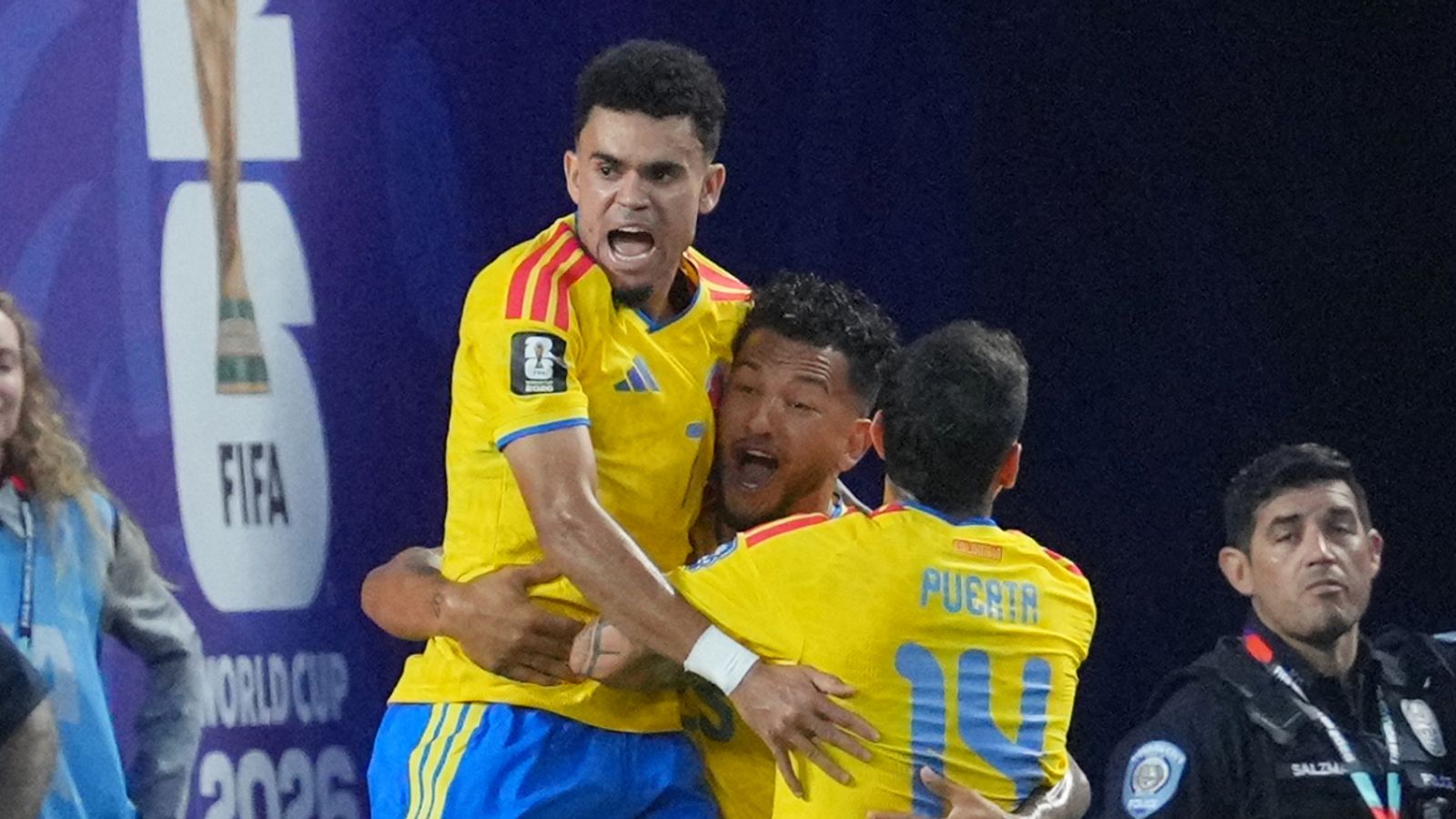
Colombia secured a 1-0 victory over Ghana in the World Championship, with a goal from J. Arias in the 14th minute proving sufficient to separate the two sides across 90 minutes of football.
The result was a fair reflection of the balance of play, with Colombia dominating possession, manufacturing the clearer opportunities, and ultimately converting one of four big chances to take all three points.
Ghana, for their part, were resolute in their defensive organisation but offered almost nothing going forward, finishing the match with an expected goals figure of just 0.26 compared to Colombia's 1.68.
From a tactical standpoint, this was a match shaped by Colombia's control of the ball and their ability to move Ghana around the pitch.
With 59% possession across the full 90 minutes and 532 passes completed to Ghana's 358, Colombia's midfield clearly dictated the tempo.
The first half was particularly one-sided in terms of territory, with Colombia holding 67% of the ball and completing 344 passes to Ghana's 167.
That kind of dominance in the opening period set the tone for everything that followed, even if Colombia were unable to convert their advantage into a more comfortable scoreline.
What made this match particularly interesting from a statistical perspective was the divergence between the xG figures and the final score.
Colombia's 1.68 xG suggests they should have won by a more comfortable margin, and the four big chances they created - none of which Ghana managed to generate in response - underlines just how lopsided the attacking threat was.
The fact that Ghana's goalkeeper, L. A. Zigi, was required to make five saves across the match, while his Colombian counterpart was not called upon once, tells the story of the contest as clearly as any other number.
The second half brought a slight shift in dynamics.
Ghana recovered some possession - finishing the period at 51% to Colombia's 49% - and their foul count rose to nine in the second 45 minutes as they became more aggressive in disrupting Colombia's rhythm.
However, their shot count dropped to just two in the second half, and their xG for that period was a meagre 0.10.
Colombia, meanwhile, continued to probe and created two more big chances after the break, though they were unable to add to their tally.
The result was never seriously in doubt, but Ghana's discipline at least ensured the scoreline remained narrow.
Colombia were the clear dominant force in this match from the first whistle, and their statistical output reflects a team that controlled proceedings with a level of assurance that belied the single-goal margin of victory.
Their 59% possession figure across the full match - rising to 67% in the first half - was not merely a reflection of comfortable ball retention but of genuine territorial control.
They moved the ball with purpose, completing 532 passes in total, and their ability to recycle possession and find space in and around Ghana's defensive structure was consistent throughout.
The attacking numbers are the most telling aspect of Colombia's performance.
Four big chances created across 90 minutes is a significant return, particularly against a side that was clearly set up to defend deep and limit space in behind.
An expected goals figure of 1.68 suggests that, on the balance of play, Colombia deserved to win by more than a single goal.
Their 14 total shots - nine of which came in the second half as they continued to press for a second - demonstrate that they did not ease off after taking the lead, maintaining their attacking intent throughout the contest.
J. Arias's 14th-minute goal was the decisive moment of the match, and it came at a time when Colombia were already beginning to assert their dominance.
The early goal allowed Colombia to dictate the terms of the contest thereafter, inviting Ghana to come onto them while retaining the ability to exploit space on the counter.
Colombia's tactical setup appeared to prioritise control over directness, and that approach was largely vindicated by the way the match unfolded.
Their three corner kicks and continued pressure in wide areas created additional opportunities, even if the final ball was not always at the level required to convert.
Defensively, Colombia were rarely troubled.
Their goalkeeper was not required to make a single save across the entire 90 minutes, which speaks to the effectiveness of their defensive organisation and the minimal threat posed by Ghana's attack.
The 13 fouls conceded across the match - six in the first half and seven in the second - suggest Colombia were occasionally caught in transition, but none of these led to meaningful danger.
The clean sheet, combined with the xG differential of 1.68 to 0.26, represents a comprehensive defensive performance as much as an attacking one.
Colombia will leave this match with considerable confidence in both their ability to control games and their resilience when protecting a lead.
Ghana arrived in this match facing a Colombia side with clear technical superiority, and their approach reflected an awareness of that reality.
They set up defensively, conceded territory willingly, and looked to frustrate rather than compete on equal terms.
In the first half, they held just 33% of the ball and completed only 167 passes, which suggests their game plan was built around compactness and limiting the spaces Colombia could exploit rather than engaging in a possession battle they were unlikely to win.
That strategy had some merit in principle, but the early concession undermined it almost immediately.
The second half offered a slightly more encouraging picture for Ghana in terms of raw possession numbers - they finished the period at 51% - but that figure is somewhat misleading.
Their shot count in the second half was just two, and their xG for the period was 0.10, indicating that the ball they did have was not being used in ways that genuinely threatened Colombia's goal.
The nine fouls they committed in the second half reflect a team that was increasingly resorting to disruption rather than creative solutions, and while that approach helped them avoid conceding further goals, it did nothing to suggest they were capable of finding an equaliser.
Ghana's total shot count of eight across the match - six of which came in the first half - is an interesting detail.
It suggests that in the opening period, before the tactical reality of chasing the game had fully set in, they were at least attempting to be direct and test Colombia's backline.
The two corner kicks they earned in the first half also hint at some early ambition.
However, with an xG of just 0.17 in the first half and 0.10 in the second, it is clear that the shots they managed were largely from positions and angles that offered minimal genuine threat.
None of their efforts were classified as big chances.
The absence of any big chances across the entire match is perhaps the most damning statistical verdict on Ghana's attacking performance.
Against a Colombia side that was not impenetrable - 13 fouls conceded, occasional lapses in transition - Ghana were unable to manufacture a single clear-cut opportunity.
Their passing volume of 358 total passes suggests they were not entirely passive, but the quality and direction of that passing clearly did not translate into meaningful attacking sequences.
The five saves made by their goalkeeper, L. A. Zigi, were a testament to his individual quality rather than any collective attacking contribution from the outfield players.
Ghana will need to find significantly more going forward if they are to be competitive in this competition.
The match's defining moment arrived early, in the 14th minute, when J. Arias put Colombia ahead.
The goal came during a period when Colombia were already exerting considerable pressure, having established their territorial dominance from the opening exchanges.
With 67% of the ball in the first half and a clear pattern of play that was moving Ghana around and creating pockets of space, Colombia's opener felt like the natural consequence of their early control rather than a moment of opportunism.
Arias's finish settled the contest in terms of its eventual direction, even if the remaining 76 minutes still required Colombia to remain organised and focused.
In the immediate aftermath of the goal, Ghana's response was limited.
They managed six shots in the first half - more than Colombia's five - but their xG of 0.17 for the period indicates that these were largely speculative efforts rather than genuine scoring opportunities.
Colombia's goalkeeper was not called upon at all in the first half, which suggests that Ghana's shots were either off target or comfortably within the range of routine positioning rather than requiring active intervention.
Colombia, meanwhile, created two big chances in the first 45 minutes, with their xG of 0.87 for the period reflecting the quality of the positions they were finding.
The second half saw Colombia continue to press for a second goal, generating nine of their 14 total shots in the final 45 minutes.
Two more big chances were created, and their xG of 0.81 for the period was almost identical to their first-half figure, demonstrating that they maintained their attacking intensity rather than retreating into a defensive posture after the break.
L. A. Zigi was required to make three saves in the second half - adding to the two he had made in the first - and it was his performance between the posts that ultimately kept the scoreline at 1-0 rather than something more emphatic.
Colombia were denied by a combination of Zigi's quality and their own inability to consistently apply the finishing touch their approach play deserved.
Ghana's attacking contribution in the second half was negligible.
Two shots, an xG of 0.10, and no corner kicks in the second period tells the story of a side that had effectively conceded the game as a contest by the time the second half was underway.
Their nine fouls in the second 45 minutes reflect the frustration of a team without a clear plan to retrieve the situation, relying on physical disruption where creative solutions were not forthcoming.
Colombia managed the closing stages without significant alarm, and the final whistle confirmed a result that the statistics - from possession to xG to big chances - had been pointing towards for the vast majority of the 90 minutes.
L. A. Zigi was named the top performer of the match, and while it may seem counterintuitive to award that distinction to a goalkeeper on the losing side, the statistics make a compelling case.
With a rating of 8.9, Zigi was by some distance the individual who most exceeded expectations relative to the circumstances he found himself in.
Colombia created four big chances and accumulated an xG of 1.68, yet they scored only once.
That gap between expected and actual output is, in large part, attributable to the quality of Zigi's goalkeeping across the 90 minutes.
Zigi made five saves in total - two in the first half and three in the second - and his 37 touches across the match reflect the sustained pressure he was under.
In a game where Colombia's attacking threat was consistent and their big chance count was four, a goalkeeper making five saves and conceding only one goal is performing at a level that significantly outstrips the baseline expectation.
His presence in goal gave Ghana a platform that their outfield players were ultimately unable to build upon, but without him, the scoreline could have been considerably more damaging.
His passing statistics - 23 accurate passes from 31 attempted - also deserve acknowledgement.
In a match where Ghana were under sustained pressure and their outfield players were often struggling to retain the ball, Zigi's ability to distribute accurately under pressure was an important factor in helping Ghana maintain any semblance of shape and composure.
A goalkeeper who can contribute 23 accurate passes in a match where their team is being dominated is providing value beyond the purely shot-stopping dimension of the role, and Zigi's figures in this regard reflect a composed and technically capable performer.
The broader context of Zigi's performance is worth considering.
Ghana's defensive unit was facing a Colombia attack that generated 1.68 xG and four big chances - a level of pressure that would test any goalkeeper.
The fact that Zigi was able to maintain his concentration and decision-making throughout, making saves at key moments in both halves, speaks to his mental as well as technical qualities.
His rating of 8.9 is the highest individual rating in the match, and it is a figure that reflects the reality of what he contributed: without his interventions, this was a match that could easily have ended 3-0 or 4-0 based on the opportunities Colombia created.
Zigi's performance was the single most significant reason the margin of defeat remained at one goal.
This result carries meaningful implications in the context of the World Championship, where every point and every goal difference calculation can prove decisive in determining which sides advance and which do not.
Colombia's victory puts them in a strong position, having demonstrated not only the ability to win but to control a match comprehensively against opposition that was clearly set up to frustrate them.
A 1-0 win with an xG of 1.68 to 0.26 is the kind of performance that suggests Colombia are capable of competing with the better sides in this competition, even if the final scoreline does not fully reflect the extent of their dominance.
For Ghana, the defeat is a setback that will require careful assessment.
They now face the prospect of needing results from subsequent matches to remain in contention, and the manner of this defeat - in which they failed to create a single big chance across 90 minutes - raises questions about their capacity to score goals against organised opposition.
A side that generates 0.26 xG in a full match is not creating the kind of attacking threat that wins games at this level, and unless there are significant tactical adjustments or personnel changes, that is a concern that will follow them into their next fixture.
Colombia's defensive performance in this match - a clean sheet against a side that managed eight shots - will also be noted by future opponents.
Their goalkeeper was not called upon once, and their defensive structure appeared well-organised and difficult to penetrate.
In a tournament context, the ability to keep clean sheets while generating attacking threat at the other end is precisely the combination that tends to carry sides deep into competitions.
Colombia's xG differential of 1.42 in this match is a figure that reflects genuine quality on both sides of the ball.
The broader picture of the World Championship will be shaped by how other results in the group or stage unfold, but Colombia's performance here sends a clear statement of intent.
They controlled possession, created the clearer chances, scored early, and managed the match without conceding.
For Ghana, the challenge now is to find a way to be more competitive in both halves of the pitch - their defensive resilience, aided significantly by Zigi, kept them in the match longer than the underlying numbers suggested they deserved, but resilience alone will not be sufficient to progress in a competition of this calibre.
Colombia emerge from this fixture with considerable momentum and a performance that will encourage their coaching staff and supporters alike.
The combination of early goal, sustained possession, multiple big chances, and a clean sheet is the template of a side that knows how to win matches without necessarily being at their most clinical.
The fact that their xG of 1.68 significantly outstripped their actual return of one goal suggests there is more in this team when the finishing matches the approach play, and that is a prospect that will concern opponents who face them in subsequent rounds.
For Ghana, the immediate task is to reassess and identify where the attacking threat can come from.
Their outfield players contributed almost nothing in terms of genuine goal-scoring opportunities, and while Zigi's performance limited the damage, a side cannot consistently rely on their goalkeeper to keep them competitive.
The tactical setup that restricted them to 33% possession in the first half may have been pragmatic given the opposition, but it produced no big chances and an xG of just 0.17 in the opening period.
A different approach in the next match - one that involves more forward intent - appears necessary if Ghana are to remain in contention.
The individual story of L. A. Zigi will be one of the talking points to emerge from this fixture.
A goalkeeper on the losing side finishing as the match's top-rated player with an 8.9 rating is a reflection of both his quality and the extent to which Ghana's performance was dependent on him.
Whether Zigi can sustain that level of output in subsequent matches, and whether Ghana's outfield players can offer him more support, will be central questions as the competition progresses.
His five saves and 23 accurate passes represent a benchmark that will be difficult to maintain without better collective performances around him.
Looking ahead, both sides will take different lessons from this encounter.
Colombia will be focused on converting their big chances more consistently - four created, one scored is a ratio that will not always be sufficient against stronger opposition - while Ghana must find a way to generate attacking threat that goes beyond the speculative and the peripheral.
The World Championship will continue to provide the context in which both sides must answer these questions, and this match has provided a clear statistical portrait of where each team currently stands.