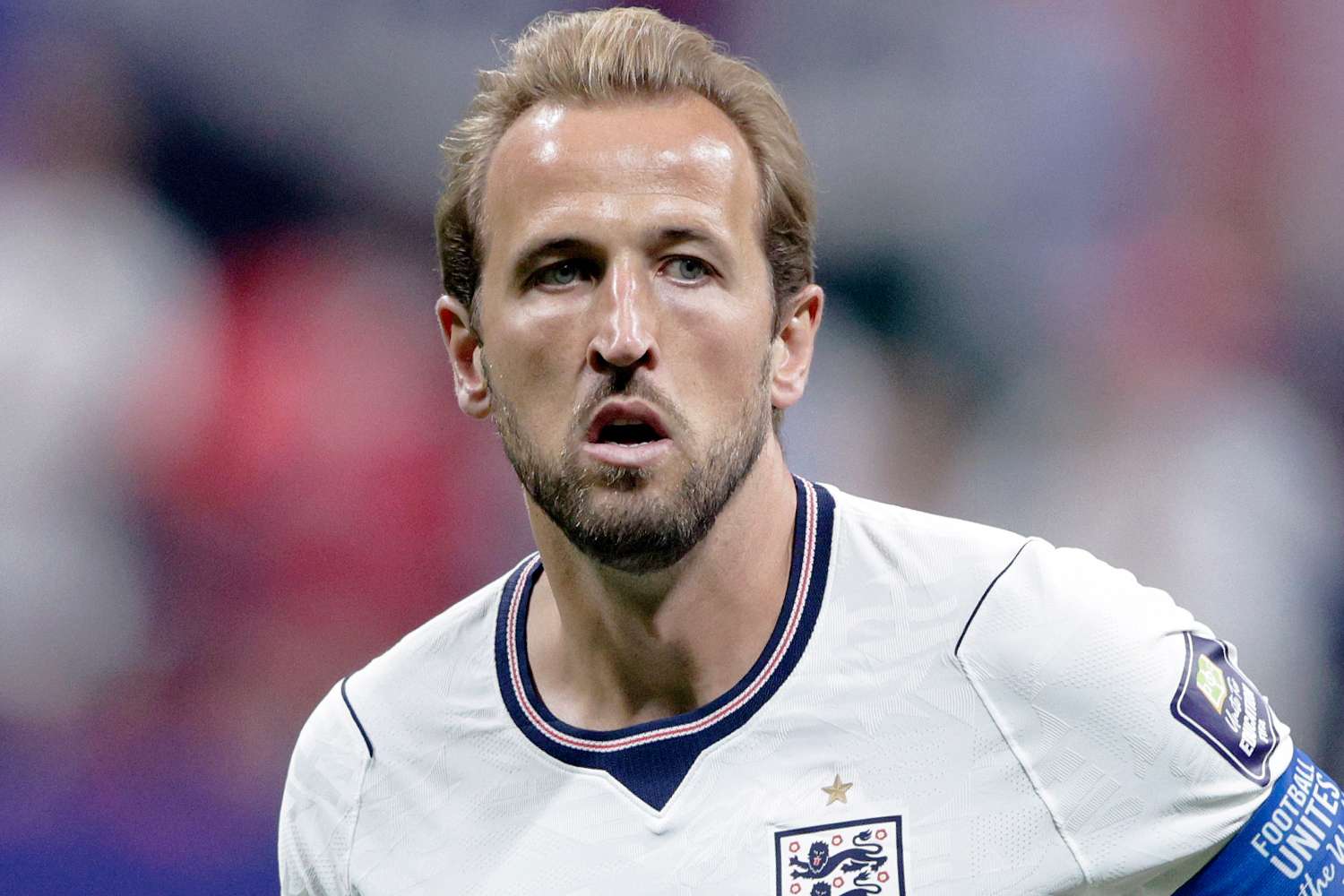
England's painful 2-1 World Cup semi-final defeat to Argentina has sparked fresh debate over a question that has long loomed in the background: who will replace Harry Kane when the country's record goalscorer eventually steps away from international football?
Asked after the defeat whether he expected to feature at the 2030 World Cup, Kane declined to look that far ahead, saying it was "too early to talk about that."
While understandable in the immediate aftermath of England's elimination, the question highlighted the uncertainty surrounding the team's long-term future.
Kane, who has scored 85 goals in 124 appearances and captained England since 2017, remains the focal point of the national side.
Alongside Jude Bellingham, he finished as England's leading scorer at the tournament with six goals.
Although the Bayern Munich striker is expected to lead England at the European Championship on home soil in 2028, he turns 33 later this month and would be approaching 37 by the time the next World Cup arrives.
Saturday's third-place play-off against France could therefore mark his final appearance at football's biggest tournament.
England manager Thomas Tuchel placed enormous faith in his captain throughout the World Cup.
Kane featured for virtually every minute of England's seven matches, coming off only twice - late against Panama and in the closing moments of the last-16 victory over Mexico.
His influence appeared to fade as the competition progressed, however.
After scoring twice against DR Congo in the last 32, Kane failed to find the net from open play in England's final three matches.
The limited opportunities afforded to Ollie Watkins and Ivan Toney suggested Tuchel had little confidence in his alternative striking options.
Watkins played just six minutes during the tournament, while Toney only appeared briefly in stoppage time against Argentina.
With Kane entering the latter stages of his career, England will need greater squad depth to manage his workload more effectively.
England's current alternatives are hardly long-term solutions.
Watkins and Toney are both 30, while Dominic Solanke (28) and Dominic Calvert-Lewin (29) are also nearing the latter stages of their careers.
The shortage of prolific English strikers is reflected in Premier League statistics.
Only three English forwards reached double figures for league goals in each of the past two seasons, highlighting the lack of elite number nines emerging at the highest level.
Chelsea forward Liam Delap, 23, remains one of England's brightest hopes despite enduring a difficult first campaign at Stamford Bridge after his £30 million move from Ipswich Town, scoring just once in the league.
Should Delap fail to fulfil his potential, England will be left hoping another young striker can emerge before Kane's international career comes to an end.
England's previous transition from Wayne Rooney to Harry Kane was almost seamless.
Kane announced himself by scoring just 80 seconds into his debut in 2015 - coming on as a substitute for Rooney - and eventually surpassed him as England's all-time leading scorer.
His own development, though, serves as a reminder that elite strikers do not always emerge as teenage stars.
Kane spent time on loan at Leyton Orient, Millwall, Norwich City and Leicester City before exploding under Mauricio Pochettino at Tottenham at the age of 21.
That path offers encouragement for several young English forwards currently progressing through the ranks.
Chelsea prospect Shim Mheuka, 18, captains the club's Under-21 side and enjoyed an outstanding academy season, scoring 16 goals in 23 appearances for England's Under-19s.
Tottenham's Will Lankshear continues to develop after loan spells in the Championship, while Manchester City youngsters Caelan Cadamarteri and Teddie Lamb have both attracted attention with prolific youth-level scoring records.
However, history also shows that academy success is no guarantee of senior stardom.
Former youth sensations Charlie McNeill and Eddie Nketiah dominated at youth level but have struggled to establish themselves as consistent Premier League goalscorers.
If no natural striker emerges, England may eventually need to rethink their tactical approach rather than searching for a direct replacement.
Tuchel experimented with a false-nine system earlier this year, deploying Phil Foden centrally in a friendly against Uruguay, but the experiment failed to convince and Foden ultimately missed out on the World Cup squad.
Anthony Gordon may offer a more suitable alternative.
Although primarily a winger, the 25-year-old excelled in a central role during England's victorious 2023 European Under-21 Championship campaign, where he was named Player of the Tournament.
He has also featured as a striker for Newcastle and has previously expressed his desire to play more centrally as his career develops.
For years, England have relied on having a traditional centre-forward leading the line.
But unless another elite goalscorer emerges before Kane's international career ends, Tuchel and his successors may be forced to abandon that model and build a new-look attack around a different type of forward.