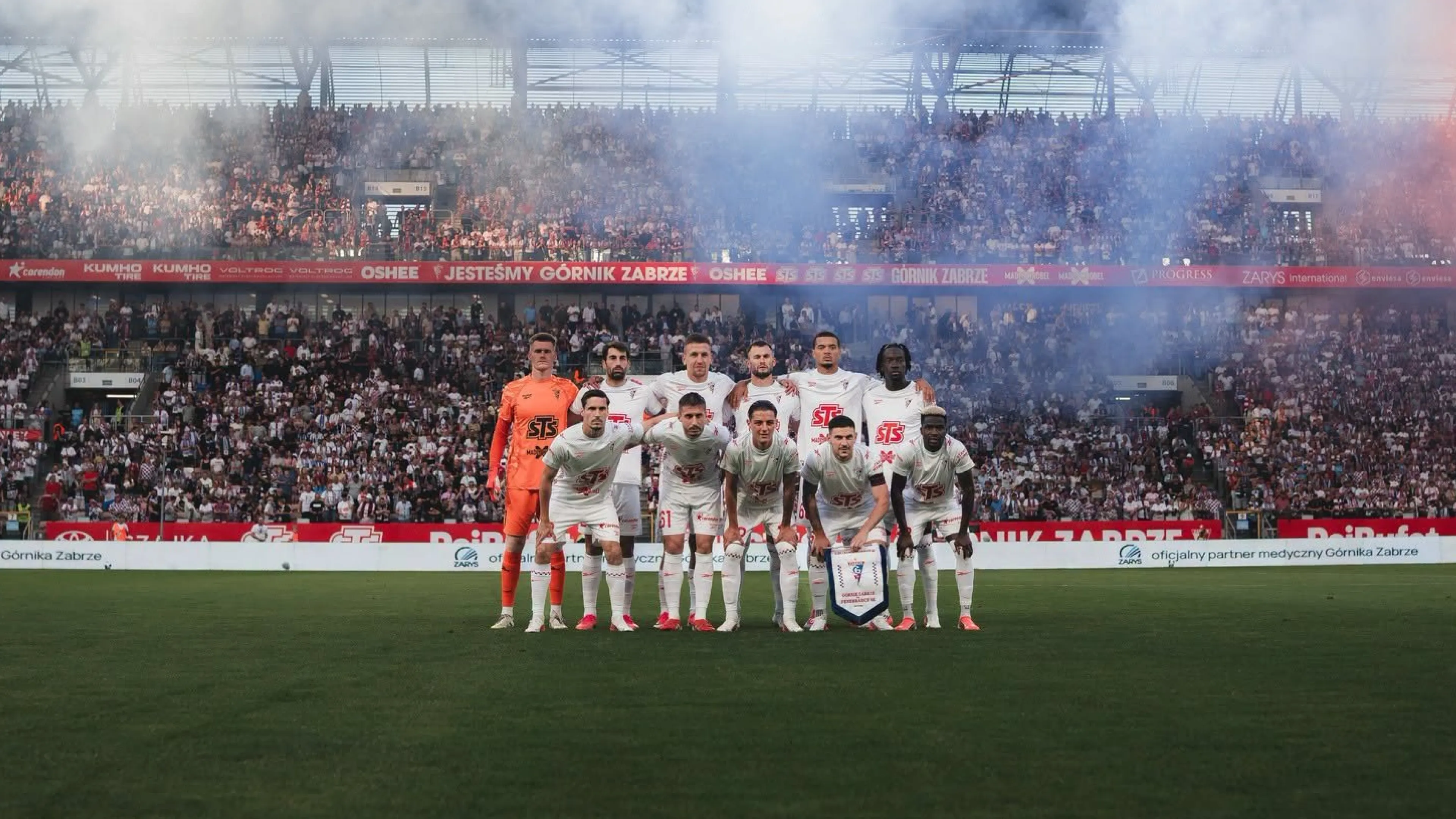
Górnik Zabrze and Fenerbahçe played out a 1-1 draw in the UEFA Champions League, a result that will be viewed with contrasting emotions by the two camps. For the Polish side, earning a point against a club of Fenerbahçe's stature and resources represents a creditable outcome, particularly given the gulf in squad value and European experience between the two clubs. For the Turkish giants, however, dropping two points from a winning position — and against opposition they would have been expected to overcome — will sting considerably. The final scoreline does not fully capture the story of a match that swung on key moments rather than sustained dominance.
Tactically, this was a contest defined by Fenerbahçe's failure to convert their superior quality into the decisive moments that should have separated the sides. The Turkish club finished the game with four big chances to Górnik's one, and their goalkeeper was called upon five times compared to just once at the other end. On paper, those numbers tell the story of a team that controlled large portions of the match. In practice, however, Fenerbahçe's inability to add to Talisca's 12th-minute penalty before half-time allowed Górnik to grow into the game and ultimately find an equaliser before the interval.
The possession statistics reflect a broadly even contest across the ninety minutes. Fenerbahçe held 52% of the ball overall, with that share nudging up to 53% in the second half as they pressed for a winner. Górnik, meanwhile, were not merely sitting back and defending — they registered 15 total shots to Fenerbahçe's 14, won nine corners to their opponents' seven, and completed 383 passes. These are not the numbers of a side simply trying to survive. Górnik engaged, pressed at times, and fashioned enough of the ball to make themselves a genuine threat rather than a passive opponent.
The match ultimately hinged on a single half-time swing: Fenerbahçe led at the interval courtesy of an early penalty, only for Górnik to level matters in first-half stoppage time through Michal Sáček. That goal changed the psychological complexion of the contest entirely. A side that might have retreated into damage limitation suddenly had parity, belief, and a crowd behind them. The second half became a more cautious, probing affair, with Fenerbahçe unable to find the quality in the final third to break down a reorganised and motivated home defence. The draw, in the end, felt like a fair reflection of what both sides produced across ninety minutes.
Górnik Zabrze's performance deserves considerable credit when assessed in full context. Facing a side with significantly greater financial resources and a roster packed with international experience, the Polish club did not simply set up to frustrate. They engaged from the first whistle, pressed with purpose in certain phases, and created enough to justify their point. The fact that they registered 15 total shots — one more than Fenerbahçe — speaks to an attacking intent that was not merely cosmetic. Their one big chance was taken; Fenerbahçe's four were not all converted, which tells its own story about the fine margins in European football at this level.
Defensively, Górnik were organised and committed. Their goalkeeper was called upon only once in the entire match, a remarkable statistic given that Fenerbahçe had four big chances across the ninety minutes. That figure reflects a combination of good defensive positioning, disciplined shape, and a degree of fortune — but also the fact that Fenerbahçe's finishing was ultimately wasteful. Górnik completed 19 tackles across the match, with 11 of those coming in the second half as Fenerbahçe pushed for a winner. The home side held their structure and did not allow the Turkish club to find the spaces they needed in behind the defensive line.
The corner count — nine for Górnik versus seven for Fenerbahçe — is an interesting detail. It suggests that Górnik were pushing the ball into wide areas and generating set-piece opportunities with regularity. In European football, set pieces are often the great levellers, and Górnik will have been aware that dead-ball situations represented one of their clearest routes to threatening a well-organised Fenerbahçe defensive unit. Their nine corners kept pressure on the away side and contributed to the general sense that this was not a one-sided affair, even if Fenerbahçe's quality in possession was marginally superior.
The equalising goal from Michal Sáček in the 45th minute was the defining moment of Górnik's evening. Scoring at that precise juncture — in the final seconds of the first half — denied Fenerbahçe the psychological benefit of going into the break with a lead to protect and a plan to execute. Instead, the interval arrived with the scoreboard level, Górnik's confidence elevated, and the Turkish side forced to reassess. That timing was not simply fortunate; it was the product of Górnik continuing to press and create even after going behind, refusing to accept the deficit as a fait accompli. It was the kind of resilience that earns European points.
Fenerbahçe will leave this fixture with a sense of opportunity missed. They arrived as the more decorated side, with greater depth, superior individual quality across the pitch, and a tactical framework that has been developed over a full season under their coaching staff. They took the lead through a penalty as early as the 12th minute, which should have set the platform for a controlled, professional victory. Instead, they conceded an equaliser before half-time and were unable to find a second goal despite generating four big chances across the ninety minutes. That conversion rate will be the central concern for their coaching staff when reviewing the footage.
In terms of possession and passing, Fenerbahçe were the dominant side. Their 433 passes to Górnik's 383 reflects a team that was comfortable on the ball and capable of recycling possession patiently. Their 52% share of possession was consistent across both halves, and they marginally increased their control in the second period as they looked for the winning goal. The problem, however, was not possession — it was penetration. Fenerbahçe found it difficult to consistently break through a compact Górnik defensive structure, and too often their build-up play stalled in the final third without creating the clear openings their quality should have produced.
The foul count is a telling statistic. Fenerbahçe committed 15 fouls across the match compared to Górnik's eight. That figure suggests a degree of frustration as the game progressed — players going to ground to win the ball when their technical approach was not yielding results. It also gave Górnik a consistent supply of set-piece situations from which to threaten. Fifteen fouls across ninety minutes is not catastrophic, but it does indicate a side that was at times reactive rather than proactive, struggling to impose their preferred rhythm on the contest. Their 25 tackles, compared to Górnik's 19, similarly points to a team that spent portions of the match chasing the game rather than dictating it.
Talisca's penalty gave Fenerbahçe the ideal start, and in the opening exchanges they looked capable of building on that lead. Three big chances in the first half alone represent genuine opportunities to put the game beyond Górnik's reach. The fact that the goalkeeper was beaten only once — from the spot — while those chances went unconverted is the crux of Fenerbahçe's frustration. In the second half, they generated one further big chance but again could not find the finish to match the opportunity. Fenerbahçe's overall shot count of 14 was virtually identical to Górnik's 15, which underlines how this match, despite the quality gap on paper, was played out on broadly level terms across the full ninety minutes.
The match's opening exchanges were shaped almost immediately by the penalty that gave Fenerbahçe the lead. In the 12th minute, Talisca stepped up and converted from the spot, giving the Turkish side an early foothold in the contest. Penalties scored early in European ties carry particular weight — they shift the burden of play onto the opposition and allow the leading side to structure their game around protecting the advantage. Fenerbahçe, with their greater experience at this level, might have been expected to manage that situation effectively. For the first portion of the half, they did, controlling possession and limiting Górnik's ability to find openings in behind.
However, the first half did not follow the script that Fenerbahçe's early lead appeared to be writing. Górnik refused to retreat into a defensive posture and continued to press and create. The home side registered nine total shots in the first half alone — three more than Fenerbahçe's six during that period — and their goalkeeper was not called into action once before the break. Fenerbahçe, despite their lead, had their goalkeeper making three saves in the first forty-five minutes, which underlines how active Górnik were in the attacking phase. The home side were not simply waiting for the game to pass them by.
The equaliser arrived in the 45th minute, scored by Michal Sáček. Coming at the very end of the first half, the goal had maximum psychological impact. Górnik had sustained their attacking effort throughout the opening period and were rewarded in the final moments before the interval. Sáček's goal meant that both teams entered the break level, and the dynamic of the match shifted considerably. What had looked like a straightforward evening for Fenerbahçe became a more uncertain proposition. The home crowd, energised by the late equaliser, would have provided considerable noise and support for the second period, adding another layer of difficulty for the away side.
The second half was a more measured, tactical affair. Fenerbahçe held marginally more possession — 53% — and increased their passing output to 211 in the second period compared to 172 for Górnik. They generated one further big chance but could not convert it, with the home goalkeeper making his sole save of the match during this period. Górnik, for their part, registered six shots in the second half and won four corners, maintaining enough of a presence to prevent Fenerbahçe from settling into a comfortable rhythm. The fouls continued to mount — Fenerbahçe committed eight in the second half alone — and the match ended with neither side able to find the decisive moment. The 1-1 scoreline, set by the 45th minute, remained unchanged through the full ninety.
Milan Škriniar was named the top performer of this match with a rating of 7.7, and the statistics behind that assessment are worth examining in detail. The Fenerbahçe defender played the full ninety minutes and accumulated 70 touches — a significant number for a centre-back, reflecting his involvement in build-up play and his comfort in receiving the ball under pressure. Of his 52 attempted passes, 50 were accurate, giving him a passing accuracy rate of approximately 96%. In a match where Fenerbahçe's overall passing accuracy was not always matched by their penetration, Škriniar's precision in distribution was a consistent feature of their play.
For a defender operating in a Champions League match against an opponent who registered 15 total shots, Škriniar's composure and organisational qualities were clearly central to keeping Górnik's threat manageable. The home side had one big chance across the entire match, and the fact that Fenerbahçe's goalkeeper was called into action only once speaks partly to the defensive solidity that Škriniar anchored. His 70 touches suggest he was regularly involved in both defensive interventions and the initiation of attacking moves from deep, which is a hallmark of the modern ball-playing centre-back role that he has occupied throughout his career.
Škriniar's influence extended beyond the raw numbers. In matches at this level, a defender's ability to read the game, position themselves correctly, and communicate with teammates is often more valuable than any single statistic can capture. His 7.7 rating reflects a consistent, error-free performance across ninety minutes — the kind of display that rarely generates individual headlines but which provides the structural foundation upon which a team's entire game is built. In a match where Fenerbahçe struggled to translate possession into goals, Škriniar's reliability at the back at least ensured the deficit never grew beyond the single equaliser.
The fact that Škriniar earned the match's top player rating despite contributing no goals and no assists is itself a statement about the nature of his performance. In a game that ended 1-1, with both teams unable to find a winner, the cleanest individual contribution came from a defender who completed 50 of 52 passes, stayed on the pitch for the full duration, and provided the kind of positional discipline that prevented Górnik from adding to their single equaliser. For Fenerbahçe, his performance was one of the few unambiguous positives from an evening that otherwise left a great deal to be desired in terms of attacking output and game management.
A 1-1 draw in the UEFA Champions League carries different weight depending on where a club sits in the competition's structure and what their expectations were heading into the fixture. For Górnik Zabrze, a point against Fenerbahçe represents a meaningful contribution to their Champions League campaign — a result that demonstrates they are capable of competing at this level and not simply making up the numbers. Polish clubs have historically found the Champions League group stages and qualifying rounds to be challenging environments, and a draw against a side of Fenerbahçe's calibre is a result that will be noted across the competition.
For Fenerbahçe, the dropped points are more significant in terms of their broader ambitions. The Turkish club has invested heavily in their squad and operates with the expectation of progressing deep into the competition. Dropping two points from a winning position — at home to a side they would have been expected to beat — represents a setback that could have implications for their final standings depending on how the rest of their fixtures unfold. In the Champions League, where the margins between qualification for the knockout rounds and elimination can be extremely fine, every dropped point demands scrutiny.
The big chances statistics are particularly relevant in a European context. Fenerbahçe created four big chances across the match and converted only one — the penalty. In the Champions League, where opponents are well-organised and rarely afford multiple opportunities to score, the failure to take those chances is the kind of inefficiency that separates clubs who progress from those who exit early. Górnik, by contrast, converted their single big chance. That efficiency ratio — one from one versus one from four — encapsulates why the match ended level rather than as a comfortable Fenerbahçe victory.
The result also provides a reference point for assessing both clubs' trajectories in the competition. Górnik have shown they can hold their own against established European sides, which will give them confidence heading into subsequent fixtures. Fenerbahçe, meanwhile, will need to address their conversion rate and their tendency to concede at inopportune moments — the 45th-minute equaliser was particularly damaging from a psychological standpoint. In the broader Champions League picture, results like this one have a way of defining campaigns; a failure to win what should have been a winnable match can set a tone that proves difficult to reverse.
Looking ahead, both clubs will take very different lessons from this result. Górnik Zabrze can draw genuine encouragement from their performance — not in a superficial sense, but in terms of concrete evidence that their tactical approach and defensive organisation are capable of functioning at Champions League level. Their ability to create 15 shots, win nine corners, and score a goal against a side of Fenerbahçe's quality suggests they are not merely participants in this competition but genuine competitors within their bracket. The challenge now is to build on this result and demonstrate that it was not an isolated performance.
For Fenerbahçe, the work ahead is more pressing. Their coaching staff will need to address the attacking inefficiency that has now cost them two points in a match they led and should have controlled. Four big chances created and only one converted is a pattern that cannot persist in the Champions League without serious consequences. The team's general structure — as evidenced by Škriniar's performance and their overall passing numbers — is not the problem. The issue lies in the final third, where decision-making and finishing have not matched the quality of the approach play. That is a fixable problem, but it requires urgency.
Fenerbahçe's foul count of 15 is also something their coaching staff will want to address. In European competition, giving away free kicks in dangerous areas and allowing opponents to accumulate set-piece opportunities is a risk that disciplined sides avoid. If Fenerbahçe are to progress in the Champions League, they will need to be more composed in their defensive work and reduce the frequency with which they give possession away through unnecessary fouls. Their 25 tackles across the match, while reflecting commitment, also suggests they were at times caught out of position and forced into recovery challenges rather than controlling space proactively.
The narrative implications of this draw are significant for both clubs. Górnik have announced themselves as a side capable of earning points at this level, which changes how future opponents will prepare to face them. Fenerbahçe, meanwhile, carry the weight of a result that should have gone in their favour. In European football, reputation counts for something, but results count for more. A dropped point here is not a crisis, but it is a warning — one that the Turkish club's management and coaching staff will need to heed as the competition progresses and the margins for error narrow further.