The 2026/27 Premier League season kicks off on 21 August, just 33 days after the FIFA World Cup final, leaving several clubs with limited time to prepare their returning international stars.
With FIFA regulations requiring players to take a minimum three-week post-tournament break, many teams will have little more than a week or two to reintegrate key players before the opening fixtures.
For clubs such as Tottenham Hotspur, Arsenal, Manchester City and Chelsea, the World Cup's impact could shape the early weeks of the Premier League campaign.
Tottenham are among the clubs facing the biggest challenge after four players remained involved until the final stages of the tournament.
Cristian Romero and new signing Marcos Senesi reached the World Cup final with Argentina, while Pedro Porro helped Spain lift the trophy. Djed Spence remained with England until the third-place play-off on 18 July.
Under FIFA's mandatory rest period, players involved in the final would not return until 9 August, leaving around two weeks to prepare before Tottenham's league opener against Brentford on 22 August.
However, Spurs confirmed Senesi was already at the club's training ground on Thursday to begin pre-season testing after making two World Cup appearances following his late call-up for Argentina.
Managers now face the difficult task of balancing player recovery with tactical preparation, as returning internationals miss valuable fitness work, tactical sessions and pre-season friendlies.
No Premier League clubs had more players progress deep into the tournament than Manchester City and Arsenal.
City's World Cup representatives featured prominently throughout the competition.
Rodri helped Spain win the World Cup after playing 726 minutes, while Marc Guehi and Elliot Anderson reached the final weekend with England. Nico O'Reilly featured during England's run to the semi-finals, while Erling Haaland and Jeremy Doku both reached the quarter-finals.
Arsenal also saw several key players involved until the closing stages.
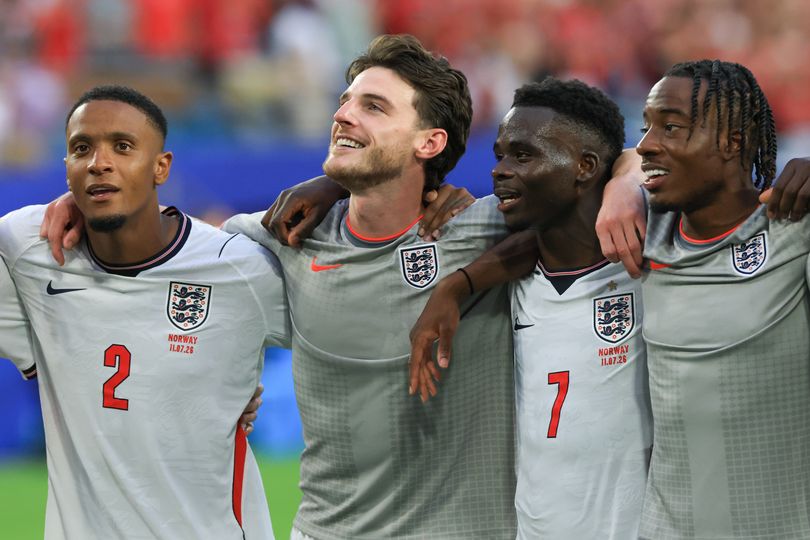
Declan Rice and Bukayo Saka played through England's 6-4 victory over France in the third-place play-off. Martin Zubimendi and Mikel Merino reached the final with Spain, while William Saliba helped France reach the third-place play-off before suffering an injury. Noni Madueke remained with England until the final weekend despite not featuring beyond the quarter-finals, while Martin Odegaard captained Norway to the quarter-finals.
The demanding tournament schedule has already taken its toll.
Manchester City's Rodri recently underwent back surgery and is expected to miss a short period at the beginning of the season.
Arsenal defender William Saliba avoided surgery but will be sidelined for an extended period with a back injury.
While neither injury has been directly linked to World Cup participation, both highlight the increasing physical demands placed on elite footballers amid an ever-expanding calendar.
Aston Villa goalkeeper Emiliano Martinez logged the most minutes of any Premier League player at the World Cup, playing the full 810 minutes of Argentina's run to the final.
Liverpool midfielder Alexis Mac Allister ranked second with 749 minutes, while Spain's Rodri was third with 726 minutes.
Players involved in the World Cup final—including Rodri, Pedro Porro, Martin Zubimendi, Alexis Mac Allister, Enzo Fernandez, Emiliano Martinez and Lisandro Martinez—cannot return before 9 August under FIFA regulations.
England players involved in the third-place play-off are eligible to return one day earlier.
That leaves clubs with roughly 12 days to prepare many of their biggest stars before competitive football resumes.
The challenges extend far beyond this summer.
Many of football's leading players have now competed in three consecutive summers of major international tournaments, following Euro 2024, Copa America, the expanded FIFA Club World Cup, and now the 2026 FIFA World Cup.
Rodri warned as early as 2024 that players were "close" to taking strike action over increasing workloads.
Arsenal manager Mikel Arteta and Manchester City boss Enzo Maresca have also spoken publicly about the growing physical demands placed on elite players.
The World Cup itself produced further injury setbacks.
Aston Villa midfielder Amadou Onana suffered a serious knee injury while representing Belgium, while Manchester United midfielder Manuel Ugarte saw his tournament end prematurely through injury. England also carefully managed Reece James' minutes as he continued his recovery from a hamstring problem.
For Tottenham, Arsenal, Manchester City, Chelsea and several other Premier League clubs, the World Cup's impact will be felt long after the final whistle.
With players only just beginning their mandatory recovery periods, managers face a race against time to prepare their squads for the start of the new season.
The World Cup may be over, but for many Premier League clubs, its biggest challenge is only just beginning.