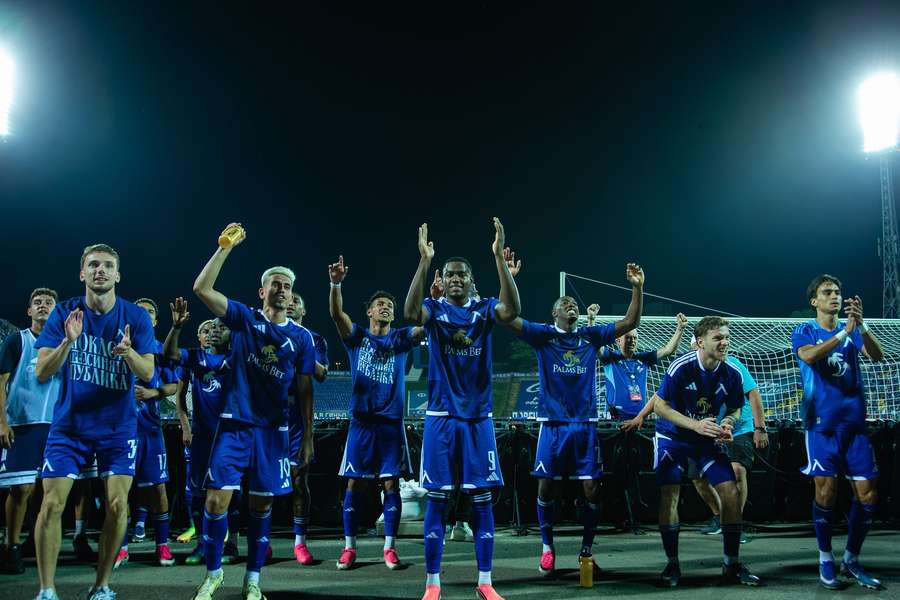
Levski Sofia secured a narrow but thoroughly earned 1-0 victory over Kairat Almaty in their UEFA Champions League qualifying encounter, with Reinaldo's early strike in the 13th minute providing the decisive moment of a match that unfolded in a fascinatingly lopsided fashion. The Bulgarian side arrived in Kazakhstan carrying the ambitions of a club with deep continental history, and they left with three points despite spending the majority of the contest under significant territorial pressure. That they managed to do so speaks to organisation, resilience and, above all, an outstanding individual performance between the posts.
The scoreline of 1-0 flatters neither side entirely and yet is precisely accurate in reflecting the balance of genuine quality on the night. Kairat Almaty dominated possession at 56% across the full 90 minutes and generated 21 total shots to Levski's nine, yet the Kazakh side could only muster two big chances — the same number as their visitors. When the defining metric is converting clear opportunities into goals, Levski's efficiency was not simply fortunate; it was the product of a coherent game plan executed with discipline from the first whistle to the last.
Tactically, this was a match defined by contrasting philosophies. Kairat set about imposing themselves through volume — 499 passes, nine corner kicks, 18 tackles — attempting to build pressure through sheer accumulation of attacking moments. Levski, by contrast, were far more selective, completing 416 passes and working to exploit transitions rather than sustain possession. With 14 fouls committed, the Bulgarians were not above using physicality to disrupt Kairat's rhythm, and that pragmatism proved an effective counterweight to the home side's territorial ambitions.
What made the result possible, beyond Reinaldo's clinical early finish, was the manner in which Levski's defensive structure held firm under second-half duress. Kairat generated 15 of their 21 shots after the break, earned seven of their nine corners in that same period, and pushed with increasing urgency as the clock wound down. Levski's goalkeeper made five saves in the second half alone, a workload that underlines just how precarious the final stages were. Yet the clean sheet was preserved, and Levski Sofia will travel home with a result that could prove pivotal in the context of this qualifying campaign.
Kairat Almaty's performance was one of persistent endeavour that ultimately fell short of the quality required to unlock a well-organised Levski backline. The Kazakh side controlled the ball for 56% of the contest overall, a figure that rose to 58% in the second half as they pushed to find an equaliser, and their 499 passes represented a clear intent to build patiently and probe for openings. The problem, however, was that this volume of possession translated into just two big chances across the entire match — a conversion rate that exposes the limitations of their attacking creativity when faced with a compact, low-block defensive shape.
In the first half, Kairat were actually reasonably competitive in terms of shot volume, registering six attempts to Levski's five, and their goalkeeper was called into action for one save in that period. But the defining moment arrived against the run of early play, when Reinaldo's 13th-minute goal gave Levski the lead before Kairat had truly settled into their intended rhythm. Conceding so early fundamentally altered the tactical landscape, forcing the home side to chase the game from a position they had not anticipated occupying, and that psychological disruption was never fully overcome.
The second half told a story of mounting frustration. Kairat generated 15 shots after the break — more than double their first-half output — and earned seven corner kicks as they sought to use set-pieces as a route back into the contest. Their 18 tackles across the full match indicate a team that was also fighting hard without the ball, attempting to win possession in areas that could fuel counter-attacks. Yet their goalkeeper was forced into just one save across the entire 90 minutes, a telling indicator that despite their territorial dominance, Levski were sufficiently comfortable on the ball in the moments that mattered to avoid gifting Kairat any meaningful opportunities on the break.
The tactical question for Kairat's coaching staff will be how to address the disconnect between possession statistics and genuine goalscoring threat. Accumulating 21 shots is a respectable total, but if the vast majority of those efforts are speculative or from unfavourable positions, the raw number becomes misleading. Against a side as defensively disciplined as Levski proved to be, Kairat needed greater precision and movement in the final third to create the kind of clear-cut chances that could genuinely test the goalkeeper. Nine corner kicks is another metric that sounds encouraging in isolation, but the inability to convert any of that set-piece volume into meaningful scoring opportunities suggests that delivery and movement from dead balls is an area requiring attention ahead of any potential second leg or future qualification matches.
Levski Sofia's performance was a textbook illustration of how a side can win a match without controlling it. They held 44% of the ball, attempted nine shots to Kairat's 21, and conceded nine corner kicks against four of their own — yet they kept a clean sheet and returned home with a 1-0 victory. The tactical intelligence underpinning that outcome was evident from the opening minutes, when Levski demonstrated a clear willingness to sit in defensively compact lines and invite Kairat to come at them, trusting in their ability to absorb pressure and punish on the counter.
The early goal from Reinaldo in the 13th minute was not simply a fortunate strike — it was the product of Levski's intent to be dangerous in transition and to take their chances when they arrived. Having secured that lead, the Bulgarians had a clear tactical framework to work within: defend the shape, limit big chances against, and use the ball intelligently when it came to them. Their 416 passes across the match, while fewer than Kairat's total, were deployed with greater directness and purpose, particularly in the second half when Levski's 177 passes were focused on retaining the ball under pressure rather than building elaborate attacking moves.
Defensively, Levski were outstanding. Their goalkeeper made six saves in total — five of those coming in the second half as Kairat pushed with increasing urgency. The back line restricted the home side to just two big chances across the full 90 minutes, which is a remarkable defensive achievement given the volume of attempts Kairat managed. The 14 fouls Levski committed across the match were a deliberate tool for disrupting Kairat's build-up play, breaking up sequences before they could develop into genuine danger, and while it risked accumulating bookings, the tactic was managed with sufficient care to avoid any major disciplinary consequences that could have undermined the result.
Where Levski will feel there is room for improvement is in their own attacking output. Nine total shots and two big chances is a modest return, and the fact that their goalkeeper was required to make six saves suggests the margin for error in this result was narrower than the coaching staff would ideally have wanted. Had Kairat's finishing been sharper, or had a set-piece delivery found its mark, the outcome could easily have been different. Levski's task in any subsequent leg or future qualifying round will be to add a greater attacking dimension to their game, ensuring that opponents cannot commit fully to attacking without fear of being punished on the counter with greater frequency and precision.
The match began with Kairat Almaty attempting to impose themselves on home soil, seeking early control of possession and territory. But it was Levski Sofia who drew first blood, and they did so with an efficiency that immediately set the tone for the evening. In the 13th minute, Reinaldo found the net to give the Bulgarian side a lead that would ultimately prove unassailable. The goal arrived at a moment when Kairat had not yet fully established their intended dominance, and the timing was psychologically significant — forcing the home side to alter their approach almost before they had properly begun to implement it.
The first half that followed was a relatively balanced affair by the numbers, with Kairat registering six shots to Levski's five and each side's goalkeeper making one save. Kairat had one big chance in the opening 45 minutes, which they were unable to convert, while Levski's threat was primarily confined to the goal they had already scored and the occasional transition opportunity. Levski held their 1-0 lead at the break having largely achieved what they set out to do in the first half — score early, absorb pressure, and remain defensively compact without conceding anything of genuine danger.
The second half was a markedly different story in terms of tempo and pressure. Kairat emerged with clear intent, generating 15 shots in the second period — more than double their first-half output — and earning seven corner kicks as they sought to find a way back into the contest. Their possession share rose to 58% after the break as they pushed bodies forward and attempted to use wide areas and set-pieces to create openings. Levski's goalkeeper was called upon five times in the second half alone, a workload that underscores just how sustained the home side's pressure was during those final 45 minutes.
Despite that pressure, Levski's defensive organisation never visibly buckled. The back line tracked runners, contested aerial duels from corners, and limited Kairat to just one big chance in the second half — the same number as they themselves created in that period. The final whistle confirmed a 1-0 victory for the visitors, a result built on a single moment of clinical finishing from Reinaldo in the 13th minute and 77 minutes of disciplined, organised defensive work thereafter. It was not a match that produced a wealth of attacking spectacle, but it was a match that Levski Sofia managed with considerable tactical intelligence from start to finish.
S. Vutsov, Levski Sofia's goalkeeper, was the standout individual of this contest by a considerable margin, earning a match rating of 8.7 that reflected a performance of genuine quality under sustained and at times intense pressure. Across 90 minutes, Vutsov made six saves in total — one in the first half and five in the second — and his work was central to preserving the clean sheet that made Levski's 1-0 victory possible. Without those interventions, the outcome of this match would almost certainly have been different, and Kairat Almaty would have had cause to feel that their second-half dominance had earned them at least a share of the spoils.
Vutsov's 57 touches across the match reflect a goalkeeper who was actively involved in the game rather than a peripheral figure. Of those 57 touches, 28 of his 42 attempted passes were completed accurately — a passing accuracy that, while not exceptional for a modern goalkeeper, is entirely reasonable for a player operating under the kind of pressure Levski faced in the second half. His distribution under pressure is a component of his game that deserves acknowledgement; in moments when Kairat were pressing high and seeking to win the ball back quickly, Vutsov's ability to play out calmly rather than concede possession cheaply helped Levski retain their shape and composure.
The five second-half saves were the defining contribution of Vutsov's evening. As Kairat generated 15 shots after the break and earned corner after corner, the Bulgarian goalkeeper was required to be alert, well-positioned and technically sound on multiple occasions. Each of those saves came at a moment when Kairat's momentum was building and the crowd was behind the home side — circumstances in which a goalkeeper's concentration and composure are tested as much as their technical ability. Vutsov demonstrated both qualities in abundance, and his ability to remain focused through a prolonged period of defensive pressure was arguably the most impressive aspect of his display.
It is worth contextualising Vutsov's performance within the broader tactical picture. Levski's defensive structure did much of the work in limiting Kairat to two big chances across the full match, and the outfield players deserve credit for the organisation that made Vutsov's job manageable rather than impossible. But the six saves he made — particularly the five in the second half — represent the margin between a clean sheet and a goal conceded, between a victory and a draw. In knockout or qualifying football, that margin is everything. Vutsov's rating of 8.7 is not inflated; it is an honest reflection of a goalkeeper who was the decisive individual in a tightly contested European tie.
This result carries genuine weight in the context of UEFA Champions League qualifying, where single-goal margins can be the difference between progression to the next round and elimination from European competition entirely. For Levski Sofia, a 1-0 away victory represents an excellent foundation from which to build, providing them with both the tangible advantage of a lead and the psychological benefit of having demonstrated they can perform in a hostile environment against a side that dominated large portions of the contest. In the context of European qualifying, the ability to grind out results when not at your best is a quality that distinguishes sides capable of advancing from those who fall short.
For Kairat Almaty, the result is a damaging one, particularly given the nature of their performance. The Kazakh side dominated possession, generated significantly more shots, and pushed hard in the second half — yet they leave the first leg behind on the scoreline. In a two-legged tie format, that means Kairat must now travel to Bulgaria needing to score and avoid conceding, a task that becomes considerably more difficult against a side that has already demonstrated its capacity to defend with organisation and discipline. The home advantage that Kairat enjoyed in this first leg has been negated, and the pressure now rests entirely on their shoulders.
The broader UEFA Champions League qualifying picture is one in which sides from less prominent leagues face an uphill challenge against more established European clubs, and this result reflects that dynamic to some extent. Levski Sofia, representing Bulgarian football, have shown that tactical discipline and individual quality in key positions can compensate for potential gaps in squad depth or financial resources. Their ability to execute a clear game plan — score early, defend the lead, absorb pressure — is the kind of pragmatic European know-how that serves sides well in qualifying rounds where margins are fine and individual errors are punished severely.
Kairat Almaty's performance will also be viewed in the context of Kazakh football's ongoing development within UEFA competition. The club has significant resources and ambitions within the Kazakhstani football landscape, and their 21 shots and territorial dominance suggests they are not without quality. But European qualifying football demands a level of clinical precision that Kairat have not yet demonstrated in this tie. Their inability to convert their two big chances, combined with the concession of an early goal, represents the kind of costly inefficiency that clubs at this level of European competition cannot afford if they are to progress.
Levski Sofia leave Kazakhstan with a 1-0 advantage and, perhaps equally importantly, with a clear understanding of what they are capable of when their defensive structure functions as intended. The performance was not one that will be remembered for attacking brilliance — nine shots and two big chances is a modest attacking return — but it was a performance that demonstrated the kind of tactical maturity that European qualifying requires. The coaching staff will have taken considerable satisfaction from watching their side absorb 15 second-half shots without conceding, and from the manner in which individual players — none more so than Vutsov — rose to the occasion when tested.
The challenge for Levski ahead of any second leg in Sofia will be to add an attacking dimension to their game without sacrificing the defensive solidity that made this result possible. Playing at home with a one-goal lead creates its own tactical dilemmas — whether to sit deep and protect the advantage or to push for a second goal that would make the tie safe. Given the nature of this first leg, in which Kairat showed they can create volume of shots when given space to build, Levski will need to be thoughtful about how much they open up. A second goal in Sofia would effectively end the tie; another 1-0 victory, or even a 0-0 draw, would be sufficient to progress.
For Kairat Almaty, the path forward is clear if not comfortable. They must travel to Bulgaria and score, while also ensuring they do not concede. Their second-half performance in this first leg showed they have the attacking intent and the work rate to create opportunities, but the conversion of those opportunities into goals is a problem that must be addressed before the return fixture. The coaching staff will need to examine their approach in the final third — whether the issue lies in delivery, movement, decision-making, or a combination of all three — and find solutions within a compressed timeframe.
Beyond the immediate context of this tie, both clubs will draw broader lessons from this encounter. Levski Sofia have demonstrated that Bulgarian football can compete at this level when organised correctly, and that result will serve as a confidence-building reference point regardless of what happens in the second leg. Kairat Almaty, meanwhile, face the kind of reckoning that is familiar to ambitious clubs from leagues outside Europe's elite tier — the recognition that possession statistics and shot volumes must be converted into goals if continental aspirations are to be realised. How each side responds to those lessons will define not just this tie, but their respective trajectories in European competition going forward.