The 2026-27 football season will introduce a significant number of new laws and trials, with changes to VAR, substitutions, injuries and time-wasting designed to reduce delays and keep matches flowing.
Many of the measures were first used at the World Cup and will now be implemented throughout English football. They will apply from the EFL and Sunday's Community Shield between Arsenal and Manchester City to the Premier League and grassroots football, although VAR-related changes will only apply in competitions where the technology is used.
The objective is simple: discourage deliberate delays, increase the amount of time the ball is in play and reduce the need for lengthy periods of added time.
At the 2022 World Cup in Qatar, the ball was in play for an average of 58 minutes and three seconds per match, representing 56.86% of total match time. At this summer's World Cup, that increased slightly to 58 minutes and 16 seconds, but reduced added time meant the ball was in play for 60.43% of the overall match duration.
The new measures are primarily intended to change player behaviour rather than simply punish offenders. However, teams accustomed to using time-management tactics to protect results may have to adapt.
Here are the key changes for the 2026-27 season.
Referees will have greater powers to punish players who deliberately delay restarts.
The five-second countdown will not automatically begin when the ball goes out of play. Instead, it can be triggered when the referee believes a player is deliberately disrupting the restart.
Tactics such as leaving the ball on a cone or dropping it for a team-mate could result in the countdown being activated.
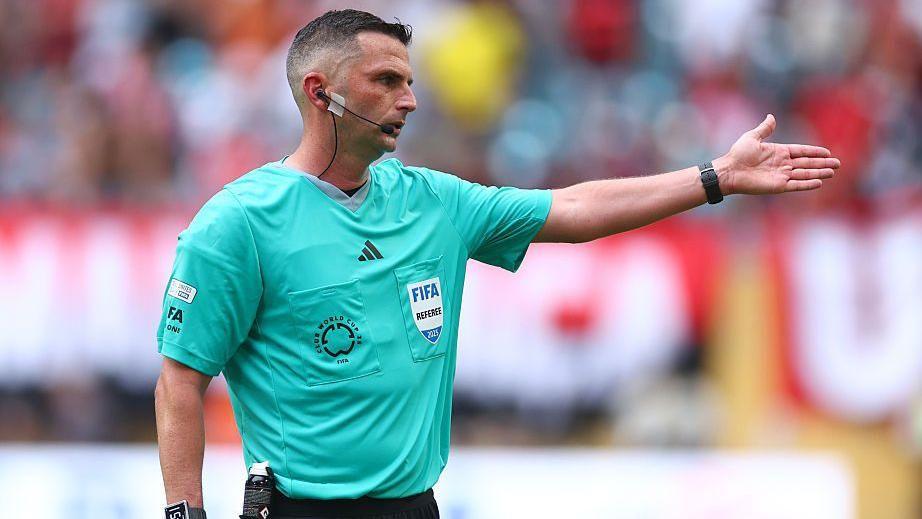
The referee will blow the whistle to warn the player and signal the beginning of the five-second period while visibly counting with an arm movement.
If the player fails to restart play before the countdown expires, possession can be awarded to the opposition for a throw-in.
Long-throw routines will not automatically be penalised because they are considered set-piece routines. However, the countdown can begin once players are in position.
Goalkeepers who deliberately delay goal-kicks could face an even greater punishment, with the opposition potentially awarded a corner if the goalkeeper takes too long.
Players being substituted will now have 10 seconds to leave the pitch at the nearest point.
If a player fails to leave within the allotted time, their replacement cannot enter for at least one minute, leaving the team temporarily reduced to 10 players.
Middlesbrough striker Will Lankshear became the first player punished under the rule during a Carabao Cup match against Wrexham.
With Middlesbrough leading 1-0 in the 80th minute following Lankshear's goal, the striker slowly left the field while applauding supporters. Despite manager Kim Hellberg urging him to hurry, he failed to leave quickly enough.
Replacement Fin Cartwright was therefore prevented from immediately entering the pitch.
The substitute must wait until the next break in play after the one-minute period, meaning a team could potentially remain a player short for several minutes.
Exceptions will apply in certain circumstances, including injuries and security concerns.
Another significant change concerns players who require treatment or cause the referee to stop play because of an apparent injury.
Previously, players were generally required to remain off the pitch for 30 seconds after receiving treatment. That period has now increased to one minute.
The rule has also been strengthened to discourage players from going down simply to interrupt an opponent's momentum.
A player can be required to leave the field if their injury causes the referee to stop the match, even if they do not request treatment.
However, the rule will not apply when a player is down injured and the ball naturally goes out of play, such as for a throw-in or goal-kick.
There are concerns that the longer absence could disadvantage players suffering genuine injuries, so several exemptions have been included.
Notably, if the player responsible for the foul receives a yellow or red card, the injured player will not automatically have to remain off the pitch. This is designed to prevent teams from gaining a numerical advantage through tactical fouls.
English professional football will also trial a measure aimed at stopping so-called goalkeeper tactical timeouts.
The tactic has become increasingly common, with goalkeepers sitting down and requesting treatment while their team-mates gather near the technical area to receive instructions from the coaching staff.
Under the new trial, if a goalkeeper requests treatment, the coach must select an outfield player to leave the pitch for one minute.
The team will have 10 seconds to tell the fourth official which player is leaving. If no player is nominated within that period, the captain must leave the field.
The measure is intended to remove the tactical benefit of using a goalkeeper injury to disrupt an opponent's momentum or create an unofficial team timeout.
Other countries are testing a slightly different version in which the goalkeeper's captain must always leave the pitch.
Exceptions will apply in situations such as when the goalkeeper has been fouled or is bleeding.
The new season will also bring greater clarity over when a goal-kick has officially been taken.
Short goal-kicks have become increasingly common, often involving defenders remaining inside the penalty area to receive possession from the goalkeeper.
This has occasionally created confusion over whether the ball was in play when a defender subsequently handled it.
Aston Villa defender Tyrone Mings conceded a penalty against Club Brugge in the Champions League in November 2024 after handling the ball following a pass from goalkeeper Emiliano Martinez.
Earlier that year, Arsenal defender Gabriel was not penalised for touching the ball with his hand after David Raya had played it to him against Bayern Munich.
From the 2026-27 season, competitions will follow a consistent interpretation.
Once the goalkeeper or a defender kicks the ball from a goal-kick, the restart will be considered taken. If a defender then deliberately handles the ball, a penalty can be awarded. If the goalkeeper handles a deliberate backpass, the restart will be an indirect free-kick.
VAR will also receive additional powers for the new season.
One major change concerns players dismissed after receiving a second yellow card.
VAR will be permitted to review the incident leading to the second caution when that booking results in a red card.
However, VAR cannot intervene simply because a player already on a yellow card potentially commits another bookable offence.
The review must identify a clear error in the decision to award the foul rather than merely represent a different subjective interpretation of whether the challenge deserved a card.
As part of a trial, VAR will also be able to examine certain attacking fouls committed before the ball is in play at a set-piece.
A review can take place when the incident directly leads to a goal, penalty decision or disciplinary sanction.
If an attacking foul is identified before a corner has been taken, for example, the restart would be a retaken corner because a free-kick cannot be awarded for an offence committed while the ball is not in play.
VAR will not be able to review defensive fouls committed before the restart because a penalty cannot be awarded while the ball is out of play.
There has also been clarification regarding VAR intervention for mistaken identity.
During the World Cup, VAR was used in some cases involving simulation. However, football's law-making body, IFAB, subsequently clarified that this was not the intended interpretation.
The provision is designed for genuine cases of mistaken identity, such as when the referee penalises one team for a handball that was actually committed by a player from the opposing side.
Not every World Cup trial will be introduced into English football.
VAR will not intervene to correct wrongly awarded corners, while there will also be no automatic red-card intervention involving players covering their mouths during confrontations.
The overall focus for 2026-27 is instead on reducing time-wasting, improving match flow and correcting specific clear errors, with players and teams expected to adjust quickly to a stricter approach to delaying tactics.