30 September 2026
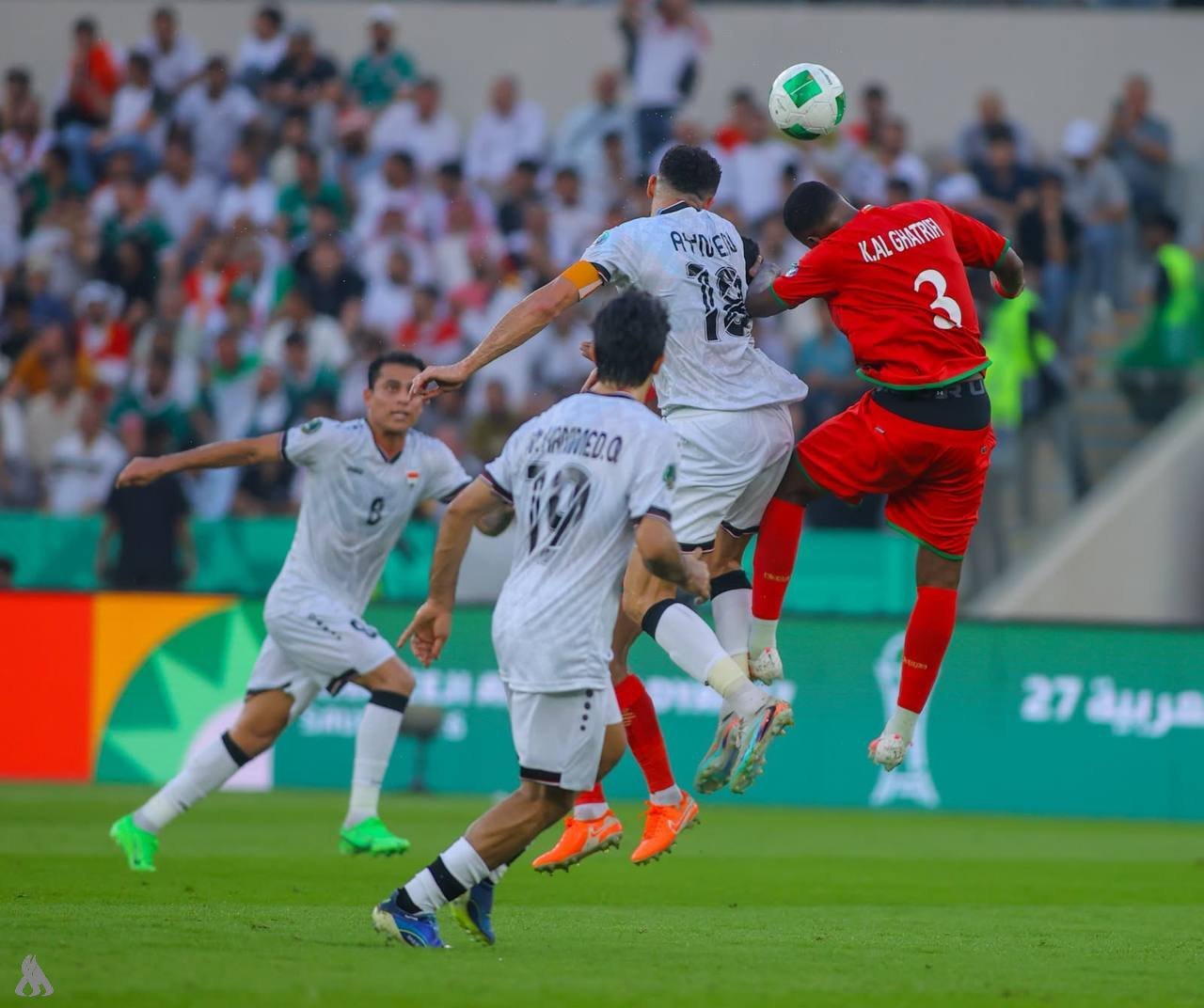
The draw for the "Gulf Cup 27" sparked widespread controversy after it determined Oman’s qualification for the semi-finals at the expense of Iraq, following a tie between the two teams in points, goals, and fair play records.
Saudi Arabia had already secured the top spot in the group with a perfect record of 9 points, while Iraq and Oman entered the final round competing for the second qualifying spot.
Iraq lost 0–2 to Saudi Arabia, whereas Oman came from behind to defeat Kuwait 3–1; consequently, both teams finished with 4 points.
A tie in points was insufficient to determine the qualifier, as the two teams had drawn 1–1 in the opening round and were also level on goal difference, goals scored, and goals conceded, according to the group's final statistics.
Reports indicate that the number of yellow cards was also equal, with no red cards issued.
With the deadlock persisting, the Gulf Cup Federation’s Competitions Committee resorted to a draw, which awarded Oman the semi-final spot.
Iraq’s head coach, Australian Graham Arnold, objected to the use of a draw, arguing instead for the use of FIFA rankings, given that Iraq held a higher ranking than Oman.
The Iraqi position is based on the fact that FIFA uses world rankings as a tie-breaking criterion in some of its competitions. For the 2025 Arab Cup, for instance, FIFA regulations stipulate resorting to the latest world rankings only after exhausting criteria such as head-to-head records, goal difference, goals scored, and fair play.
However, this does not automatically mean the Gulf Cup Federation was bound to apply FIFA’s regulations for the 27th Gulf Cup. The tournament operates under its own specific regulations, and the Federation had confirmed prior to the competition that international rankings were used to assign teams to the draw's seeding pots.
Was the draw a surprise?
The draw itself was not an impromptu decision made after the match ended; rather, it served as a last resort when the two teams could not be separated based on the tournament's established criteria, according to reports covering the incident.
Consequently, the real debate is not necessarily about whether the draw violated FIFA regulations, but rather centers on a more critical question: Should the 27th Gulf Cup regulations have included an additional criterion—such as FIFA rankings—to be applied before resorting to a draw?