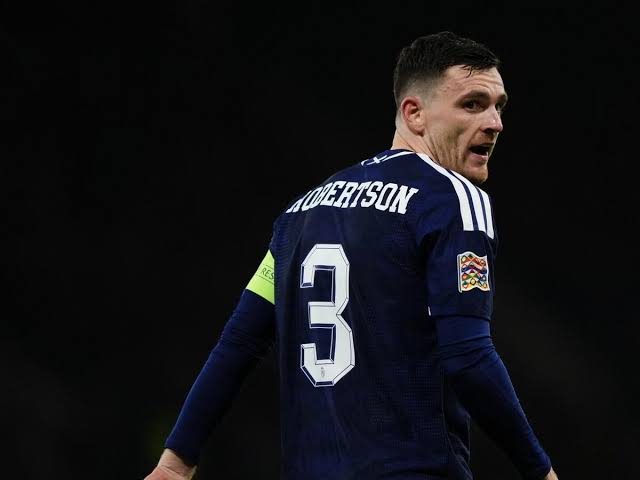
Scotland captain Andy Robertson has warned that the national team cannot afford to wait for results after a humiliating 4-0 defeat to Switzerland secured a third-place finish in their UEFA Nations League group.
The heavy loss in St Gallen has intensified scrutiny of head coach Sebastien Pocognoli, who has repeatedly called for patience as he attempts to introduce a more attacking style of football.
Appointed in August as Steve Clarke's successor, the Belgian has managed just two victories in his opening six matches, both against North Macedonia, while Scotland have conceded 10 goals during that period.
Monday's defeat exposed further defensive weaknesses as Scotland surrendered a promising start against a much-changed Switzerland side.
Bologna midfielder Lewis Ferguson scored an unfortunate own goal before the hosts struck twice shortly after half-time to establish a commanding 3-0 advantage. Zeki Amdouni completed the rout with a late fourth goal.
Robertson, who surpassed Kenny Dalglish to become Scotland's most-capped men's international on the night, was furious with his team's collapse.
"First half, I thought we were in the game, we lost a stupid goal, but I thought we had chances and could have been 2-1 at half time," Robertson said.
"By the time you get to 50 minutes and you're 3-0 down, that can't happen in international football."
The Tottenham Hotspur defender rejected suggestions that Scotland could afford an extended rebuilding period under their new manager.
"I don't think you've got time in international football, you have to do it," he insisted.
Robertson also acknowledged the frustration of supporters who continue to follow Scotland despite disappointing performances.
"We don't have time, the players do not have time, we have got to step up."
With Scotland not scheduled to return to international action until March, the captain admitted the lengthy break would make the defeat particularly difficult to accept.
What should have been a historic evening for Robertson quickly became another damaging result for Scotland and a growing test of Pocognoli's leadership.
The former Union Saint-Gilloise and Monaco coach arrived promising a more entertaining, attack-minded approach, but his early results have raised doubts about whether his tactical philosophy can deliver success at international level.
Robertson was not alone in questioning Scotland's performances.
Midfielder John McGinn offered a similarly critical assessment when asked whether the national team was moving in the right direction.
"Well, obviously the trajectory of the results means it's impossible for me to say yes," McGinn admitted.
Billy Gilmour also questioned the team's intensity and determination following the defeat.
"As a team we know we need to show passion and fight. We've not quite done that tonight," he said.
The players' comments have added to concerns surrounding Pocognoli's tactical decisions, particularly his preference for a 3-5-2 formation.
Supporters have questioned a system that limits opportunities for traditional wingers and has forced players such as Ben Gannon-Doak into unfamiliar wing-back positions.
While Pocognoli remains committed to developing his approach, Scotland's defensive vulnerability and inconsistent performances have increased pressure for immediate improvements.
Former Scotland head coach Craig Levein believes Pocognoli should prioritise defensive organisation rather than attempting to overhaul the team's playing style too quickly.
Speaking on BBC Scotland, Levein suggested the Belgian could benefit from adopting elements of Steve Clarke's approach, which focused on making Scotland difficult to beat.
"Pocognoli is picking up where Clarke left off," Levein said.
"In that situation, you need to get off to a good start. That's what the players are looking for - that you're going to make them better."
Levein argued that Scotland's limited attacking threat makes defensive stability even more important.
"I'd be thinking 'we need to stop losing goals'. We haven't got a potent threat, so how do we get results? As Steve recognised, you need to be hard to beat."
His comments reflect growing concerns that Scotland's attempts to play more expansive football have left them exposed defensively without producing enough attacking improvement.
With 10 goals conceded in six matches, Pocognoli faces increasing pressure to find a balance between his attacking ambitions and the defensive discipline required at international level.
Despite the heavy scoreline and criticism from his players, Pocognoli remained optimistic about Scotland's development.
The Belgian insisted the result did not accurately reflect his team's overall performance, pointing to their promising first half and periods of attacking control.
"The score is heavy with the 4-0, but I don't think it's a reflection of the game," Pocognoli said.
"We played a good first half, we created chances, we were dominant in some moments, and we faced Switzerland with different shapes and adapted well from the first minute."
He acknowledged the disappointment of conceding four goals but maintained that his players had shown encouraging signs during his first two international camps.
Pocognoli also reiterated his belief that additional time together would allow Scotland to correct their mistakes and become more consistent.
"The more we have games together, the more we will try to fix these things," he explained.
"We have a lot of good response from this camp and it's good for the future as well."
However, his positive assessment contrasted sharply with the frustration expressed by several senior players.
Former Scotland winger Pat Nevin was unconvinced by Pocognoli's post-match explanation and suggested the Scottish Football Association should assess whether the players remain confident in their manager.
Speaking on BBC Scotland's Sportsound, Nevin criticised the Belgian's tendency to emphasise positives despite another disappointing result.
"If I'm ever in trouble and I need a PR man, I'm getting him because he's absolutely good at it," Nevin said.
"He's certainly a glass-half-full person. You can talk away any moment and say it's just a moment, but it's four moments, five moments, six moments."
Nevin believes Scotland's senior players should have an opportunity to express their views on Pocognoli's leadership and tactical decisions.
He suggested that uncertainty among influential members of the squad would represent a serious concern for the SFA.
"If a couple of the main ones say 'we're not sure of the decision-making' then I think it's got to that stage," he warned.
Six matches into his tenure, Pocognoli faces an increasingly difficult challenge to convince players, supporters and Scottish football authorities that his approach is producing meaningful progress.
His commitment to attacking football has yet to deliver consistent results, while defensive mistakes continue to undermine Scotland's performances.
The defeat to Switzerland has also highlighted a growing divide between the manager's calls for patience and the urgency expressed by senior players.
With international football not returning until March, Pocognoli has time to review his tactics and address Scotland's weaknesses, but limited opportunities to demonstrate improvement on the pitch.
For Robertson and his teammates, the message is clear: Scotland must deliver better performances and results when they return to action.
The pressure is now firmly on Pocognoli to prove that his vision can translate into success before patience runs out.

