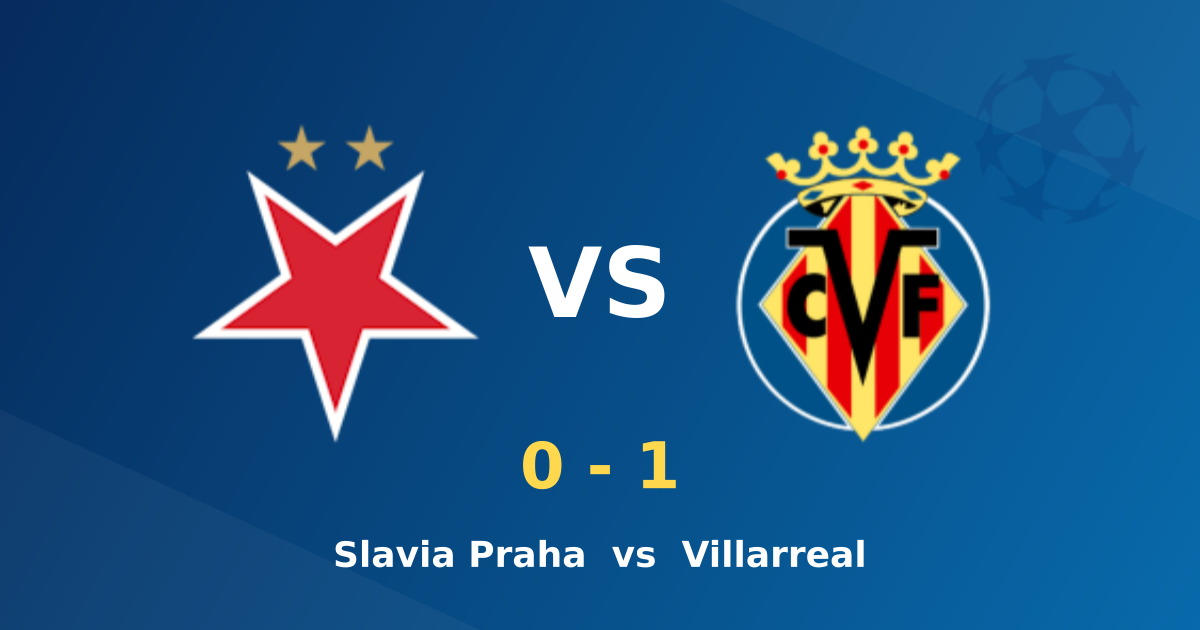
Villarreal secured a 1-0 victory away at Slavia Praha on Wednesday, 25 November 2026, in the fifth round of the UEFA Champions League 26/27 group phase. The only goal of the match arrived in the 62nd minute, converted by Tani Buchanan, and it proved sufficient to separate two sides who, for large portions of the contest, appeared evenly matched in terms of territorial control and passing volume. The result continues to underline Villarreal's capacity to win matches through efficiency rather than dominance, taking their single clear opportunity and converting it while conceding very little at the other end.
The tactical picture over the full 90 minutes was one of contrasts rather than imbalance. Slavia Praha finished the match having registered 13 total shots to Villarreal's seven, and they dominated corner kicks to an almost extraordinary degree — 14 to zero across the full match. That level of set-piece pressure suggests Slavia were consistently pushing into dangerous areas and forcing Villarreal to concede possession of wide channels, yet the Czech side could only muster one big chance across the entire game. Villarreal, by contrast, generated two big chances from considerably fewer attacking forays, which speaks directly to their clinical approach in the final third.
Ball possession told its own story depending on which half you examined. In the first period, Villarreal held 56% of the ball and appeared to be setting the tempo, playing through Slavia's press with relative composure — 222 passes to Slavia's 157 in that opening 45 minutes. The second half saw the dynamic shift, with Slavia Praha taking a 52% share of possession and increasing their shot volume dramatically from three to ten. Yet despite that territorial pressure, Villarreal's goalkeeper was only called upon three times after the break, and crucially the visitors scored during the period when Slavia were supposedly in the ascendancy, catching their hosts on the counter or from a well-worked set-piece situation.
The match also highlighted a disciplinary dimension worth noting. Villarreal committed 15 fouls across the 90 minutes to Slavia's 12, suggesting the away side were prepared to use the rulebook as a defensive tool when needed. Slavia, meanwhile, accumulated 12 fouls of their own, and the 14 corners they won indicate they were working hard to find routes to goal through wide areas, recycling possession and looking to exploit aerial situations. In the end, the match was decided by a single moment of quality from a player who took his chance with both hands, and Villarreal's defensive organisation ensured that moment was all they needed.
Slavia Praha's performance at Eden Aréna on Wednesday was one of effort and volume without the corresponding reward. The Czech champions generated 13 total shots across the match — nearly double Villarreal's seven — and earned an almost implausible 14 corner kicks compared to their opponents' zero. That corner statistic alone tells a story of a team that was consistently threatening from wide positions and forcing the Villarreal defence to defend their box repeatedly. Yet the conversion of that pressure into genuine goal-scoring opportunities remained elusive, with just one big chance recorded for the home side over the full 90 minutes.
The first half was a period in which Slavia struggled to assert themselves in terms of ball retention. They managed just 157 passes in that opening 45 minutes, compared to Villarreal's 222, and held only 44% of possession. Their goalkeeper was called upon once in the first period, suggesting Villarreal were not entirely without threat going forward, and Slavia's seven corners in the opening half indicate they were already probing down the flanks but finding it difficult to create clear openings from open play. The tactical shape appeared to invite pressure through wide areas, which produced corner opportunities but not the direct chances that a team of Slavia's ambition would have been targeting.
The second half saw a significant tactical recalibration from the home side. Slavia's possession share climbed to 52%, they registered ten shots in the second period alone, and their goalkeeper made three saves — suggesting Villarreal were not entirely passive after taking the lead, but the home side were doing the majority of the pressing and attacking work. The 14 tackles Slavia completed across the full match, nine of them in the second half, reflects a team that was fighting to win the ball back quickly and sustain attacking momentum. The problem, however, was that the goal they conceded in the 62nd minute fundamentally changed the nature of the task they faced, and chasing the game against a well-organised Villarreal side is a different proposition entirely.
Slavia's foul count of 12 across the match — eight of them in the first half — indicates a degree of frustration in their pressing and a willingness to disrupt Villarreal's build-up through physical means when technical interceptions were unavailable. Their 15 tackles overall show that the defensive and midfield work rate was not lacking, but the clinical edge that separates a competitive performance from a winning one was absent on this occasion. With one big chance registered and 13 shots taken, the conversion rate was simply insufficient. For a side hosting a Champions League 26/27 fixture and generating the kind of set-piece volume they managed, a return of zero goals represents a missed opportunity that will be difficult to look past when the round's results are assessed.
Villarreal's victory at Slavia Praha was built on a foundation of defensive solidity and tactical discipline rather than attacking fluency. The Spanish side finished the match with seven total shots — a modest total — but crucially converted two of those into big chances and ultimately took one of them. Their goalkeeper made just one save across the entire 90 minutes, which is the most telling statistic of the evening from Villarreal's perspective. It means that despite Slavia's sustained pressure and considerable shot volume, the Yellow Submarine's backline and midfield defensive structure collectively restricted the home side to a single genuine opportunity to score.
In the first half, Villarreal were the more composed side in possession, completing 222 passes to Slavia's 157 and holding 56% of the ball. That first-half control allowed them to dictate the tempo, limit Slavia to just three shots before the break, and avoid the kind of frantic, reactive defending that might have opened gaps. Their five tackles in the first period were fewer than Slavia's six, which aligns with their possession-based approach — if you have the ball, you do not need to tackle as frequently. The seven fouls they committed in the opening 45 minutes suggest they were not above disrupting Slavia's rhythm when necessary, and the eight free kicks they earned in that period gave them additional opportunities to reset and reorganise.
The second half presented a different challenge. After Buchanan's goal in the 62nd minute, Villarreal found themselves in the position of defending a lead against a home side that had shifted gear and was pressing with greater urgency. Slavia's ten second-half shots required Villarreal to be more reactive, and the visitors committed eight fouls in the second period — the majority of their disciplinary total — as they worked to slow the game down and protect their advantage. Their 11 tackles in the second half, compared to five in the first, reflects how the nature of their work changed once they were ahead. They were prepared to absorb pressure and be physical when the situation demanded it.
What Villarreal demonstrated above all else was the kind of away-day pragmatism that separates sides who can compete in European competition from those who struggle to translate domestic form into continental results. They did not need to outshoot Slavia, they did not need to dominate possession across the full match, and they did not need to win the corner battle — they needed to be defensively sound, take their chance when it arrived, and manage the game thereafter. On all three counts, they succeeded. The zero corners they conceded is also a noteworthy detail: it means Slavia never had cause to take a corner from Villarreal's end of the pitch in the traditional sense of attacking pressure, which reflects how effectively the visitors kept the home side's most dangerous wide players in check when they were defending in their own half.
The opening exchanges of this Champions League 26/27 Round 5 fixture were defined by Villarreal's first-half possession advantage. The Spanish side completed 222 passes in the opening 45 minutes, moving the ball with a degree of assurance that suggested they had prepared specifically for Slavia's pressing triggers. Slavia, for their part, managed only 157 passes in the same period and held 44% of the ball, which is a notably low figure for a home side in a competitive European match. Despite the territorial imbalance, neither goalkeeper was severely tested — each made one save in the first half — and the scoreline remained goalless at the break. Slavia had already won seven corners by the interval, indicating they were finding routes into wide areas but struggling to convert that positional advantage into direct shots from central positions.
The second half began with Slavia Praha demonstrating a clear intent to take the game to their opponents. Their possession share climbed to 52%, and they registered ten shots after the break compared to just three before it. However, the decisive moment of the match arrived not through Slavia's increased pressure but through Villarreal's ability to strike at the right time. In the 62nd minute, Tani Buchanan scored to give the visitors a 1-0 lead. The goal represented Villarreal's cutting edge in this contest — arriving at a point in the match where Slavia had begun to push forward with greater numbers and, in doing so, left themselves exposed to the kind of incisive counter-attacking or set-piece exploitation that Villarreal had been threatening throughout.
Buchanan's goal fundamentally altered the match's dynamic. From the 62nd minute onwards, Slavia were required to chase the game, which pushed them into more advanced positions and increased the risk of being caught on the break. Villarreal's response was to tighten their defensive shape, commit more fouls — eight in the second half — and use their 11 second-half tackles to disrupt Slavia's rhythm whenever the home side attempted to build through the middle. Slavia's goalkeeper was called upon three times in the second period, which confirms that Villarreal were not entirely passive after scoring, but the home side's sustained pressure — seven more corners in the second half, bringing their total to 14 — never produced the equaliser that their shot volume might have suggested was coming.
The final whistle confirmed a 1-0 victory for Villarreal, a result that was clinically achieved and defensively sound. Slavia Praha's 13 total shots and 14 corners represent a level of attacking activity that, in many other matches, would yield at least one goal. The fact that they converted none of it into a big chance until the very end — and that single big chance went unconverted — is the defining narrative of their evening. Villarreal, with four saves from their goalkeeper across the full match (one in the first half, three in the second), absorbed everything Slavia could produce and left Prague with three points secured by a single goal from a midfielder playing with the composure and directness of someone fully attuned to the demands of European football at this level.
Tani Buchanan was named the top performer of the match with a rating of 7.86, and the statistics that underpin that rating tell a coherent story of a player who contributed meaningfully across multiple phases of the game. Playing in a midfield role for Villarreal, Buchanan completed the full 94 minutes — inclusive of stoppage time — and accumulated 43 touches across that period. In the context of a match where Villarreal's total pass count was 408 and the game was frequently contested in tight spaces, 43 touches represents a solid level of involvement for a midfielder who was not the team's primary ball-carrier.
Buchanan's passing accuracy was a particular strength on the night. He completed 19 of 22 attempted passes, a success rate of approximately 86%, which aligns well with the overall picture of a Villarreal side that was composed in possession and reluctant to give the ball away cheaply. In a match where Slavia Praha were pressing with intent — particularly in the second half — maintaining that level of passing accuracy under pressure is a meaningful achievement. It suggests Buchanan was making good decisions in terms of when to play short, when to recycle possession, and when to attempt something more progressive.
The goal in the 62nd minute is, of course, the defining contribution of his evening. Arriving at a moment when Slavia were beginning to assert themselves in the second half and the match remained goalless, Buchanan's strike gave Villarreal the lead at precisely the right time. Goals from midfield positions in European competition are valuable not only for their points contribution but for the psychological impact they carry — a midfielder arriving late into a position to score suggests the team's structural organisation is functioning correctly, with runners from deep creating problems that a defence focused on the striker cannot easily address. Buchanan's goal was the product of that kind of coordinated movement, and it proved to be the match-winner.
What elevates Buchanan's performance beyond the goal itself is the broader context of his 94 minutes. He was active defensively as well as offensively, operating in a midfield role that required him to contribute to Villarreal's press when out of possession and to support the defensive structure that ultimately conceded zero big chances from Slavia's 13 shots. His 43 touches indicate he was consistently available for teammates and willing to receive the ball in contested areas. In a match decided by the finest of margins, Buchanan's combination of technical reliability — 86% passing accuracy — and match-winning instinct in front of goal made him the standout individual on a night when collective defensive discipline was Villarreal's most prominent feature.
This result carries considerable weight in the context of the UEFA Champions League 26/27 competition. Round 5 of the league phase is a juncture at which the standings begin to crystallise and the distance between sides competing for automatic qualification and those fighting to remain in contention for the play-off places becomes more defined. For Villarreal, a victory away from home in European competition — particularly against a side as well-organised domestically as Slavia Praha — adds three points that could prove decisive when the final standings are calculated at the end of the league phase.
Slavia Praha's position is more complicated following this defeat. The home side demonstrated the capacity to generate attacking pressure — 13 shots, 14 corners, and a sustained second-half push — but their inability to convert that pressure into goals will be a recurring concern for their European campaign. In the Champions League 26/27, where the margin between progression and elimination can be a single goal across multiple matches, a home defeat of this nature is a setback that requires an immediate response. The fact that they conceded from just one of Villarreal's seven shots underscores the difference in clinical efficiency between the two sides at this level of competition.
Villarreal's victory also reinforces a broader narrative about Spanish clubs in European competition during this cycle. The ability to win away matches through defensive organisation and individual quality in key moments is a characteristic that has defined successful Champions League campaigns historically, and this result at Slavia Praha adds to the evidence that Villarreal are capable of performing to that standard. Their goalkeeper's four saves across the match — particularly the three in the second half when Slavia were pushing hard — reflect a defensive unit that is coherent and well-drilled, which is a prerequisite for sustained progress in the knockout stages.
For the wider Champions League 26/27 picture, results like this one — where a side with fewer shots and zero corners wins the match — serve as a reminder that the competition rewards efficiency and tactical intelligence above raw attacking output. Slavia Praha's 14 corners and 13 shots would, in aggregate across a season, produce a respectable goals tally. But in a single European match, where the margins are tight and one moment of quality can decide everything, those numbers are ultimately secondary to the scoreline. Villarreal understood that reality and acted accordingly, while Slavia Praha's challenge for the remainder of the league phase will be to find a way to convert their evident capacity to create pressure into the goals that their performances arguably merit.
Villarreal depart Prague with three points and the confidence that comes from winning a European away fixture without needing to produce their best attacking football. That is a valuable commodity in the Champions League 26/27, where the schedule is relentless and the ability to grind out results in difficult environments separates genuine contenders from sides that can only perform when conditions are favourable. The 1-0 victory was not built on attacking brilliance — seven shots and zero corners tell their own story — but it was built on defensive solidity, positional discipline, and the individual quality of Tani Buchanan at the critical moment. Those are repeatable qualities, and that is what makes this result particularly significant for Villarreal's campaign.
For Slavia Praha, the immediate task is to reassess how they approach the remainder of the league phase. They have demonstrated in this match that they can generate attacking volume — 13 shots and 14 corners at home against a Champions League-calibre opponent is not a negligible return — but the conversion rate needs to improve dramatically if they are to remain competitive for a place in the knockout rounds. The single big chance they created across 90 minutes is the number that will concern their coaching staff most acutely. In European competition, particularly at the group or league phase stage, squandering home fixtures against direct rivals for progression is a pattern that is very difficult to recover from.
Looking ahead, both sides will be aware that the remaining rounds of the UEFA Champions League 26/27 league phase offer limited opportunities to accumulate points. Villarreal will approach their next fixture with the momentum of a side that has shown they can win away from home and manage a lead under sustained pressure. Their defensive record in this match — one save required in the first half, three in the second, and zero big chances conceded — provides a solid platform from which to build, and Buchanan's form will be a talking point as the competition progresses. A midfielder who can score in Europe and maintain 86% passing accuracy over 94 minutes is an asset in any system.
Slavia Praha's path forward requires a more ruthless edge in front of goal. The infrastructure of their attacking play — the width, the set-piece volume, the willingness to commit numbers forward — is sound enough to cause problems for any side in this competition. But infrastructure without finishing is ultimately insufficient, and the 14 corners that yielded zero goals on Wednesday evening is a statistical indictment of their final-third execution. The coming rounds will test whether they can address that deficiency quickly enough to remain in contention, or whether this home defeat becomes the moment at which their European aspirations for the 26/27 season were effectively curtailed.